
Buterin backs Coinbase’s Base as a true Layer-2
Ethereum co-founder Vitalik Buterin has come to the defense of Base, Coinbase’s Ethereum layer-2 network, following regulatory doubts over whether sequencers could be treated as exchanges.
“Base is doing things the right way: an L2 on top of Ethereum that leverages centralized features to provide stronger UX, while remaining tied to Ethereum’s decentralized base layer for security,” Buterin said on Tuesday.
He stressed that Base does not have custody over user funds — it cannot “steal or stop withdrawals.” According to Buterin, true L2s are non-custodial extensions of Ethereum, not centralized servers disguised as blockchains.
SEC concerns spark centralization debate
The comments follow remarks from SEC Commissioner Hester Peirce on Sept. 7, who questioned whether some layer-2 networks could be classified as “exchanges” if their sequencers resemble centralized matching engines.
Peirce noted that if a single entity controls transaction sequencing in a way similar to order-book matching, regulatory scrutiny could increase. Still, she acknowledged that if the underlying assets aren’t securities, the SEC may not intervene.
This sparked debate across the crypto industry, with critics warning that labeling sequencers as exchanges would burden L2s with securities exchange registration and compliance obligations.
Coinbase legal team: L2s are infrastructure, not exchanges
Paul Grewal, Coinbase’s Chief Legal Officer, argued that calling sequencers “exchanges” misrepresents their function.
The SEC defines an exchange as a marketplace bringing buyers and sellers of securities together. By contrast, L2s are general-purpose blockchains that process payments, smart contract calls, and messages.
Grewal compared layer-2s to Amazon Web Services (AWS): AWS runs code for exchanges, but nobody calls AWS an exchange. Similarly, L2s host decentralized applications but don’t conduct trades themselves.
Sequencers aren’t matching engines
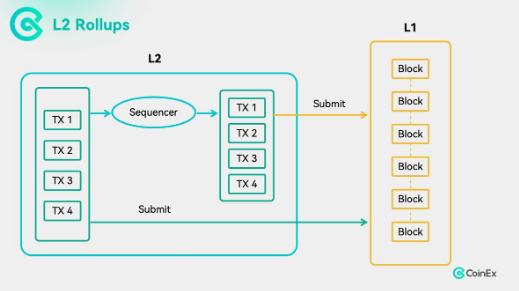
Jesse Pollak, co-founder of Base, added that sequencers simply order transactions before submitting them to Ethereum.
“Matching engines pair buy and sell orders at specific prices. Sequencers don’t do that — they only determine transaction order,” Pollak clarified.
He explained that users retain decentralization and censorship resistance by transacting directly on Ethereum if they choose. Sequencers, he said, function more like traffic controllers than trading venues.
If regulators classify sequencers as exchanges, L2 projects like Base, Optimism, and Arbitrum could face heavy compliance burdens. But Buterin’s defense reinforces the view that layer-2s are critical infrastructure scaling Ethereum, not financial intermediaries.
Disclaimer
This content is for informational purposes only and does not constitute financial, investment, or legal advice. Cryptocurrency trading involves risk and may result in financial loss.