
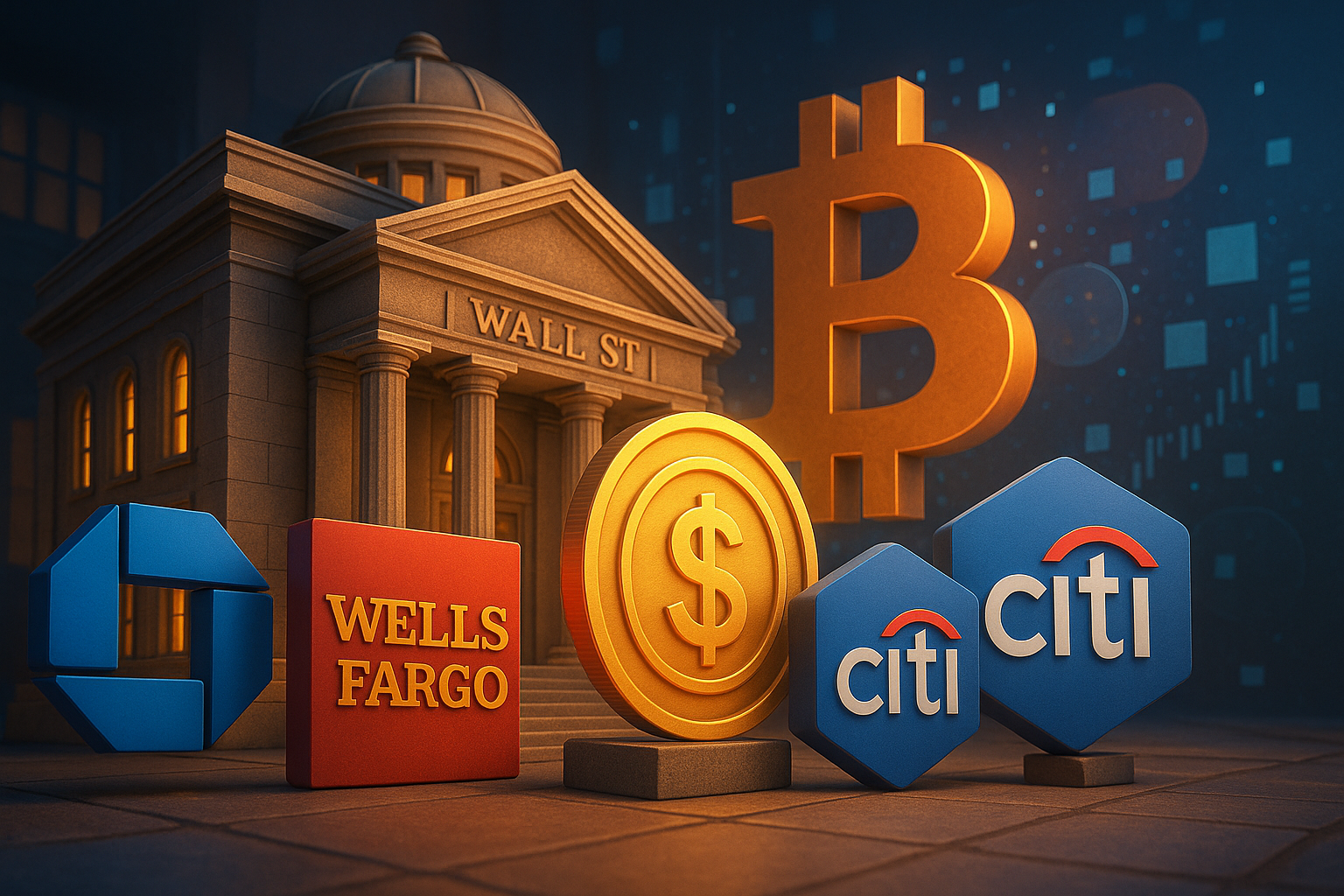
In a major development that could reshape the future of digital finance, several large U.S. banks are reportedly in early discussions to launch a joint crypto stablecoin, according to a report by the Wall Street Journal (WSJ). The talks mark a potential turning point in how traditional financial institutions view and engage with blockchain-based digital assets.


A New Era for Traditional Finance and Crypto

According to sources cited by the WSJ, major financial institutions including JPMorgan Chase, Wells Fargo, and Bank of America are exploring the creation of a shared stablecoin. While no final decision has been made, the early-stage conversations are focused on regulatory compliance, liquidity management, and interoperability with existing payment systems.

“The goal is to create a trusted, bank-backed digital dollar alternative that can compete with private and international stablecoins,” one insider revealed.

This effort signals that traditional banks are beginning to embrace blockchain as part of their future payment infrastructure.


Why a Joint Stablecoin Matters

A joint stablecoin issued by U.S. banks could provide:

  • Increased trust and security compared to privately issued stablecoins
  • Faster and cheaper transactions for businesses and consumers
  • Regulatory-friendly features to satisfy government oversight

It would also help banks retain control over digital payments in the face of growing competition from decentralized finance (DeFi) platforms and fintech firms.


Challenges Ahead: Regulation and Coordination

While the initiative sounds promising, the road ahead is not simple.

  • Regulatory uncertainty remains a key barrier.
  • Inter-bank coordination on technology, legal frameworks, and user access must be ironed out.
  • The Federal Reserve’s position on stablecoins could influence the direction of the project significantly.

Banking regulators have previously expressed caution around stablecoins, fearing they may destabilize traditional financial systems if not properly backed or regulated.


What This Means for the Crypto Industry

If successful, this bank-backed stablecoin could:

  • Legitimize digital currencies in the eyes of mainstream investors
  • Boost adoption of crypto-based payments in the U.S. and globally
  • Put pressure on existing stablecoin providers like USDT and USDC

“This could be the bridge between legacy finance and crypto,” said a blockchain analyst.


Conclusion

The early talks among U.S. banking giants highlight a significant shift in financial strategy. As stablecoins continue to rise in popularity, banks are realizing they can’t afford to stay on the sidelines.

If launched, this joint stablecoin could redefine how digital money is created, regulated, and used across America and beyond.

logo

blockto.io

info@blockto.io

Blockto.io Copyright © 2025, All rights reserved

News
Rates
Buy
More
We use cookies to personalize content and ads, provide social media features, and analyze our traffic. In accordance with GDPR/AVG and EU cookie regulations, data is processed only with your consent. We may share information about your use of our website with our social media, advertising, and analytics partners, and you can manage or withdraw your consent at any time. View more
Cookies settings
Accept
Privacy & Cookie policy
Privacy & Cookies policy
Cookie name Active

Privacy Policy

At BitxJournal.com, we respect your privacy and are committed to protecting your personal data. This Privacy Policy explains how we collect, process, store, and protect personal information in accordance with the General Data Protection Regulation (GDPR) and AVG (EU privacy legislation).

1. Data Controller

BitxJournal.com acts as the data controller for all personal data processed through this website.

2. Personal Data We Collect

We may collect and process the following categories of data:

Personal Data

  • Name and email address (when you subscribe to newsletters or contact us)

Technical & Usage Data

  • IP address, browser type, operating system

  • Device information

  • Pages visited, referral sources, and interaction data

This data is collected via cookies, log files, and analytics technologies.

3. Legal Basis for Processing

We process personal data only when a lawful basis exists, including:

  • Consent – when you explicitly agree (e.g., cookies, newsletter sign-up)

  • Legitimate interest – to operate, secure, and improve our website

  • Legal obligation – when required by applicable laws

You may withdraw your consent at any time.

4. Purpose of Data Processing

Your data is processed for the following purposes:

  • Operating and maintaining the website

  • Improving content, usability, and performance

  • Sending newsletters or updates (only with consent)

  • Analyzing traffic and user behavior

  • Responding to inquiries or support requests

5. Cookies & Consent Management

We use cookies and similar technologies in compliance with EU Cookie Law.

  • Non-essential cookies are placed only after explicit user consent

  • Users may accept, reject, or manage cookie preferences at any time

  • Consent can be withdrawn without affecting prior lawful processing

Detailed cookie information is available in our Cookie Settings panel.

6. Third-Party Data Processing

We may share limited data with trusted third-party service providers, including:

  • Analytics providers (e.g., Google Analytics)

  • Advertising partners (for personalized or non-personalized ads)

These third parties act as data processors and process data only under contractual obligations compliant with GDPR/AVG.

7. International Data Transfers

Where data is transferred outside the European Economic Area (EEA), we ensure appropriate safeguards are in place, such as Standard Contractual Clauses (SCCs) or equivalent legal mechanisms.

8. Data Retention

We retain personal data only for as long as necessary to fulfill the purposes outlined in this policy or as required by law.

9. Data Security

We implement appropriate technical and organizational security measures to protect personal data against unauthorized access, alteration, disclosure, or destruction.

10. Your GDPR Rights

Under GDPR/AVG, you have the right to:

  • Access your personal data

  • Rectify inaccurate or incomplete data

  • Request data erasure (“right to be forgotten”)

  • Restrict or object to processing

  • Data portability

  • Withdraw consent at any time

  • Lodge a complaint with a supervisory authority

11. Changes to This Privacy Policy

We reserve the right to update this Privacy Policy at any time. Any changes will be posted on this page with a revised effective date.

12. Contact Information

For privacy-related inquiries or GDPR requests, contact:

📧 Email: support@blockto.io
🌐 Website: https://blockto.io

Save settings
Cookies settings