

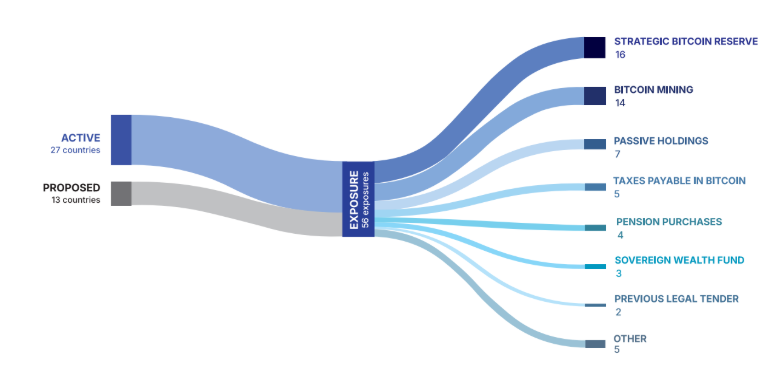
The idea of creating a national Bitcoin (BTC) strategic reserve has gained traction among policymakers and advocates who believe it could cement Bitcoin’s role as a global reserve asset. However, some crypto executives warn the move could have serious negative consequences for both Bitcoin and the U.S. dollar.
Centralized Control Risks Bitcoin’s Neutrality
Haider Rafique, global managing partner for government and investor relations at crypto exchange OKX, cautioned that a government-held Bitcoin reserve would undermine the very principles of decentralization that make BTC unique.
He explained that if a government were to accumulate large amounts of Bitcoin, it would gain the power to manipulate prices by selling off reserves at scale.
“What happens in a few years if a new administration decides this was a bad idea?” Rafique asked, stressing that U.S. political shifts could lead to policy reversals and liquidation risks.
The German government offered a recent warning sign. In 2024, it sold 50,000 BTC, an event that suppressed prices below $60,000, highlighting how large state-level moves can destabilize markets.
Threats to the U.S. Dollar
Beyond Bitcoin itself, a strategic BTC reserve could also send damaging signals about the U.S. dollar’s strength.
According to Rafique, building a Bitcoin reserve would suggest that the dollar can no longer stand on economic fundamentals alone, undermining global trust in the world’s leading reserve currency.
This could spark capital flight into safe-haven assets such as:
- Gold
- The Swiss franc
- Other non-dollar stores of value
Such a shift could accelerate a loss of confidence in USD and ripple across global financial markets.
Systemic Financial Contagion
Rafique warned that a U.S. Bitcoin reserve could trigger a contagion effect beyond crypto markets. If investors interpreted the move as a sign of weakness in the U.S. economy, they might dump risk-on assets, leading to widespread liquidations and potentially a major financial crash.
“The most significant macroeconomic implication would be a loss of confidence in the dollar,” Rafique said, noting that this kind of perception shock could create systemic instability.
Advocates See It Differently
Despite these risks, some Bitcoin advocates argue that a nation-state-level BTC treasury is the logical next step toward positioning Bitcoin as:
- A global reserve currency
- A standard unit of account
- A hedge against inflation and monetary debasement
Recent bipartisan discussions in Washington, including input from high-profile figures like Michael Saylor, signal growing political interest in the idea.
While a U.S. Bitcoin strategic reserve could legitimize BTC’s role in global finance, critics like Rafique emphasize that it also risks destabilizing both Bitcoin and the dollar.
The debate underscores a fundamental question: Can Bitcoin strengthen the U.S. economy as a reserve asset, or would it instead signal fragility in the dollar-dominated system?
Disclaimer
This content is for informational purposes only and does not constitute financial, investment, or legal advice. Cryptocurrency trading involves risk and may result in financial loss.