
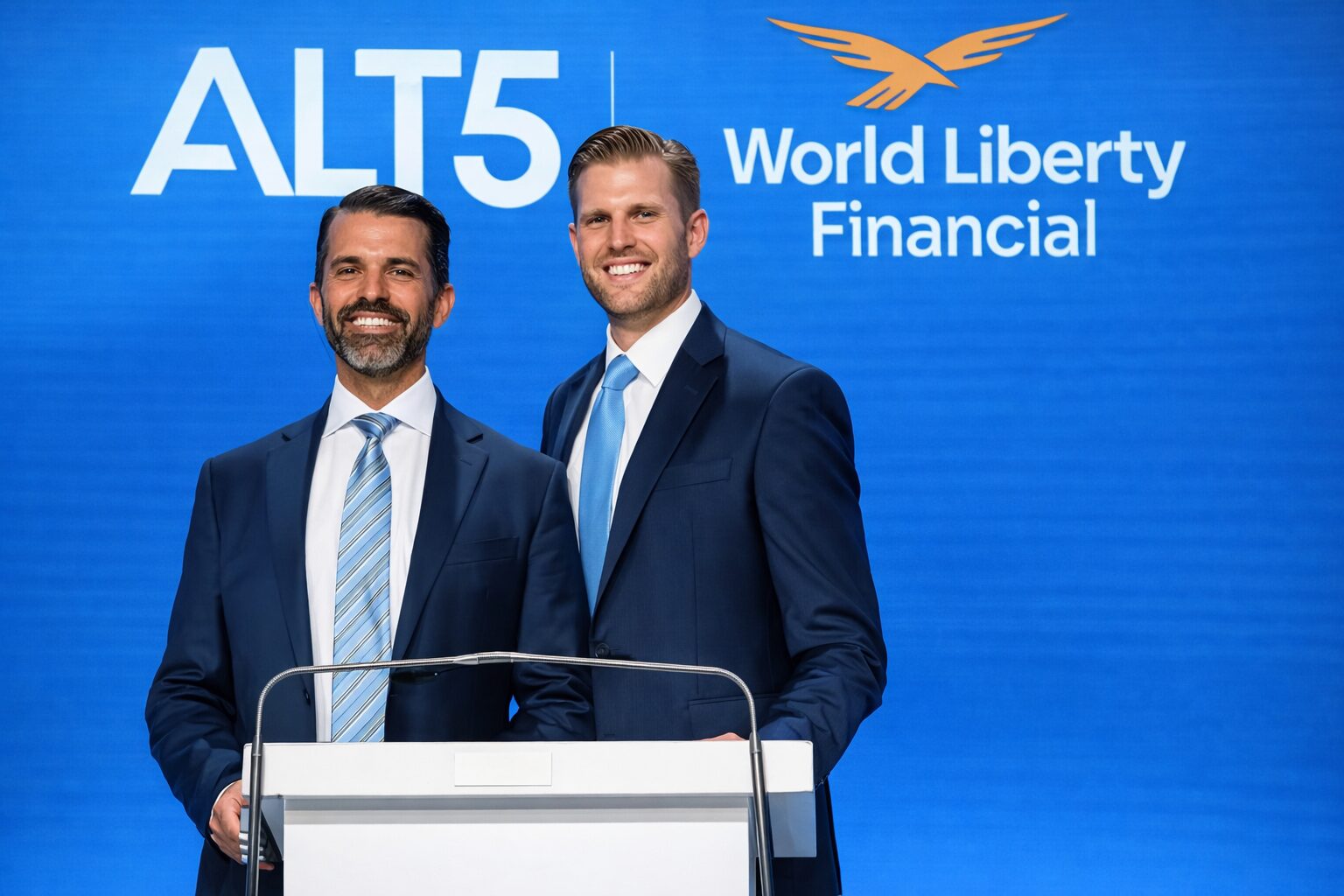
World Liberty Financial is facing strong criticism after introducing a governance proposal that would extend lock-up and vesting periods for early supporters of WLFI tokens by up to four years. The proposal aims to restructure token distribution across founders, advisors, partners, and early investors.
Under the plan, more than 62 billion WLFI tokens currently under indefinite lockups would be shifted to fixed schedules. Founders and team members would face a two-year lock-up followed by a three-year linear vesting period, along with a requirement to burn 4.5 billion tokens. Early supporters holding over 17 billion tokens would be subject to a two-year cliff and an additional two-year vesting period, fully unlocking after four years.
Justin Sun and Investors Criticize Governance Model
Tron founder Justin Sun, the project’s largest individual investor, strongly opposed the proposal, calling it one of the “most absurd governance scams” he has encountered. He argued the system effectively punishes dissent, stating that holders who do not approve the new schedule would remain locked indefinitely under current terms.
Sun also alleged that voting rights are undermined by centralized control mechanisms, including an anonymous multisignature wallet and an externally controlled account capable of blacklisting addresses. He claimed this structure makes governance votes ineffective and symbolic.
Broader Investor Concerns and Market Fallout
Other WLFI holders have also raised concerns, with some warning of potential legal action and questioning the fairness of the proposed changes. Critics argue the structure could trap investors while allowing early insiders to maintain control over token liquidity and financial benefits.
X user Isonips wrote;
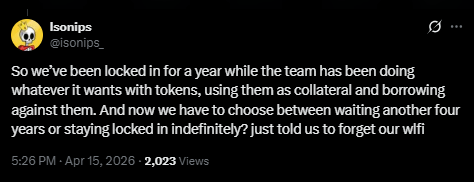
Additional controversy stems from reports that WLFI tokens were used as collateral on lending platforms to borrow stablecoins, further intensifying scrutiny over the project’s transparency and governance practices.
Disclaimer
This content is for informational purposes only and does not constitute financial, investment, or legal advice. Cryptocurrency trading involves risk and may result in financial loss.