
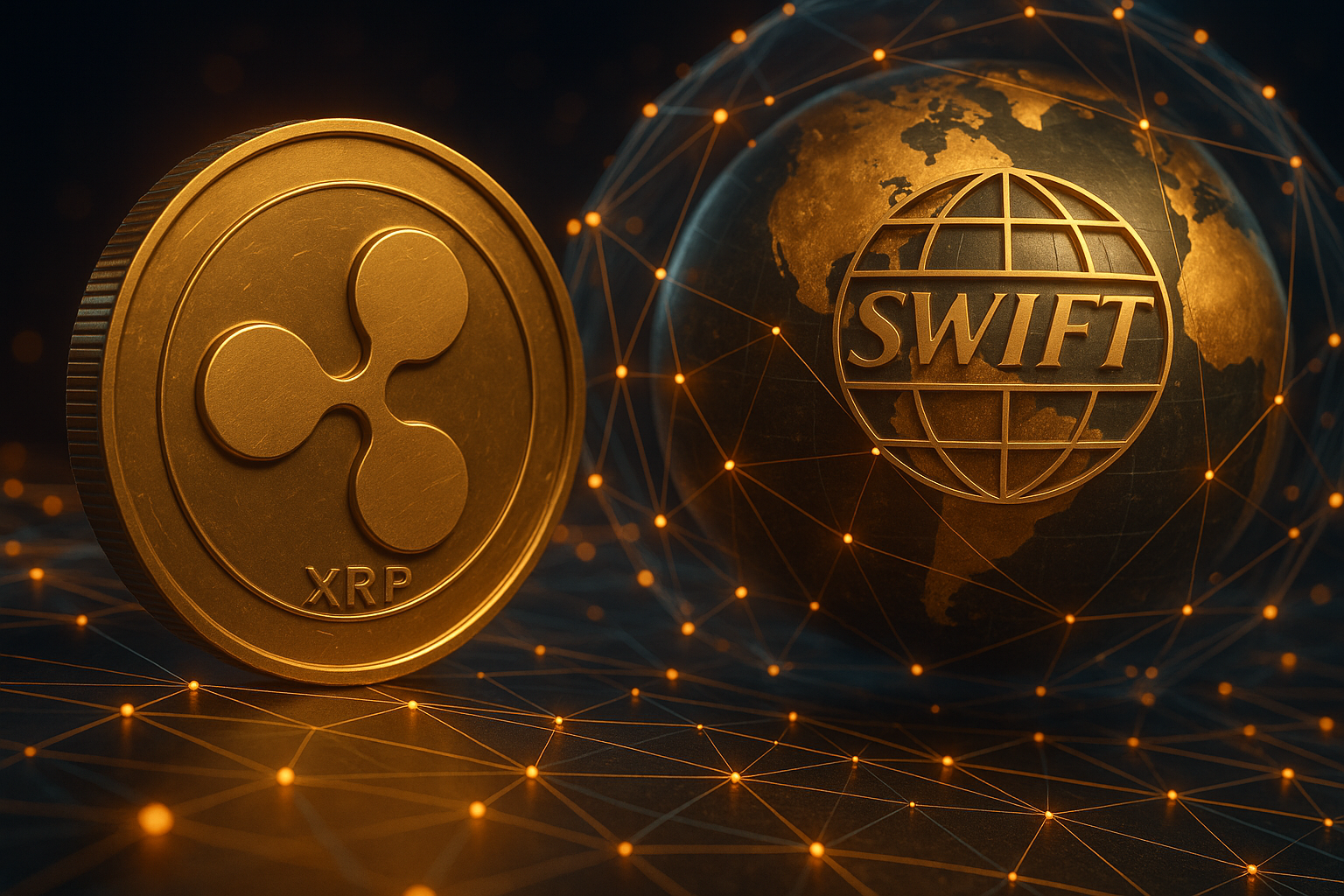
Ripple Positions XRP for the Future of Cross-Border Payments
Ripple CEO Brad Garlinghouse recently shared a bold vision for XRP’s role in global finance. Speaking at the XRP APEX 2025 event in Singapore, Garlinghouse stated that XRP could capture up to 14% of SWIFT’s global transaction volume within the next five years.
Garlinghouse emphasized that Ripple is focusing not just on messaging, but on solving the liquidity problem that banks face in international money transfers.
Understanding SWIFT’s Current Role
SWIFT currently powers the messaging infrastructure for interbank transfers across the globe. However, SWIFT does not move money—it simply sends transaction instructions between banks. The actual funds often pass through multiple intermediaries, leading to high costs and slow settlement times.
Ripple aims to replace this with a faster and cheaper system powered by XRP and blockchain technology.
Liquidity Is the Key Differentiator
“There are two parts to SWIFT today: messaging and liquidity,” Garlinghouse said. “Liquidity is owned by the banks. I think less about the messaging and more about liquidity.” He argued that if Ripple can dominate the liquidity side, it could disrupt the global payment infrastructure significantly.
Ripple’s system enables near-instant currency conversion, eliminating the need for banks to hold foreign reserves.
By leveraging on-demand liquidity (ODL) with XRP as the bridge currency, transactions are completed in seconds instead of days, at a fraction of the cost.
Blockchain’s Competitive Edge
Ripple’s use of blockchain ensures end-to-end transparency, faster settlement, and real-time value transfer, which addresses many inefficiencies in the legacy system. Unlike SWIFT, Ripple provides both the messaging layer and the liquidity movement, offering a comprehensive solution.
This dual-layer functionality gives Ripple an edge in the $150+ trillion cross-border payment market.
The Road Ahead
Capturing 14% of SWIFT’s global volume would be a major milestone, especially in a financial system deeply rooted in traditional infrastructure. While challenges remain, Ripple’s focus on utility and liquidity positions XRP as a strong contender in the evolving digital payments landscape.
With growing institutional interest and expanding international corridors, Ripple’s vision may be closer than many expect.