
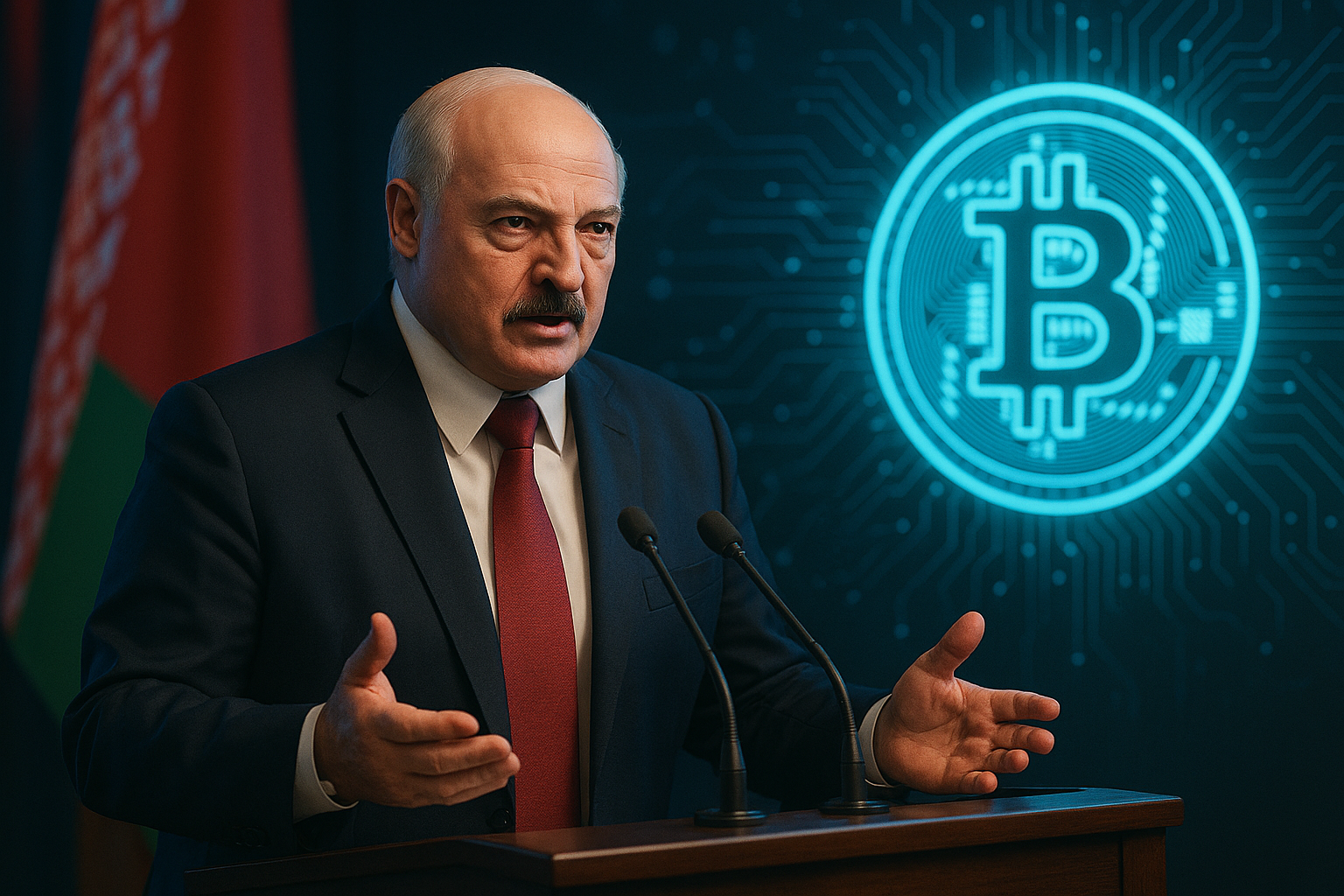
Lukashenko urges financial sector to embrace digital assets as external payments rise

Belarus President Alexander Lukashenko has called on the country’s banks to increase their use of cryptocurrencies, citing the growing pressure of Western sanctions on the economy. The directive, delivered at a high-level meeting with central and commercial bank leaders, highlights a dramatic shift in Minsk’s financial strategy.

Over the past five years, the national economy, and with it the Belarusian banking sector, have faced unprecedented challenges. The government and the National Bank have been given corresponding instructions. Now, act,” Lukashenko said, according to the state-run Belarusian Telegraph Agency.
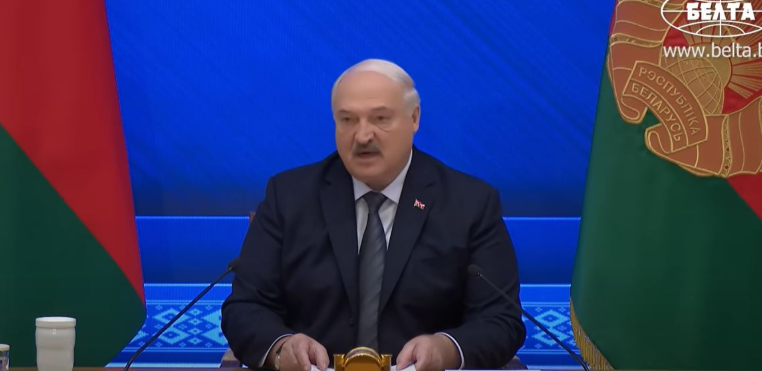
President Alexander Lukashenko told banks to expand crypto usage after telling lawmakers to develop rules for the sector. : YouTube 

$3 Billion in Crypto Payments Projected

The president revealed that external payments processed through Belarusian crypto exchanges reached $1.7 billion in just the first seven months of this year. He added that the figure could climb to $3 billion by year-end, nearly doubling previous levels.

Today, cryptocurrency-based transactions are more active than ever, and their role in facilitating payments is growing,” Lukashenko noted.

According to Statista projections, the number of crypto users in Belarus is expected to surpass 855,000 by 2026, representing nearly 10% of the population.

Digitalization Strategy Beyond Crypto

Lukashenko also urged banks to adopt digital payment systems, expand QR code-based transactions, and launch an instant payment network before the end of the year. VTB Bank Belarus, a Russian state-owned lender, has already introduced QR code payments linked to the ERIP national system.

The president further emphasized that Belarus’s digital strategy should prioritize biometric technologies, establish a domestic IT company to reduce foreign reliance, and adopt AI-based solutions. “Banks must try to make the most of modern technology. Digitalization is not an end in itself; it must deliver tangible economic results,” he said.

Mixed Track Record on Crypto

Belarus has taken a fluctuating stance on digital assets. While crypto transactions were legalized in 2018, the government has periodically sought to restrict peer-to-peer trading. Last year, Lukashenko also promoted developing a domestic crypto mining industry to leverage the country’s energy surplus.

Still, the latest directive reflects a clear push to integrate cryptocurrencies into mainstream banking, especially as sanctions squeeze traditional financial channels.

Disclaimer

This content is for informational purposes only and does not constitute financial, investment, or legal advice. Cryptocurrency trading involves risk and may result in financial loss.

logo

blockto.io

info@blockto.io

Blockto.io Copyright © 2025, All rights reserved

News
Rates
Buy
More
We use cookies to personalize content and ads, provide social media features, and analyze our traffic. In accordance with GDPR/AVG and EU cookie regulations, data is processed only with your consent. We may share information about your use of our website with our social media, advertising, and analytics partners, and you can manage or withdraw your consent at any time. View more
Cookies settings
Accept
Privacy & Cookie policy
Privacy & Cookies policy
Cookie name Active

Privacy Policy

At BitxJournal.com, we respect your privacy and are committed to protecting your personal data. This Privacy Policy explains how we collect, process, store, and protect personal information in accordance with the General Data Protection Regulation (GDPR) and AVG (EU privacy legislation).

1. Data Controller

BitxJournal.com acts as the data controller for all personal data processed through this website.

2. Personal Data We Collect

We may collect and process the following categories of data:

Personal Data

  • Name and email address (when you subscribe to newsletters or contact us)

Technical & Usage Data

  • IP address, browser type, operating system

  • Device information

  • Pages visited, referral sources, and interaction data

This data is collected via cookies, log files, and analytics technologies.

3. Legal Basis for Processing

We process personal data only when a lawful basis exists, including:

  • Consent – when you explicitly agree (e.g., cookies, newsletter sign-up)

  • Legitimate interest – to operate, secure, and improve our website

  • Legal obligation – when required by applicable laws

You may withdraw your consent at any time.

4. Purpose of Data Processing

Your data is processed for the following purposes:

  • Operating and maintaining the website

  • Improving content, usability, and performance

  • Sending newsletters or updates (only with consent)

  • Analyzing traffic and user behavior

  • Responding to inquiries or support requests

5. Cookies & Consent Management

We use cookies and similar technologies in compliance with EU Cookie Law.

  • Non-essential cookies are placed only after explicit user consent

  • Users may accept, reject, or manage cookie preferences at any time

  • Consent can be withdrawn without affecting prior lawful processing

Detailed cookie information is available in our Cookie Settings panel.

6. Third-Party Data Processing

We may share limited data with trusted third-party service providers, including:

  • Analytics providers (e.g., Google Analytics)

  • Advertising partners (for personalized or non-personalized ads)

These third parties act as data processors and process data only under contractual obligations compliant with GDPR/AVG.

7. International Data Transfers

Where data is transferred outside the European Economic Area (EEA), we ensure appropriate safeguards are in place, such as Standard Contractual Clauses (SCCs) or equivalent legal mechanisms.

8. Data Retention

We retain personal data only for as long as necessary to fulfill the purposes outlined in this policy or as required by law.

9. Data Security

We implement appropriate technical and organizational security measures to protect personal data against unauthorized access, alteration, disclosure, or destruction.

10. Your GDPR Rights

Under GDPR/AVG, you have the right to:

  • Access your personal data

  • Rectify inaccurate or incomplete data

  • Request data erasure (“right to be forgotten”)

  • Restrict or object to processing

  • Data portability

  • Withdraw consent at any time

  • Lodge a complaint with a supervisory authority

11. Changes to This Privacy Policy

We reserve the right to update this Privacy Policy at any time. Any changes will be posted on this page with a revised effective date.

12. Contact Information

For privacy-related inquiries or GDPR requests, contact:

📧 Email: support@blockto.io
🌐 Website: https://blockto.io

Save settings
Cookies settings