

Russia has taken a major step toward formal crypto regulation after its State Duma approved a new cryptocurrency bill in its first reading. According to state media reports, the proposal aims to establish a legal framework for crypto market participants while tightening control over domestic usage.
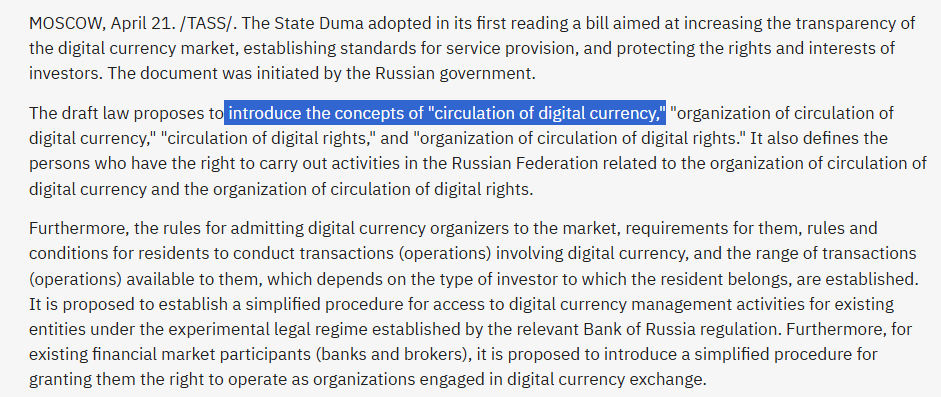
The bill designates the Bank of Russia as the main regulator responsible for licensing exchanges, brokers, and other financial institutions involved in crypto operations. It also introduces a tiered system for investors, separating qualified professionals from non-qualified participants. Under earlier proposals, retail investors would be limited to around 300,000 rubles ($3,900) in crypto exposure.
Crypto Banned for Domestic Payments but Allowed in Trade
A key feature of the bill is its dual approach to usage. While crypto would be recognized as property under the law, it would remain banned as a payment method for domestic goods and services. However, it would be permitted for cross-border trade and foreign economic activity, marking a significant policy shift.
Officials noted that the ruble would remain the only legal tender inside the country, but crypto could be used for international settlements. Lawmakers highlighted that this exception could help Russian companies conduct trade with foreign partners while navigating sanctions-related restrictions.
The legislation must still pass two additional readings in the State Duma before moving to the upper house and eventually to presidential approval. If finalized, the law is expected to come into force on July 1, 2026, potentially reshaping how crypto operates within Russia’s financial and trade systems while keeping domestic use tightly controlled.
Disclaimer
This content is for informational purposes only and does not constitute financial, investment, or legal advice. Cryptocurrency trading involves risk and may result in financial loss.