

The current Bitcoin market cycle following the April 2024 halving is showing significantly weaker performance compared with previous cycles, according to analysis from Galaxy Digital research head Alex Thorn.
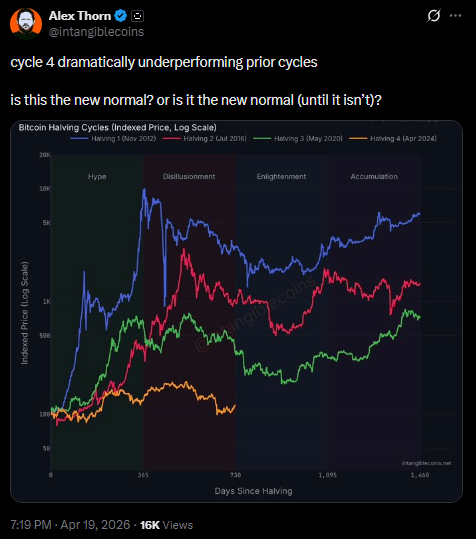
Data comparing earlier halving cycles in 2012, 2016 and 2020 shows that price growth has slowed dramatically. During the 2012 halving cycle, Bitcoin surged roughly 9,294%, reaching about $1,163. The 2016 cycle delivered gains of around 2,950%, pushing prices close to $19,891, while the 2020 cycle produced a rise of approximately 761%.
In contrast, the current cycle has produced much smaller gains. Bitcoin reached an all-time high above $125,000 in October 2025, representing an increase of about 97% from the halving price near $63,000. Analysts say this sharp decline in returns suggests changing market dynamics and reduced speculative momentum.
ETFs and Early Price Surge Altered Traditional Market Pattern
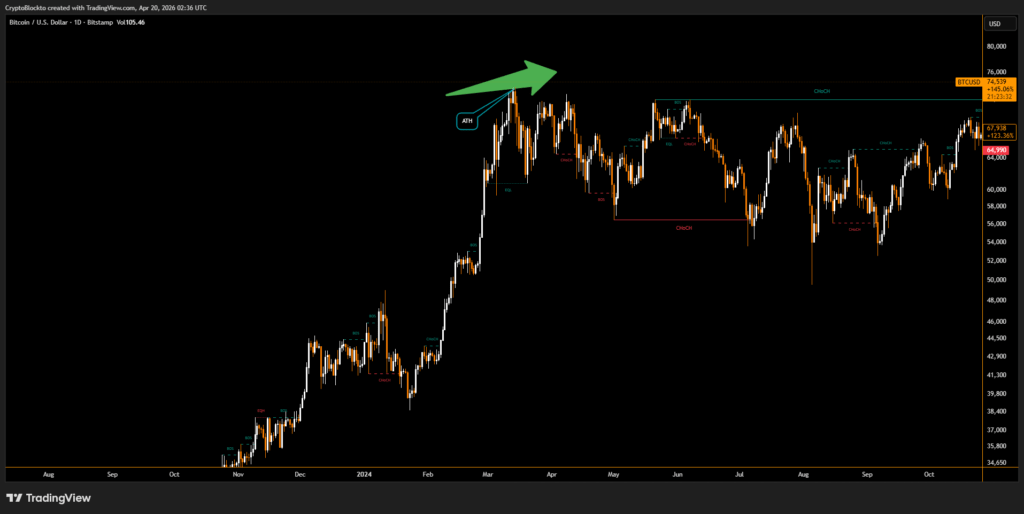
One factor affecting the current cycle is the unusual timing of price highs. Bitcoin reached a major peak above $70,000 in March 2024, one month before the halving event. This early surge followed approval of spot Bitcoin exchange-traded funds in the United States, which boosted institutional demand and shifted the traditional cycle timeline.
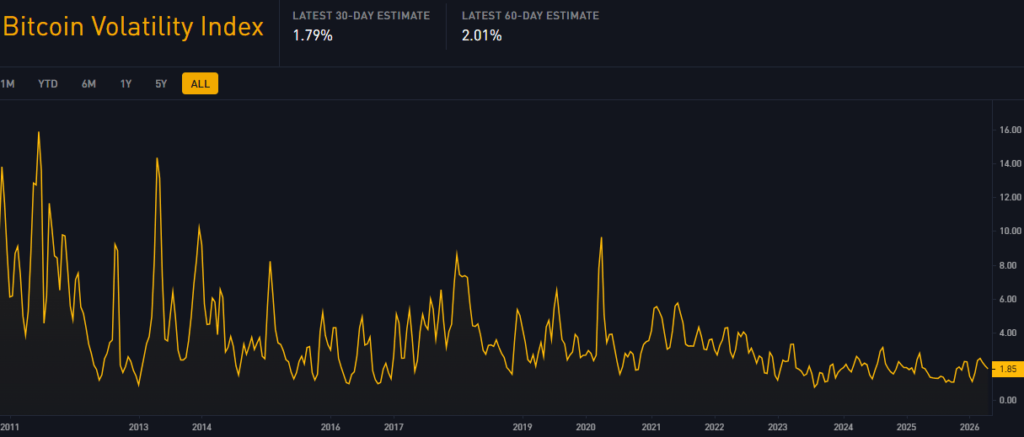
Volatility has also declined significantly. The 30-day volatility index peaked near 9.64% in April 2020 but has not exceeded 3.11% during the current cycle, with recent readings around 1.75%. Lower volatility has also reduced the scale of market downturns.
Previous bear markets saw price declines between 80% and 90%, but the recent drop from above $125,000 to around $60,000 represented a fall of slightly more than 50%. Some analysts believe this trend indicates a maturing market, with expectations that prices could gradually recover through 2026.
Disclaimer
This content is for informational purposes only and does not constitute financial, investment, or legal advice. Cryptocurrency trading involves risk and may result in financial loss.