
Bitcoin Mining Difficulty Falls to 135.5T Amid Industry Pressure
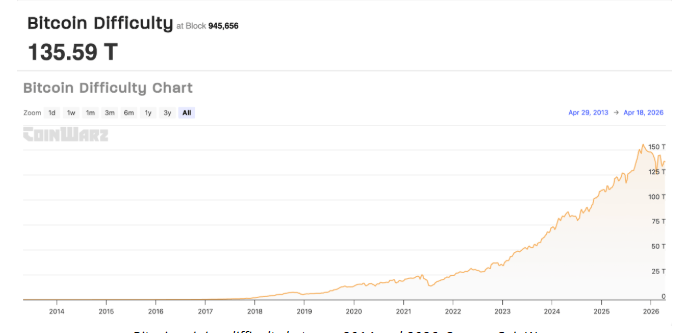
Bitcoin mining difficulty recorded a modest decline on Saturday, falling to approximately 135.5 trillion (T), reflecting a decrease of about 1.1% within the past 24 hours. Mining difficulty measures how challenging it is for miners to add new blocks to the Bitcoin blockchain, and it adjusts periodically to maintain an average block time of about 10 minutes.
Recent data shows the average block time is currently around 9.8 minutes, slightly below the network’s target. Despite the latest drop, projections indicate that mining difficulty is expected to rise again in the upcoming adjustment cycle.
Next Difficulty Adjustment Projected for Early May
The next difficulty adjustment is estimated to occur on May 1, 2026, at approximately 01:24 PM UTC. During this update, difficulty is forecast to increase from around 135.59T to nearly 137.43T, with roughly 1,865 blocks remaining before the recalibration takes place.
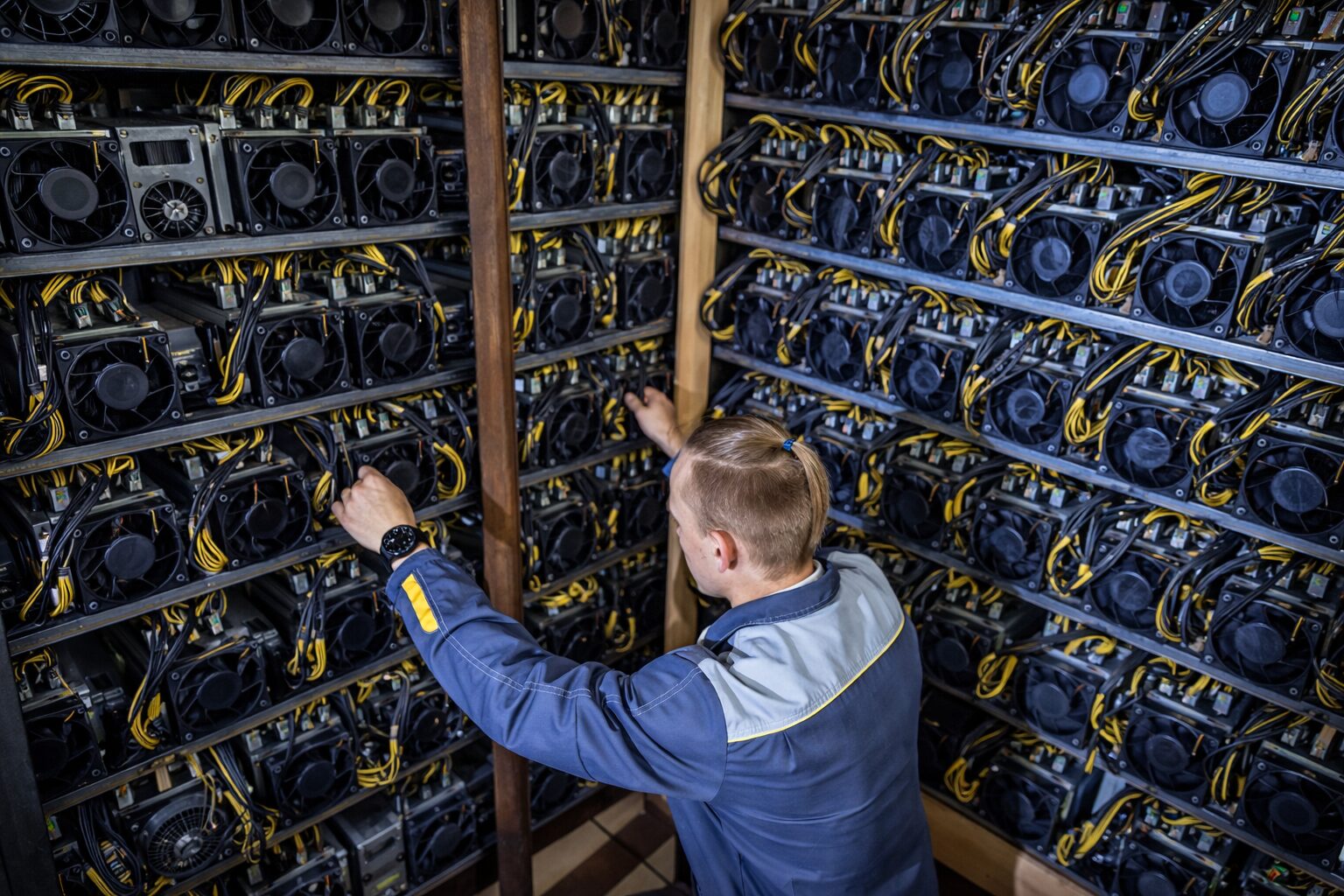
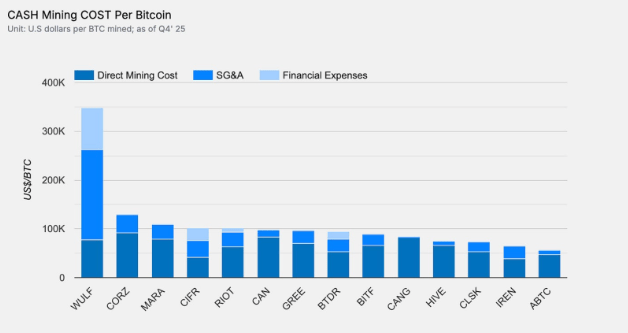
The mining sector has been facing significant financial pressure due to rising energy costs, lower block rewards following earlier halving events, and fluctuating cryptocurrency prices. These factors have made mining operations increasingly expensive.
Public Mining Firms Sell Record Bitcoin Holdings
Publicly traded mining companies sold record amounts of Bitcoin during the first quarter of 2026 to maintain operational stability. Major firms including MARA, CleanSpark, Riot, Cango, Core Scientific and Bitdeer collectively sold more than 32,000 BTC during the quarter, exceeding the combined total sold across all quarters of 2025.
Reports suggest that as many as 20% of Bitcoin miners are currently operating at a loss, highlighting the growing economic challenges facing the global mining industry.
Disclaimer
This content is for informational purposes only and does not constitute financial, investment, or legal advice. Cryptocurrency trading involves risk and may result in financial loss.