

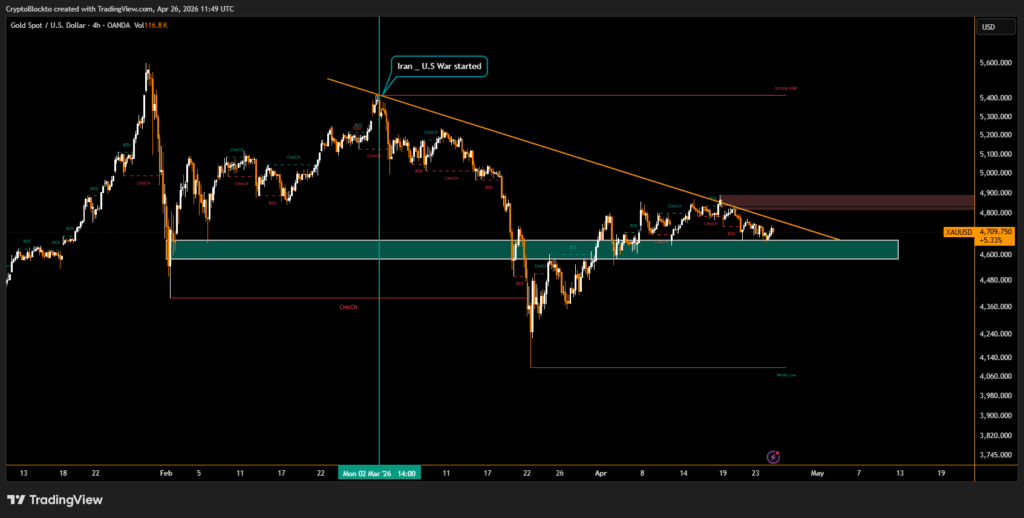
Gold slipped around 1.3% to the $4,650 area, breaking below the lower boundary of a short term rising channel. This move signals weakening bullish momentum, as the pattern of higher highs and higher lows was disrupted. Traders now view the breakdown as a shift where buyers failed to defend support levels, allowing sellers to regain control of price action. With the structure broken, market participants are searching for the next support zone in an increasingly uncertain environment.
US Dollar Strength and Treasury Yields Pressure Gold Prices
A firmer US Dollar added pressure on bullion by making gold more expensive for non-dollar buyers. At the same time, rising US 10-Year Treasury Yield increased the opportunity cost of holding non-yielding assets like gold, as investors can now earn higher returns from fixed-income instruments. Together, these factors created a classic bearish setup for gold despite ongoing global uncertainty.
Geopolitical Developments Reduce Safe-Haven Demand
Safe-haven demand also softened after Donald Trump announced a three week ceasefire between Israel and Lebanon, easing immediate geopolitical tensions. Earlier reports of collapsed US–Iran diplomatic negotiations and heightened military activity had previously supported defensive positioning in gold markets. However, the ceasefire reduced short-term risk appetite for safe-haven assets.
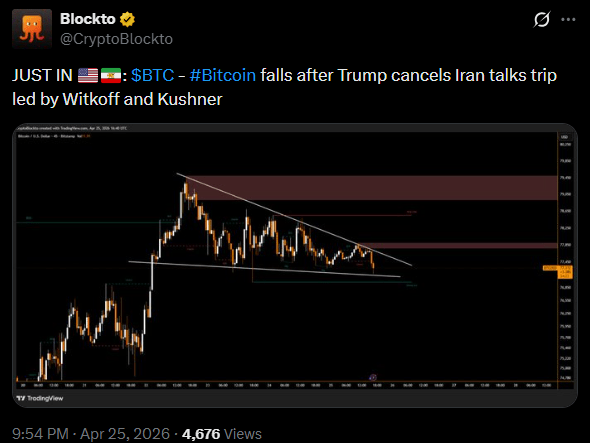
Despite the recent decline, gold remains up roughly 7% year-to-date, with volatility driven by shifting macro conditions and alternating geopolitical headlines shaping investor sentiment.
Disclaimer
This content is for informational purposes only and does not constitute financial, investment, or legal advice. Cryptocurrency trading involves risk and may result in financial loss.