
Questions about possible insider trading have intensified during the presidency of Donald Trump, as unusually timed market activity has appeared ahead of several major announcements. Analysts reviewing financial data identified repeated spikes in trading volumes minutes before public statements affecting oil, stocks, and geopolitical markets.
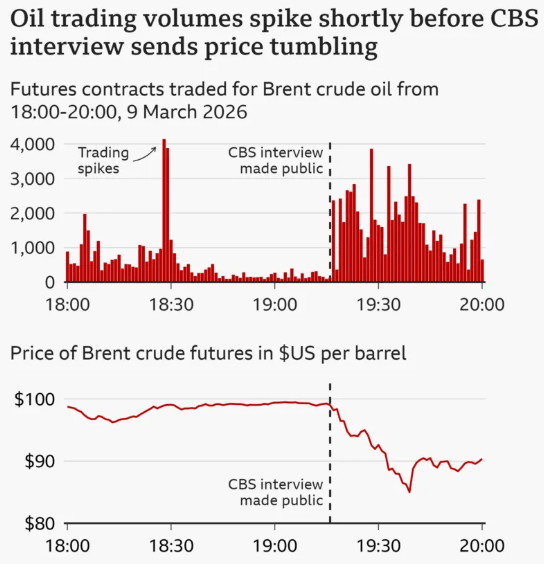
One key example occurred on March 9, 2026, during the conflict involving the United States, Israel, and Iran. In a phone interview with CBS News, Trump said the war was “very complete, pretty much.” Market data showed Brent crude oil trading volume surged sharply at 18:29 GMT, nearly 47 minutes before the interview became public. Once the statement aired at 19:16 GMT, oil prices dropped by roughly 25%, generating significant profits for traders who had anticipated the move.
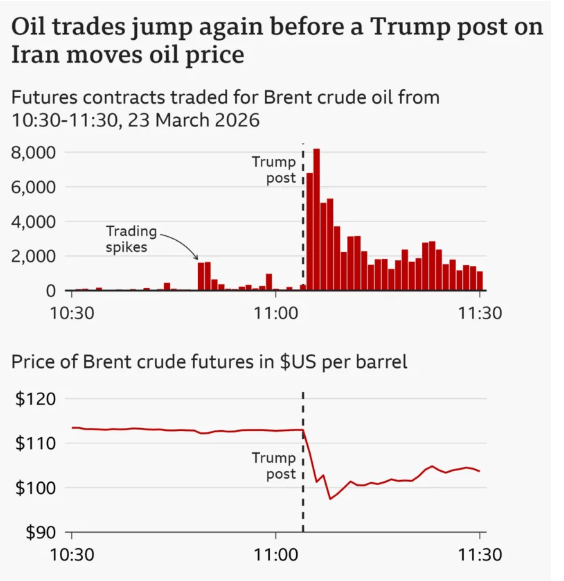
A similar pattern was recorded on March 23, 2026, when Trump posted on Truth Social about “very good and productive conversations” with Iran. Trading activity increased minutes earlier, followed by an 11% drop in oil prices after the post went live.
Stock Market and Prediction Market Bets Raise Further Concerns
Unusual trading was also observed during tariff policy shifts. On April 9, 2025, Trump announced a 90-day pause on global tariffs an event widely known as “Liberation Day.” Shortly before the announcement, trading on funds tracking the S&P 500 surged to more than 10,000 contracts per minute, compared with only hundreds earlier in the day. After the policy was confirmed, the S&P 500 jumped 9.5%, one of its largest single day gains since World War II.
Prediction markets have added another layer of scrutiny. Platforms such as Polymarket and Kalshi have seen users place large wagers shortly before major geopolitical developments. One account reportedly won $436,000 after betting on the removal of Nicolás Maduro just before his reported seizure in January 2026.
Regulators Face Challenges in Proving Insider Trading Violations
Regulatory oversight remains under the authority of the Commodity Futures Trading Commission, which has stated it maintains zero tolerance for fraud and insider trading. However, proving violations is difficult without identifying the source of confidential information.
Legal experts note that insider trading laws, first introduced under the Securities Act of 1933 and extended to government officials in 2012, require clear evidence linking traders to privileged information. To date, no prosecutions have been confirmed related to these incidents, and authorities have not publicly acknowledged launching formal investigations.
Disclaimer
This content is for informational purposes only and does not constitute financial, investment, or legal advice. Cryptocurrency trading involves risk and may result in financial loss.