


Photo: Illustrative
Advanced AI Models Raise New Security Concerns for the Crypto Industry
The launch of Anthropic’s Claude Fable 5 has renewed debate about the impact of advanced artificial intelligence on cryptocurrency security. The model offers stronger reasoning and coding abilities while using safety filters designed to block dangerous cyber activities. A more powerful version, Claude Mythos 5, is available only to vetted users in cybersecurity and critical infrastructure sectors.

The launch of Anthropic’s Claude Fable 5 has renewed debate about the impact of advanced artificial intelligence on cryptocurrency security. The model offers stronger reasoning and coding abilities while using safety filters designed to block dangerous cyber activities. A more powerful version, Claude Mythos 5, is available only to vetted users in cybersecurity and critical infrastructure sectors.
Anthropic says Mythos level models can identify and connect previously unknown software vulnerabilities, known as zero-day flaws. The company has implemented safeguards that redirect high-risk cybersecurity requests to a less capable model, Claude Opus 4.8. According to Anthropic, this fallback system is triggered in fewer than 5% of sessions.
DeFi Hacks Continue to Expose Weak Points
The concerns come as decentralized finance platforms have already suffered more than $840 million in losses from hacks during the first five months of 2026. April alone accounted for over $600 million in stolen funds.
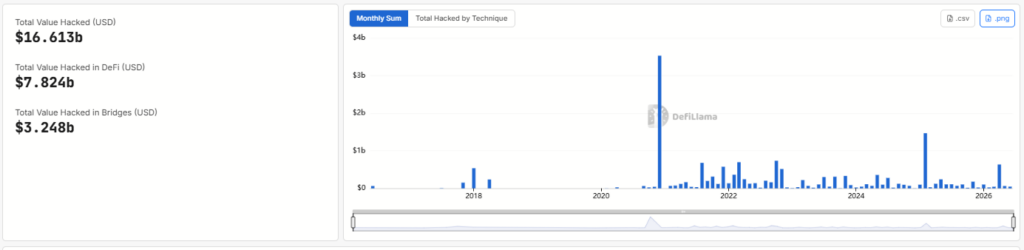
However, some of the largest attacks were not caused by smart contract bugs. Drift Protocol lost around $285 million after attackers used a lengthy social-engineering campaign to gain administrative access. Kelp DAO suffered losses of approximately $292 million through a single-verifier weakness, while Humanity Protocol recently lost more than $30 million after a private-key compromise.
AI Accelerates Existing Threats
Security experts argue that AI is not creating entirely new attack methods but is dramatically increasing the speed of reconnaissance and planning. Ledger Chief Technology Officer Charles Guillemet said AI can review software repositories, analyze code changes, identify configuration mistakes and assist in crafting convincing phishing messages at machine speed.
Despite these risks, AI is also helping developers improve security. Some decentralized finance projects are already using advanced AI tools to review code, identify vulnerabilities and strengthen smart contracts before deployment.
The growing role of AI highlights a new reality for the crypto industry: while technology can strengthen defenses, human error, poor security practices and compromised credentials remain the biggest risks.
Live market reaction
Disclaimer
This content is for informational purposes only and does not constitute financial, investment, or legal advice. Cryptocurrency trading involves risk and may result in financial loss.
Start trading
with BloFin today
Up to $500 sign-up bonus and zero-fee trading on your first 30 days.
Buy crypto nowⓘ You will be redirected to BloFin
About the author
8+ years covering crypto markets, macro, and geopolitics. Previously at Decrypt and CoinDesk. Focused on the intersection of digital assets and traditional finance.

 Tristan R. ·