


Photo: Illustrative
Chinese Users Turn to Peer to Peer Stablecoins as Wallet Activity Jumps 43 Times Despite Bans
Even with strict limits on crypto trading, China has seen a huge rise in people sending stablecoins directly between wallets. Chainalysis says the number of unique wallets making these transfers grew 43 times from early 2024 to mid-2026. Over the year ending in June 2026, self custodied holdings tied to China handled 18.1 million transfers worth $104.1 billion. Coins changed hands 33.2 times a year, against a global average of 9.3, which points to people using stablecoins like everyday working capital. This happened after regulators tightened rules in February on unauthorized yuan-linked stablecoins and tokenized real world assets.
.jpeg)
Even with strict limits on crypto trading, China has seen a huge rise in people sending stablecoins directly between wallets. Chainalysis says the number of unique wallets making these transfers grew 43 times from early 2024 to mid-2026. Over the year ending in June 2026, self custodied holdings tied to China handled 18.1 million transfers worth $104.1 billion. Coins changed hands 33.2 times a year, against a global average of 9.3, which points to people using stablecoins like everyday working capital. This happened after regulators tightened rules in February on unauthorized yuan-linked stablecoins and tokenized real world assets.
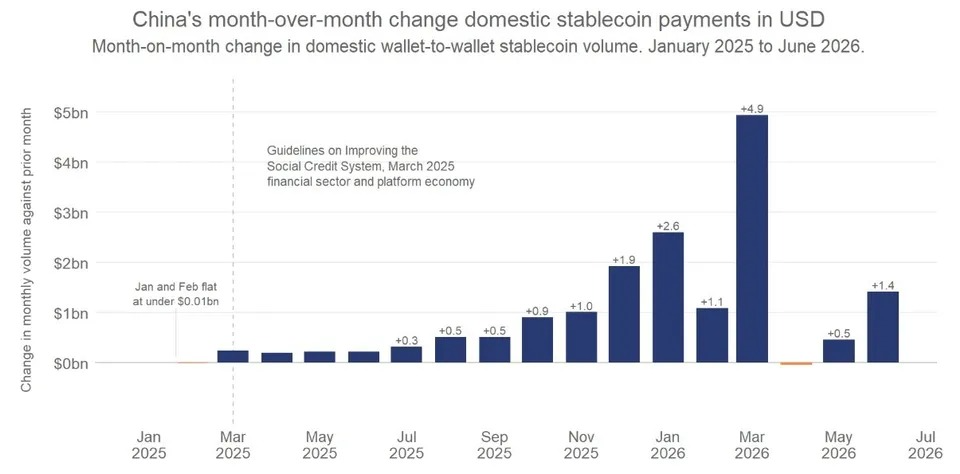
Size of China’s Crypto Economy
The report puts the country’s crypto economy at a minimum of $176 billion. Domestic peer to peer trading makes up 59.1% of it, which is 3.5 times the share seen a year earlier. March 2026 saw the sharpest monthly rise, adding $4.9 billion in domestic stablecoin transfers.
How South Korea and Hong Kong Compare
South Korea is still the biggest crypto market in East Asia at $449.1 billion, up 12.3%, and its retail traders lean toward AI-themed tokens. Hong Kong stands out for institutions, which supplied 16% of service inflows, almost three times the share of any nearby market. The city received nearly $24 billion in business-to-business flows and issued its first stablecoin licenses in April.
Japan’s Decentralized Exchange Boom and New Rules
In Japan, decentralized exchanges handle close to 35% of service activity, the highest among mature East Asian markets. Most swaps, 65.7%, fall between $10 and $1,000, and usage has grown over 200% since 2022. In July, lawmakers approved changes that place digital assets under the national financial-markets framework.
Live market reaction
Disclaimer
This content is for informational purposes only and does not constitute financial, investment, or legal advice. Cryptocurrency trading involves risk and may result in financial loss.
Start trading
with BloFin today
Up to $500 sign-up bonus and zero-fee trading on your first 30 days.
Buy crypto nowⓘ You will be redirected to BloFin
About the author
Emerging voice in crypto journalism with a background in fintech and digital economics. Covers DeFi, NFTs, and the evolving regulatory landscape.

Bitcoin Circles $86,000 as S&P 500, Nasdaq Hit Record Highs and Ask Liquidity Caps Upside
 Guylian ·
McDonald’s Sued in Proposed Nationwide Class Action Over AI-Driven Menu Pricing
 Tristan R. ·
French Student Protests Hit Biggest Day Yet as Riot Police Clash With Demonstrators and Bond Yields Stay Elevated
.jpeg&w=32&q=75) Laurisa ·
Laurisa ·