


Photo: Illustrative
Ethereum Developers Push Last-Minute Prysm Fix Ahead of Glamsterdam Sepolia Test
Ethereum developers released a last minute software update before Tuesday's Glamsterdam test on Sepolia, fixing a setting that could have left some validators producing much smaller blocks than planned. Glamsterdam is Ethereum's next major upgrade and activates first on Sepolia, a test network that uses tokens with no real value. One part of the test lifts Sepolia's gas limit from about 60 million to 200 million. Gas measures how much computing work fits into a block, so a higher limit means room for more transactions and more complex activity, though it also asks more of the machines running the network.

Ethereum developers released a last minute software update before Tuesday’s Glamsterdam test on Sepolia, fixing a setting that could have left some validators producing much smaller blocks than planned. Glamsterdam is Ethereum’s next major upgrade and activates first on Sepolia, a test network that uses tokens with no real value. One part of the test lifts Sepolia’s gas limit from about 60 million to 200 million. Gas measures how much computing work fits into a block, so a higher limit means room for more transactions and more complex activity, though it also asks more of the machines running the network.
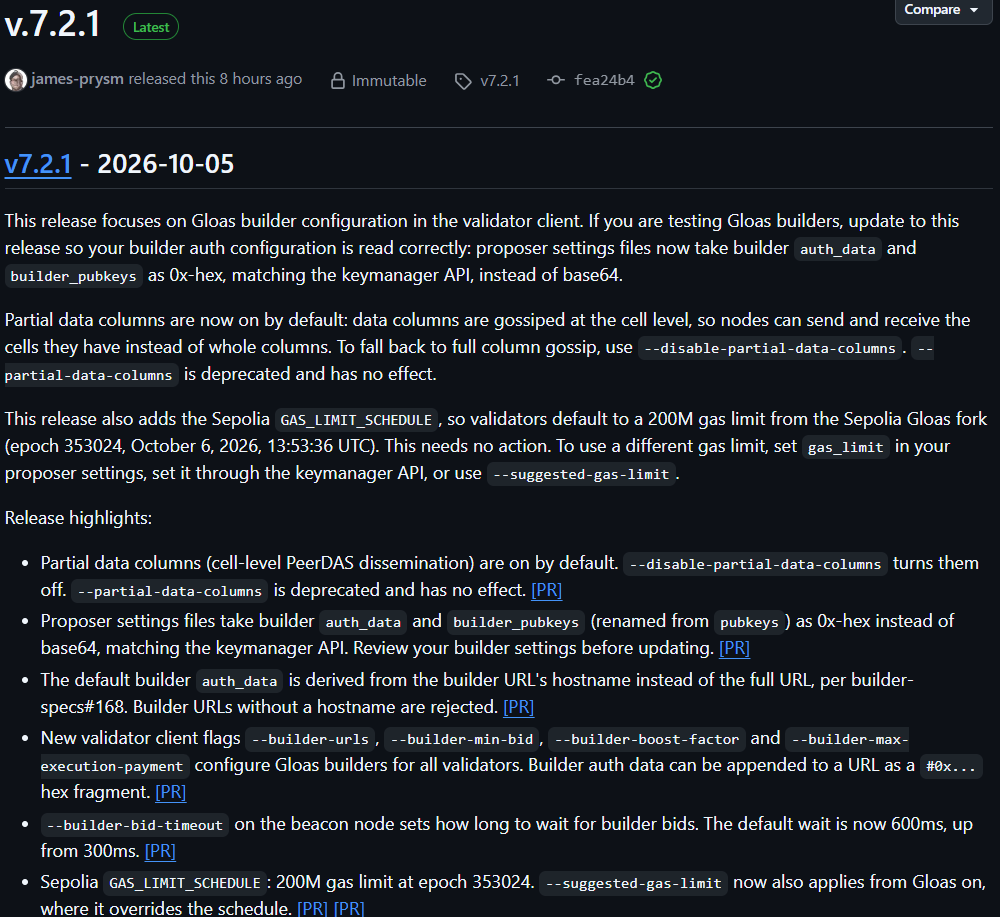
Prysm 7.2.1 Update for Validators
Prysm, software used by Ethereum validators, shipped version 7.2.1 late Monday with the 200 million setting built in. Its earlier release was finished before that value was added to Sepolia’s configuration, so validators on it would have stayed at 60 million unless operators changed it by hand. Those on the new version will propose 200 million-gas blocks automatically when Glamsterdam activates on Sepolia at 13:53:36 UTC on Oct. 6. Blocks at the old limit would have diluted the test, which is meant to show how the network copes with the larger size.
Ethereum Block Capacity: What Comes Next
Ethereum has been raising block capacity in steps, checking how far it can go before running a validator gets too demanding or expensive. More block space could mean room for more trades and stablecoin transfers before users compete and push fees up. The 200 million setting applies only to Sepolia, and Glamsterdam has not yet activated on the main network. The test will show whether validators can handle blocks more than three times the previous default.
Live market reaction
Disclaimer
This content is for informational purposes only and does not constitute financial, investment, or legal advice. Cryptocurrency trading involves risk and may result in financial loss.
Start trading
with BloFin today
Up to $500 sign-up bonus and zero-fee trading on your first 30 days.
Buy crypto nowⓘ You will be redirected to BloFin
About the author
Covers Bitcoin, on-chain data and market structure. Breaks down what the charts and wallet flows are actually saying, without the hype.

FinCEN Withdraws $10,000 Crypto Wallet Reporting Rule and Mixer Proposal
.jpeg&w=32&q=75) Laurisa ·
Laurisa · 
Rain Applies for a National Trust Bank Charter as Community Banks Take the OCC to Court
 Tristan R. ·
Daily Market Update Oct 6: Bitcoin Stalls at $87,000 Again as Nasdaq Hits a Record and Treasury Yields Climb
 Guylian ·