


Photo: Illustrative
Ethereum Privacy Upgrades Explained: What Vitalik Buterin’s Plan Means for ETH
Ethereum co-founder Vitalik Buterin has outlined a set of near-term privacy-focused upgrades aimed at making private transactions and data protection a native part of the network rather than relying on external tools. The changes are still under development but signal a major shift in Ethereum’s long-term design direction.
.jpeg)
Ethereum co-founder Vitalik Buterin has outlined a set of near-term privacy-focused upgrades aimed at making private transactions and data protection a native part of the network rather than relying on external tools. The changes are still under development but signal a major shift in Ethereum’s long-term design direction.
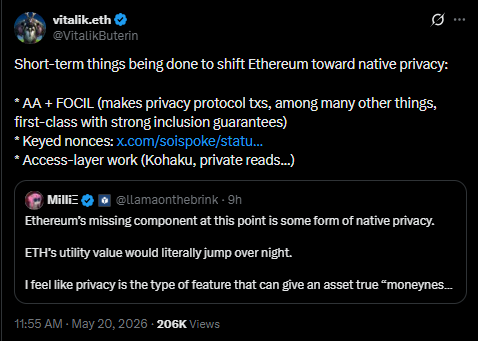
Buterin highlighted three key initiatives: account abstraction with FOCIL, keyed nonces, and access-layer privacy tools including the Kohaku framework. Together, these upgrades aim to reduce transaction visibility, improve censorship resistance, and protect user activity from surveillance.
Account Abstraction and FOCIL Improve Transaction Privacy
Account abstraction would turn Ethereum wallets into programmable smart contracts instead of single key accounts, enabling features like social recovery, multi-signature approvals, and flexible fee payments.
FOCIL (fork-choice enforced inclusion lists) adds censorship resistance by requiring validators to include certain transactions in blocks. If ignored, blocks can be rejected, making it harder for powerful actors to exclude transactions from the network.
Keyed Nonces Reduce Transaction Tracking
Ethereum currently uses sequential nonces to order transactions, which can unintentionally reveal that multiple transactions come from the same wallet. Keyed nonces replace this with multiple independent counters, making it harder to link user activity across transactions.
Kohaku Toolkit Enables Private Blockchain Queries
The Kohaku privacy toolkit focuses on “private reads,” helping users interact with Ethereum without exposing their wallet data to RPC providers. Instead of revealing what is being queried, nodes respond without seeing user specific requests.
What It Means for ETH
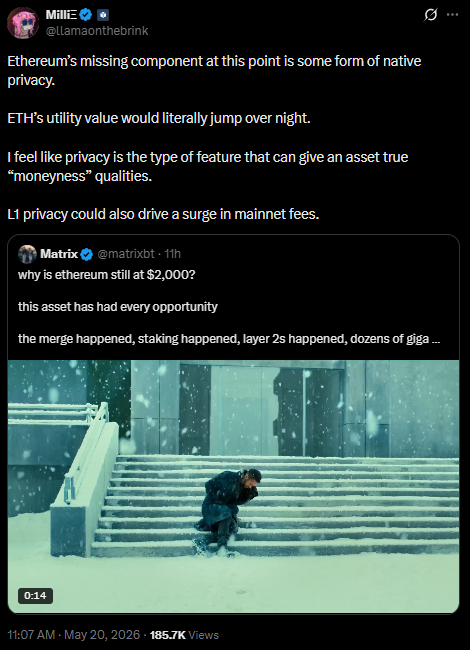
While none of these features are live yet, they represent a major step toward privacy native blockchain infrastructure. Analysts say stronger privacy could increase Ethereum’s appeal for institutions and boost ETH’s long-term utility by expanding use cases and network demand.One X user aid;
Live market reaction
Disclaimer
This content is for informational purposes only and does not constitute financial, investment, or legal advice. Cryptocurrency trading involves risk and may result in financial loss.
Start trading
with BloFin today
Up to $500 sign-up bonus and zero-fee trading on your first 30 days.
Buy crypto nowⓘ You will be redirected to BloFin
About the author
Emerging voice in crypto journalism with a background in fintech and digital economics. Covers DeFi, NFTs, and the evolving regulatory landscape.

 Tristan R. ·