


Photo: Illustrative
Ethereum Staking Tax Debate Fades as EthLabs Offers Alternative Funding Path
Ethereum’s latest funding debate has sparked questions about how the network should support long-term development, but a newly launched initiative may have already reduced the need for a controversial staking reward proposal.

Ethereum’s latest funding debate has sparked questions about how the network should support long-term development, but a newly launched initiative may have already reduced the need for a controversial staking reward proposal.
Ethereum Funding Concerns Trigger New Debate
The discussion began after former Ethereum Foundation contributor Trenton Van Epps warned that Ethereum’s development ecosystem could face a funding shortfall within three to nine months as existing support programs expire and Foundation spending declines.
Van Epps estimated that maintaining more than 10 client, research and coordination teams costs around $30 million annually. However, some community members disputed the urgency, arguing that the Ethereum Foundation still has enough resources to operate for decades.
Ethereum founder Vitalik Buterin recently confirmed the Foundation is reducing its budget by roughly 40% as part of a long term plan to lower annual spending from around 15% of treasury assets to about 5% by 2030.
Validator Reward Proposal Faces Backlash
Kleros co-founder Clément Lesaege proposed a Validator Redirected Revenue mechanism that would redirect up to 10% of staking rewards toward ecosystem development. Under the proposal, validators would vote on a contribution rate between 0% and 10%, with any approved rate becoming mandatory across the network.
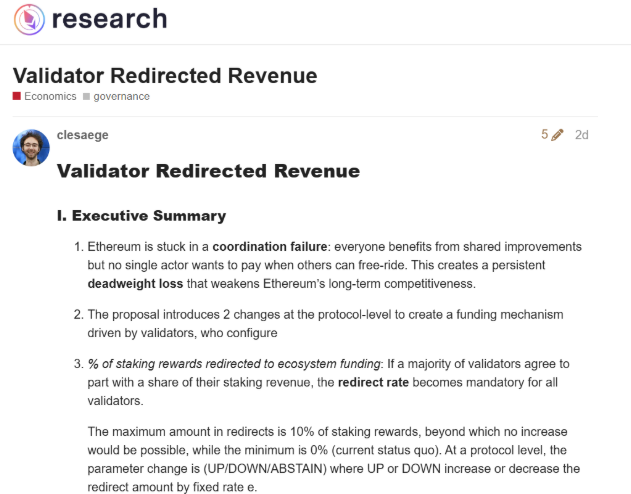
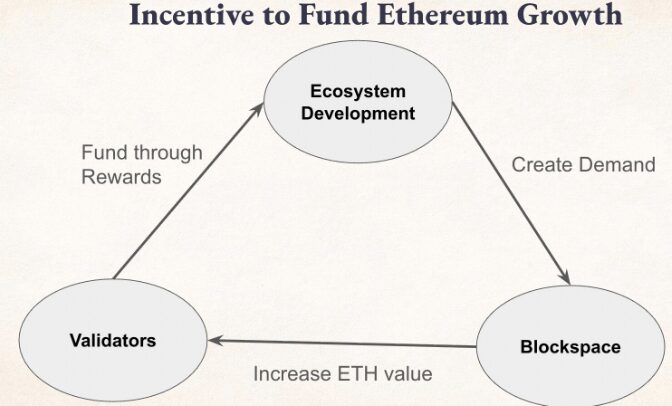
Lesaege argued that Ethereum suffers from a coordination problem where everyone benefits from shared infrastructure, but few are willing to fund it. He estimated that a 5% to 10% redirect could generate between 50,000 and 70,000 ETH annually, worth roughly $82.5 million to $115.5 million at current prices.
EthLabs Emerges as Potential Solution
The proposal faced immediate criticism from staking providers and researchers who warned it could reduce validator profits, encourage industry consolidation and give large validators greater influence over ecosystem funding decisions.
At the same time, EthLabs, a new nonprofit research and development organization created by five former Ethereum Foundation researchers, entered the spotlight. Backed by major Ethereum supporters including BitMine, SharpLink and ConsenSys founder Joseph Lubin, the initiative offers an alternative funding model based on voluntary support from large ETH holders.
Analysts noted that if Ethereum’s funding gap is around $30 million annually, it could theoretically be covered by only 1.6% of yearly staking rewards, making the economic challenge relatively small compared with the governance concerns surrounding a protocol-level funding mechanism.
Live market reaction
Disclaimer
This content is for informational purposes only and does not constitute financial, investment, or legal advice. Cryptocurrency trading involves risk and may result in financial loss.
Start trading
with BloFin today
Up to $500 sign-up bonus and zero-fee trading on your first 30 days.
Buy crypto nowⓘ You will be redirected to BloFin
About the author
8+ years covering crypto markets, macro, and geopolitics. Previously at Decrypt and CoinDesk. Focused on the intersection of digital assets and traditional finance.

 Tristan R. ·
.jpeg&w=32&q=75) Laurisa ·
Laurisa ·