

Photo: Illustrative
Ethereum’s Energy Use Falls 99.9% Since Switching Away From Mining
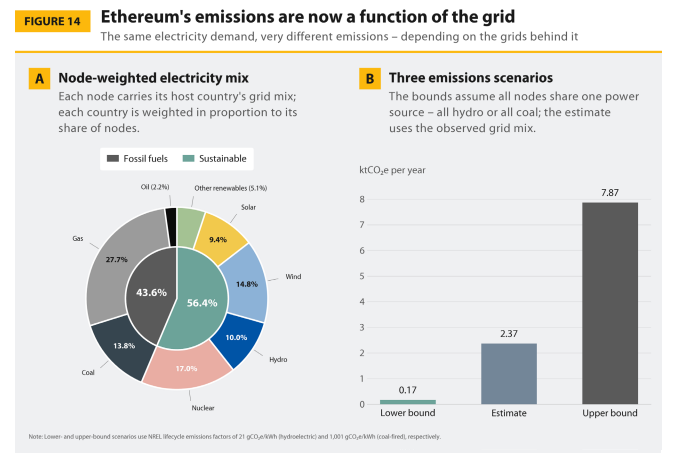
Ethereum's global network now runs on less electricity in a year than it takes to keep a single mid sized museum operating. Data from the Cambridge Centre for Alternative Finance puts the network's annual electricity use at roughly 7.87 gigawatt-hours as of mid-2026, with carbon emissions of about 2.37 kilotons of CO2 equivalent. That's less than half of what the British Museum burns through annually just to keep its climate control and lighting running.

Ethereum’s global network now runs on less electricity in a year than it takes to keep a single mid sized museum operating. Data from the Cambridge Centre for Alternative Finance puts the network’s annual electricity use at roughly 7.87 gigawatt-hours as of mid-2026, with carbon emissions of about 2.37 kilotons of CO2 equivalent. That’s less than half of what the British Museum burns through annually just to keep its climate control and lighting running.
From Country-Level Consumption to Museum-Level
Before The Merge in September 2022, Ethereum used roughly as much energy as a mid-sized country. Over its entire proof-of-work era, from 2015 to 2022, the network consumed about 58.26 terawatt-hours total. That changed when Ethereum shifted to proof-of-stake, letting token holders validate transactions by staking their ETH instead of relying on massive computing power to solve mining puzzles. The switch cut energy use by more than 99.98 percent.
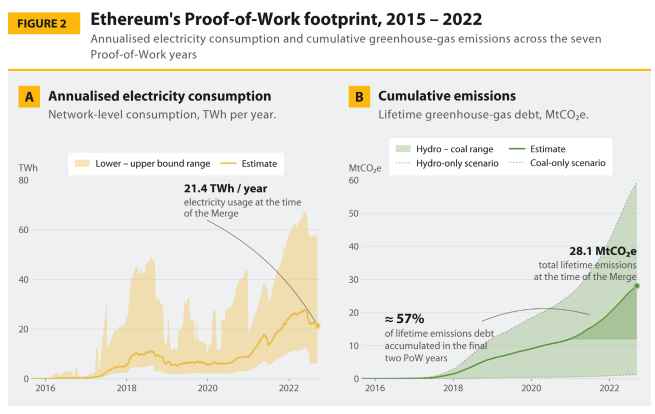
Early estimates right after The Merge predicted annual consumption would land between 2.6 and 6.5 GWh. The actual number came in a bit higher, which tracks with the steady growth in validators since the transition. Continuous power draw now sits around 0.90 megawatts.
Cleaner Power Mix Backs Up the Numbers
CCAF’s assessment found 56.4 percent of Ethereum’s electricity comes from sustainable sources, which helps explain the relatively low emissions figure.
Why This Matters for Institutional Money
Environmental concerns have long been a sticking point for ESG-focused funds and corporate treasuries considering crypto exposure, an issue Bitcoin still faces given its energy-heavy mining process. Ethereum’s post-Merge numbers, verified by an independent research body, largely take that objection off the table for compliance teams doing due diligence.
Live market reaction
Disclaimer
This content is for informational purposes only and does not constitute financial, investment, or legal advice. Cryptocurrency trading involves risk and may result in financial loss.
Start trading
with BloFin today
Up to $500 sign-up bonus and zero-fee trading on your first 30 days.
Buy crypto nowⓘ You will be redirected to BloFin
About the author
8+ years covering crypto markets, macro, and geopolitics. Previously at Decrypt and CoinDesk. Focused on the intersection of digital assets and traditional finance.

.jpeg&w=32&q=75) Laurisa ·
Laurisa ·