

Photo: Illustrative
Euro Stablecoin Push Accelerates as Qivalis Expands to 37 Banks Ahead of 2026 Launch
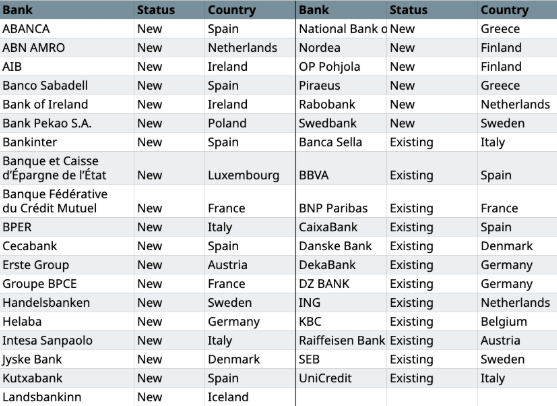
European banking consortium Qivalis has significantly expanded its euro stablecoin initiative, adding 25 new banks from 15 countries. With this latest expansion, the network now includes 37 financial institutions as it prepares for a planned launch in the second half of 2026.
.jpeg)
European banking consortium Qivalis has significantly expanded its euro stablecoin initiative, adding 25 new banks from 15 countries. With this latest expansion, the network now includes 37 financial institutions as it prepares for a planned launch in the second half of 2026.
The new members include major banks such as ABN AMRO, Rabobank, Nordea, and Intesa Sanpaolo, strengthening the project’s position as one of Europe’s most coordinated efforts in digital currency development.
Goal Is a Regulated Euro Stablecoin Under MiCA Rules
Qivalis aims to build a fully regulated euro stablecoin system under the European Union’s Markets in Crypto Assets (MiCA) framework. The consortium says its focus is not only on payments but also on embedding European standards for data protection, financial stability, and regulatory compliance into digital money infrastructure.
Howard Davies, chairman of Qivalis’ supervisory board, said the project is designed to go beyond payment rails and support the next generation of regulated digital finance in Europe.
Spain, Italy and Nordics Drive Expansion
Spain emerged as the most active country in the new wave of members, adding five banks including Banco Sabadell, Bankinter, ABANCA, Cecabank, and Kutxabank. Italy added two new banks, while France, Sweden, Greece, the Netherlands, Finland, and Ireland each contributed additional members.
This wide participation highlights growing European interest in euro based stablecoins as an alternative to dollar-dominated digital assets, which still account for about 98% of the global stablecoin market.
Europe Debates Stablecoin Strategy as ECB Stays Cautious
While Qivalis and other institutions continue to push forward, European Central Bank President Christine Lagarde has expressed caution, saying stablecoins may not be the best way to strengthen the euro’s global role.
Despite this, banking led projects are moving ahead, aiming to create regulated alternatives to US dollar stablecoins.
CEO Jan Sell said the goal is to ensure the euro is fully represented in on chain financial systems built by European institutions under European rules.
Live market reaction
Disclaimer
This content is for informational purposes only and does not constitute financial, investment, or legal advice. Cryptocurrency trading involves risk and may result in financial loss.
Start trading
with BloFin today
Up to $500 sign-up bonus and zero-fee trading on your first 30 days.
Buy crypto nowⓘ You will be redirected to BloFin
About the author
Emerging voice in crypto journalism with a background in fintech and digital economics. Covers DeFi, NFTs, and the evolving regulatory landscape.

 Guylian ·

.jpeg&w=32&q=75) Laurisa ·
Laurisa ·