


Photo: Illustrative
Google Warns Hackers Now Use Autonomous AI Agents to Find and Exploit Software Flaws
Google's threat researchers say attackers have crossed a line: for the first time, they found criminals using AI frameworks to discover and exploit software weaknesses with no person guiding each step. The finding means companies have less time to fix known problems before they are attacked.

Google’s threat researchers say attackers have crossed a line: for the first time, they found criminals using AI frameworks to discover and exploit software weaknesses with no person guiding each step. The finding means companies have less time to fix known problems before they are attacked.
What Google Found on the Exposed Server
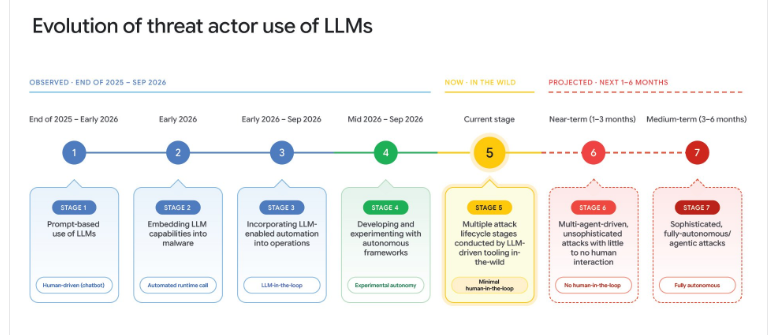
The Google Threat Intelligence Group reported on Monday that it came across an unprotected staging server during the past quarter. It hosted a multi-agent system built to research vulnerabilities and turn them into working attacks. The tool compared code before and after patch announcements on popular web applications, spotted possible flaws, then wrote and ran exploit code by itself, with no human in the loop.
Why Patching Windows Are Shrinking
Attackers are using AI agents to reverse engineer patches through differential analysis and to weaponize N-day vulnerabilities, which are publicly known flaws that already have fixes. Google warned that large language models let attackers scale exploitation pipelines against internet-facing servers without human involvement. As a result, organizations have far less time to apply security updates before exploits appear.
The change is notable because Google’s September report said it had not yet seen threat actors running fully autonomous pipelines against real targets. This new report marks the first confirmed case of that capability, and it fits a wider pattern of AI-assisted attacks hitting crypto firms and other businesses.
Live market reaction
Disclaimer
This content is for informational purposes only and does not constitute financial, investment, or legal advice. Cryptocurrency trading involves risk and may result in financial loss.
Start trading
with BloFin today
Up to $500 sign-up bonus and zero-fee trading on your first 30 days.
Buy crypto nowYou will be redirected to BloFin
About the author
8+ years covering crypto markets, macro, and geopolitics. Previously at Decrypt and CoinDesk. Focused on the intersection of digital assets and traditional finance.

Air Force’s Cloud One Platform Reportedly Hit by Hackers, Putting Sensitive Military Data at Risk
 Guylian ·

Australia Imposes Counterterrorism Financing Sanctions on Two Men Over Iran Directed Arson Attacks
 Laurisa ·

Ethereum Developers Set Dec. 15 for Glamsterdam Hoodi Testnet Launch After Gas Pricing Delay
Guylian ·