
Photo: Illustrative
Hester Peirce Leaves the SEC After Eight Years, Urging Privacy-First Crypto Rules
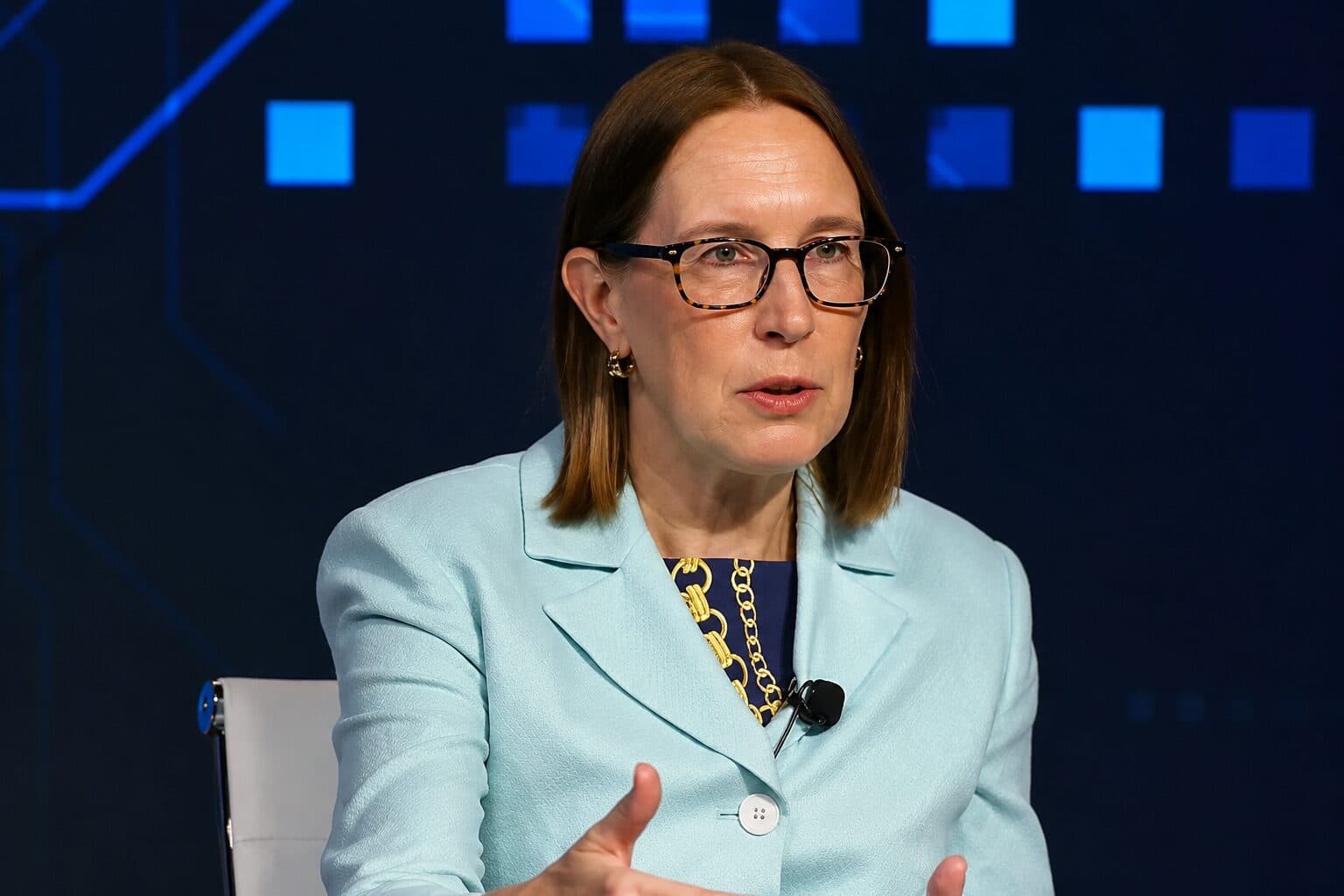
Hester Peirce's final day as an SEC Commissioner is today, ending more than eight years at the agency. She was known for dissenting when the Commission favored enforcement over writing workable rules, and she floated a token safe harbor long before others were ready to discuss it. She also led the Crypto Task Force, arguing that investor protection meant giving the industry clear guardrails.

Hester Peirce’s final day as an SEC Commissioner is today, ending more than eight years at the agency. She was known for dissenting when the Commission favored enforcement over writing workable rules, and she floated a token safe harbor long before others were ready to discuss it. She also led the Crypto Task Force, arguing that investor protection meant giving the industry clear guardrails.
Peirce’s Warning on Financial Surveillance
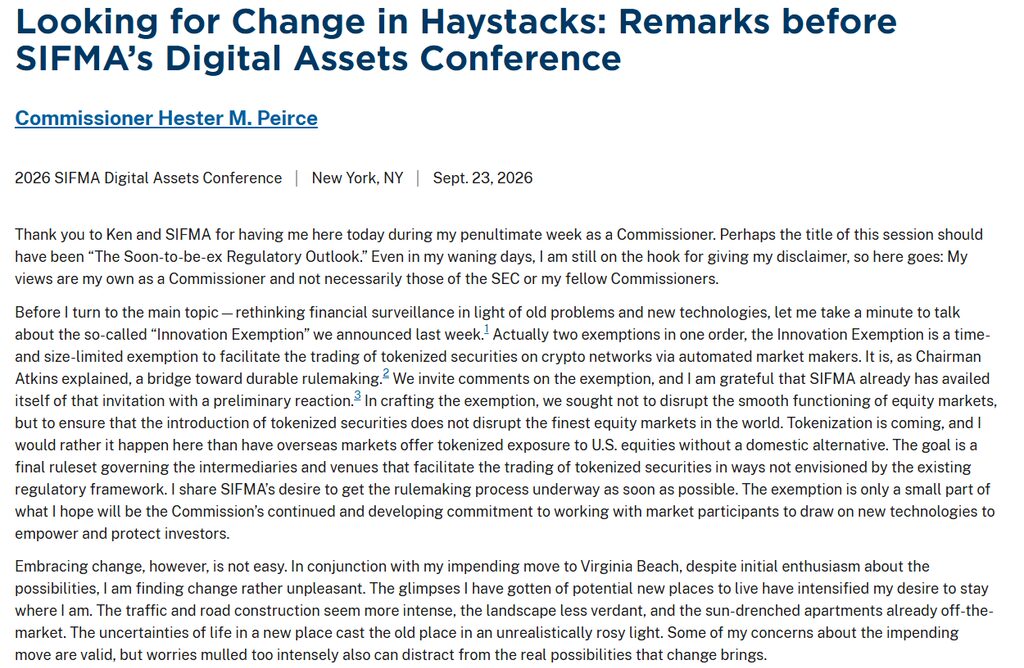
At SIFMA’s Digital Assets Conference on Sept. 23, Peirce described a crossroads for America. For over 50 years, financial rules have relied on collecting and storing vast amounts of personal data, hoping to find the rare criminal, her “needle in a haystack.” In practice, that creates huge data stores that make breaches more damaging, feed data brokers who build consumer profiles, and leave people exposed to censorship and discrimination. AI could make the problem worse.
Zero-Knowledge Proofs and Privacy-Enhancing Technology
The other path, Peirce said, uses privacy-enhancing tools, many of them native to blockchains. Zero-knowledge proofs let people prove they are allowed to transact without revealing extra details, while verifiable credentials can confirm someone is genuine without exposing identity. In her words, the missing piece is a regulatory framework that allows and encourages their adoption. Supporters now say it falls to the industry and policymakers to carry that work forward.
Live market reaction
Disclaimer
This content is for informational purposes only and does not constitute financial, investment, or legal advice. Cryptocurrency trading involves risk and may result in financial loss.
Start trading
with BloFin today
Up to $500 sign-up bonus and zero-fee trading on your first 30 days.
Buy crypto nowⓘ You will be redirected to BloFin
About the author
8+ years covering crypto markets, macro, and geopolitics. Previously at Decrypt and CoinDesk. Focused on the intersection of digital assets and traditional finance.
 Tristan R. ·