

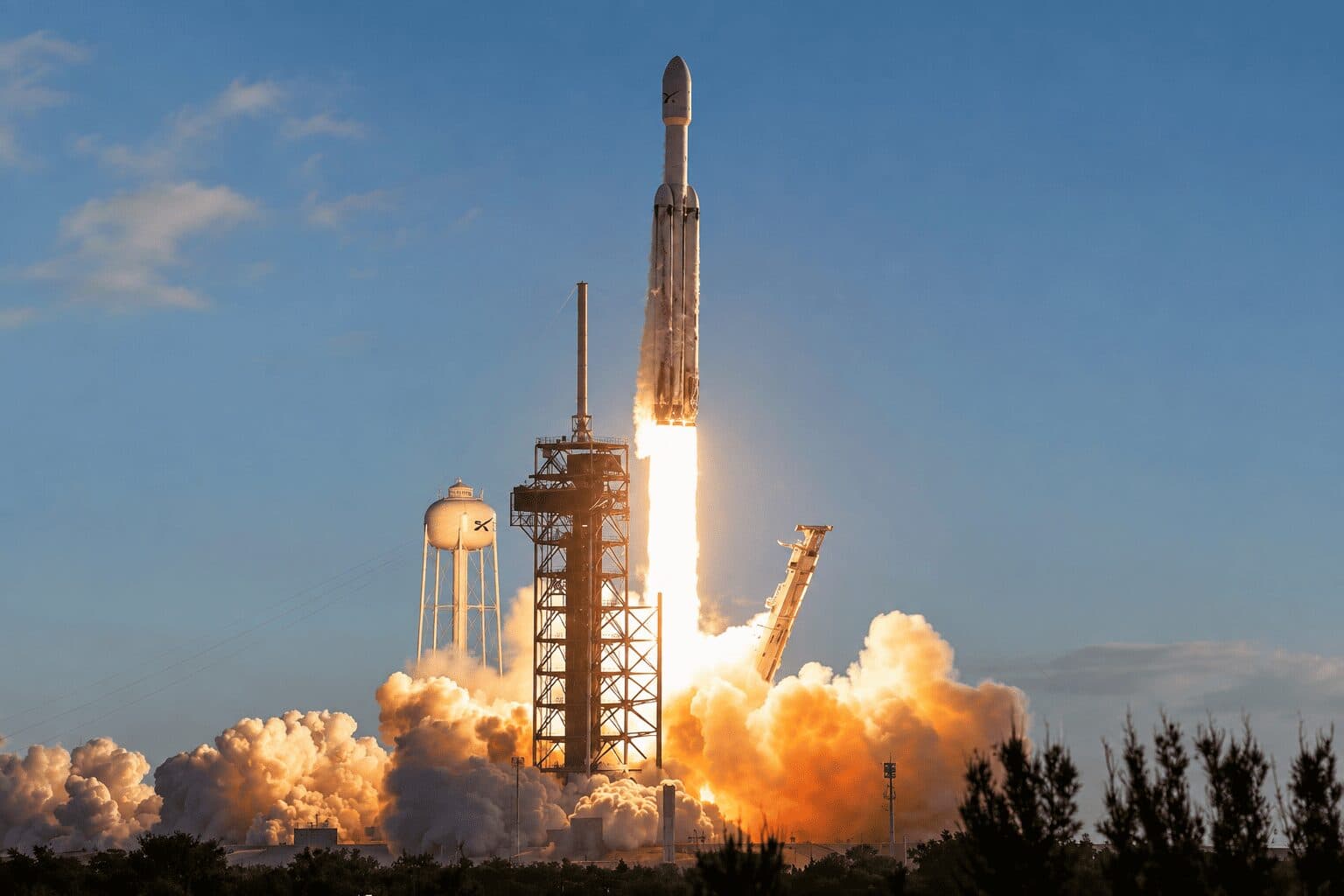
Photo: Illustrative
NASA Launches Roman Space Telescope, a Former Spy Satellite Turned Cosmic Explorer
NASA successfully launched its newest flagship space telescope on Sunday from Cape Canaveral, Florida, sending the roughly $4 billion Nancy Grace Roman Space Telescope into orbit aboard a SpaceX rocket. The mission, expected to last at least five years with the possibility of extending further, will position the telescope nearly a million miles from Earth to begin studying some of the universe's biggest unsolved mysteries.

NASA successfully launched its newest flagship space telescope on Sunday from Cape Canaveral, Florida, sending the roughly $4 billion Nancy Grace Roman Space Telescope into orbit aboard a SpaceX rocket. The mission, expected to last at least five years with the possibility of extending further, will position the telescope nearly a million miles from Earth to begin studying some of the universe’s biggest unsolved mysteries.
From Spy Satellite to Scientific Instrument
Interestingly, the telescope’s origins trace back to a canceled spy satellite program originally developed for U.S. intelligence purposes. After that program was terminated due to budget issues, the hardware was transferred to NASA over a decade ago and redesigned for astronomical research rather than surveillance.
Wide-Angle View Complements Existing Telescopes
Unlike the James Webb Space Telescope, which focuses deeply on distant, faint objects, Roman is designed to capture broad, panoramic views of space at remarkable speed. According to mission scientists, it can survey the entire Milky Way galaxy in about a month, a task that would take a similarly powerful older telescope roughly a century to complete.
Mission Goals Include Dark Matter, Dark Energy and Exoplanets
Roman’s primary objectives include building the most detailed three dimensional map of the universe to date, helping researchers better understand dark matter and dark energy, two components believed to make up the vast majority of the universe’s total content. The telescope is also expected to conduct one of the most extensive exoplanet searches ever undertaken, potentially discovering thousands of new planets beyond our solar system.
Mission teams will spend the coming months preparing the telescope for full operation, with its first high resolution images expected before the end of the year.
Live market reaction
Disclaimer
This content is for informational purposes only and does not constitute financial, investment, or legal advice. Cryptocurrency trading involves risk and may result in financial loss.
Start trading
with BloFin today
Up to $500 sign-up bonus and zero-fee trading on your first 30 days.
Buy crypto nowⓘ You will be redirected to BloFin
About the author
8+ years covering crypto markets, macro, and geopolitics. Previously at Decrypt and CoinDesk. Focused on the intersection of digital assets and traditional finance.

 Guylian ·

.jpeg&w=32&q=75) Laurisa ·
Laurisa ·