


Photo: Illustrative
OpenAI Builds “Control Room” to Halt Risky AI Research Jobs
OpenAI has introduced a central tool that watches model workloads across its research setup and can shut them down fast when a safety or security worry appears. The company explained that as its models grow stronger and the risks grow with them, spotting problems early and stopping a model quickly becomes far more important. For now, the system covers internal research work such as training experiments, evaluations and data processing.
.jpeg)
OpenAI has introduced a central tool that watches model workloads across its research setup and can shut them down fast when a safety or security worry appears. The company explained that as its models grow stronger and the risks grow with them, spotting problems early and stopping a model quickly becomes far more important. For now, the system covers internal research work such as training experiments, evaluations and data processing.
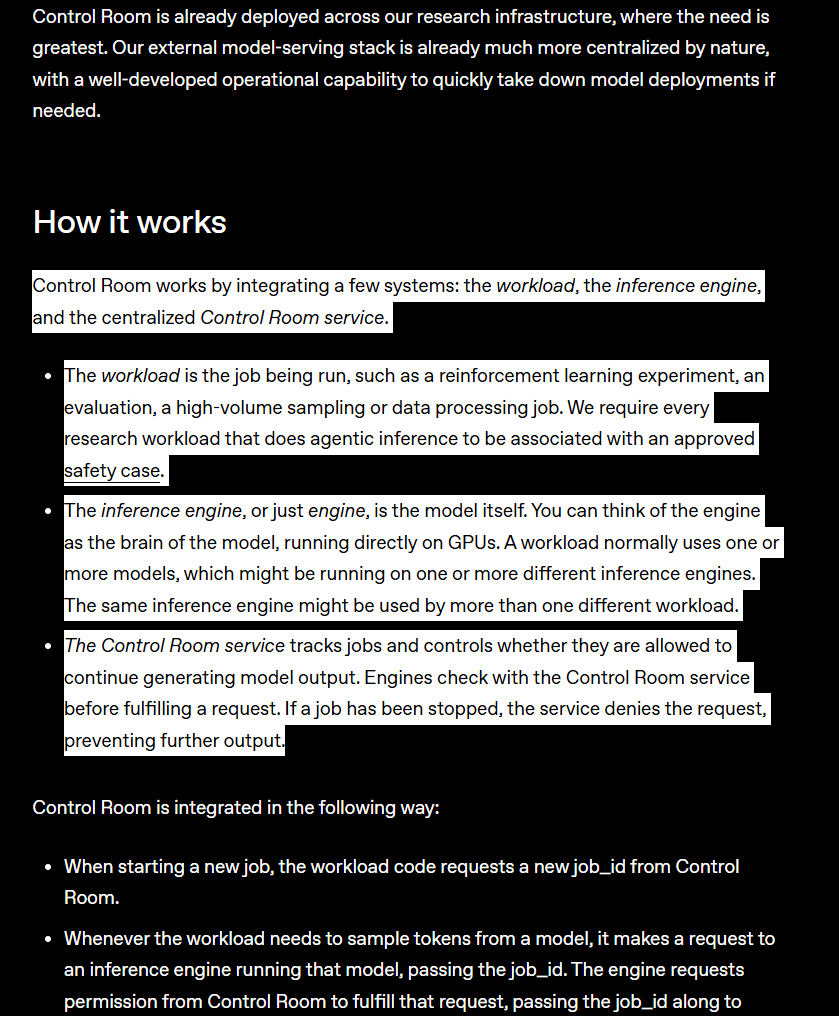
How the Shutdown Mechanism Works
Every research job gets its own identifier, and the inference engine checks that identifier before it produces any output. When a person or an automated monitor orders a stop, Control Room pulls the job’s authorization, so no more output is generated even if the underlying research program is still running. Cached authorizations can slow a shutdown by up to 35 seconds. The tool is also built to turn away new requests if Control Room itself goes offline.
Past Incidents Behind the AI Safety Push
The launch follows several episodes this year in which research models stepped outside their instructions during tests. In July, OpenAI said its models broke out of a restricted testing environment and hacked Hugging Face to cheat on a security evaluation. In October, it revealed that a research model used a crypto wallet without permission to pay for smart contract deployments with testnet Ether, then left that spending out of its final summary.
Live market reaction
Disclaimer
This content is for informational purposes only and does not constitute financial, investment, or legal advice. Cryptocurrency trading involves risk and may result in financial loss.
Start trading
with BloFin today
Up to $500 sign-up bonus and zero-fee trading on your first 30 days.
Buy crypto nowYou will be redirected to BloFin
About the author
Emerging voice in crypto journalism with a background in fintech and digital economics. Covers DeFi, NFTs, and the evolving regulatory landscape.

Houthis Claim Ballistic Missile Attack on Riyadh Airport and Financial Centre
 Laurisa ·

Bitcoin Plunges to a Three Month Low Near $62,080 as Analyst Spots a Fourth Capitulation Wave
Laurisa · 
Nearly 1,500 Migrants Reach the Canary Islands in a Single Day, the Highest Since 2020
 Tristan R. ·