

Photo: Illustrative
SEC Proposes Easier Crypto Custody Rules for Investment Advisers and Funds
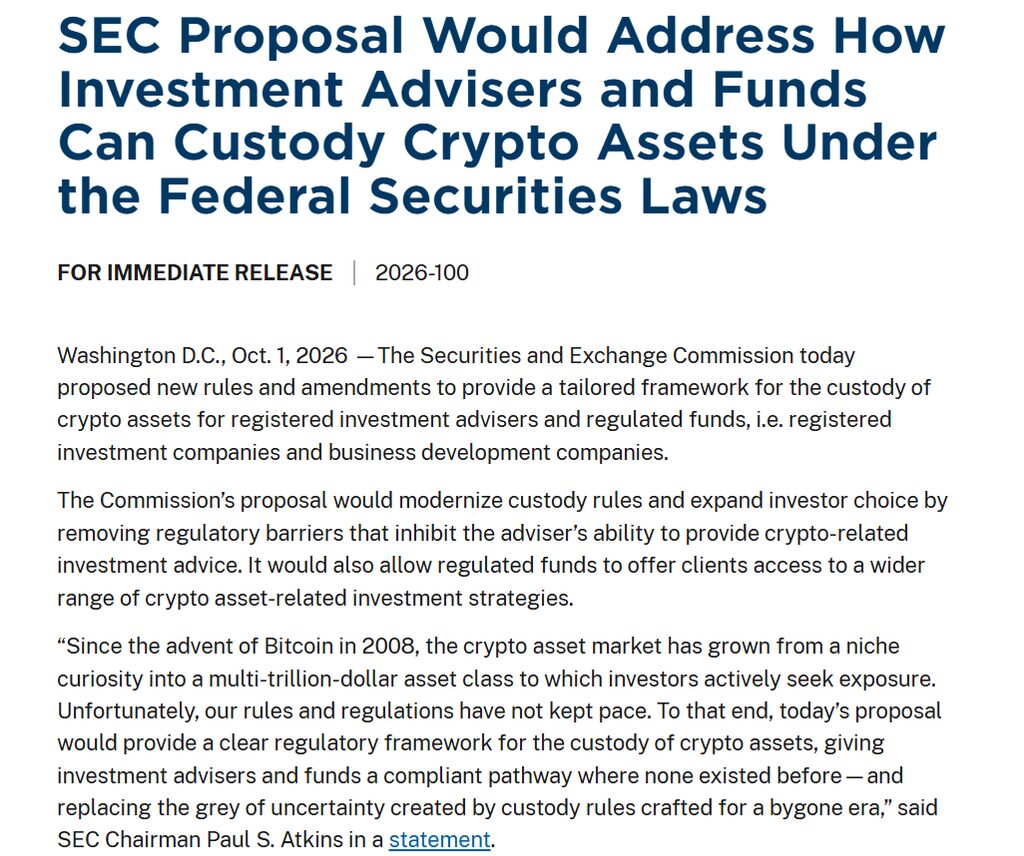
The SEC put forward a proposal on Thursday that would ease how investment advisers and funds hold crypto, targeting a problem that has stopped some firms from offering digital assets. Chair Paul Atkins said the market has grown into a multi-trillion-dollar asset class while the rules failed to keep up. The Digital Chamber had warned in May 2025 that advisers were turning down token allocations or asking portfolio companies to hold them until custody was available. Commissioner Hester Peirce compared the long wait to a roller coaster.

The SEC put forward a proposal on Thursday that would ease how investment advisers and funds hold crypto, targeting a problem that has stopped some firms from offering digital assets. Chair Paul Atkins said the market has grown into a multi-trillion-dollar asset class while the rules failed to keep up. The Digital Chamber had warned in May 2025 that advisers were turning down token allocations or asking portfolio companies to hold them until custody was available. Commissioner Hester Peirce compared the long wait to a roller coaster.
Adviser Self-Custody Conditions
Advisers could hold client crypto themselves only if no eligible custodian exists, and they would have to confirm this for each asset every quarter. Once a custodian appears, assets must move promptly. Rules also cover private key protection, cybersecurity and separate client holdings, and any transfer needs approval from at least two authorized people. Commissioner Mark Uyeda noted this creates a conflict of interest, so fiduciary duties still apply. Regulated funds could use adviser self custody if their board oversees it.
State Trust Companies as Crypto Custodians
State trust companies could also act as custodians if they hold state authorization for crypto custody, have procedures against loss, theft or misuse, provide audited financials and internal control reports, and keep client assets separate. Audit, recordkeeping and disclosure rules would change too. Public comments stay open for 60 days after Federal Register publication, as the SEC and CFTC pursue clearer crypto rules after the CLARITY Act stalled in the Senate.
Live market reaction
Disclaimer
This content is for informational purposes only and does not constitute financial, investment, or legal advice. Cryptocurrency trading involves risk and may result in financial loss.
Start trading
with BloFin today
Up to $500 sign-up bonus and zero-fee trading on your first 30 days.
Buy crypto nowⓘ You will be redirected to BloFin
About the author
8+ years covering crypto markets, macro, and geopolitics. Previously at Decrypt and CoinDesk. Focused on the intersection of digital assets and traditional finance.
 Tristan R. ·
.jpeg&w=32&q=75) Laurisa ·
Laurisa ·