

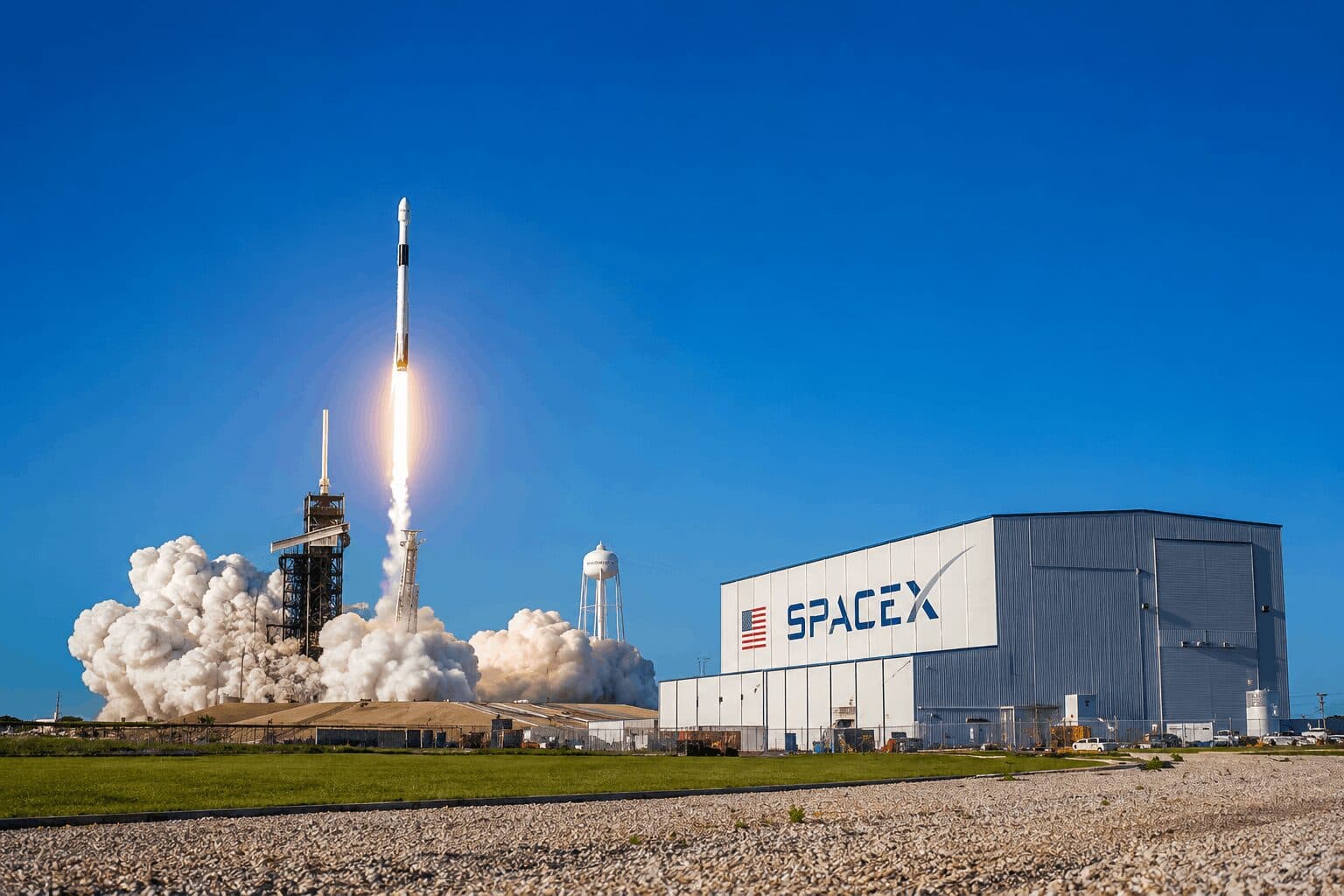
Photo: Illustrative
SpaceX Starship Set for First Orbital Flight on 14th Test Launch
SpaceX plans to launch its 14th Starship test flight at 8:15 a.m. Eastern on Monday from Starbase, near Brownsville, Texas, with the countdown able to slip by up to 75 minutes. If it works, it will be the first time the giant vehicle enters orbit. In the first 13 flights, Starship came down in the Indian Ocean, so any debris would fall far from people. Orbit is the step needed to deploy satellites and later reach the moon and Mars. The 407-foot rocket is the largest and most powerful ever built, and it is designed to be fully and rapidly reusable.
.jpeg)
SpaceX plans to launch its 14th Starship test flight at 8:15 a.m. Eastern on Monday from Starbase, near Brownsville, Texas, with the countdown able to slip by up to 75 minutes. If it works, it will be the first time the giant vehicle enters orbit. In the first 13 flights, Starship came down in the Indian Ocean, so any debris would fall far from people. Orbit is the step needed to deploy satellites and later reach the moon and Mars. The 407-foot rocket is the largest and most powerful ever built, and it is designed to be fully and rapidly reusable.
Why the Orbital Flight Took So Long
Regulators and SpaceX must be sure the ship can leave orbit and land at a chosen spot, avoiding uncontrolled falls like the Chinese Long March 5B stages years ago. Musk had promised an earlier orbital attempt, but failed flights slowed progress. An improved design did better on flights 12 and 13. The July flight showed an in-flight engine restart, which controlled re-entry requires. That flight also deployed 20 next-generation Starlink satellites, but they burned up after 20 minutes on a suborbital path. The booster hit the water hard after icing cut one burn short and only eight of 13 engines relit. SpaceX has changed the engines and software.
Flight Plan and Landing Tests
The booster pushes for about 2 minutes 22 seconds, and the ship’s engines cut off at 8 minutes 11 seconds. A 20-second burn will set a circular orbit about 171 miles up. Over roughly six loops, the ship will deploy 26 Starlink satellites meant to become operational. After nearly nine hours, an 11-second burn will bring it back. SpaceX will not try to catch either stage. The booster will simulate a landing in the Gulf of Mexico and the ship west of Chile, since Musk worries about debris over land.
Live market reaction
Disclaimer
This content is for informational purposes only and does not constitute financial, investment, or legal advice. Cryptocurrency trading involves risk and may result in financial loss.
Start trading
with BloFin today
Up to $500 sign-up bonus and zero-fee trading on your first 30 days.
Buy crypto nowⓘ You will be redirected to BloFin
About the author
Emerging voice in crypto journalism with a background in fintech and digital economics. Covers DeFi, NFTs, and the evolving regulatory landscape.

Wall Street Sept 28 :Bitcoin Slips to $83K as Altcoins Erase Friday’s Gains
 Tristan R. ·
Bitget Restores Bitcoin Withdrawals After $388M Hack as Attacker Swaps ETH on THORChain
Tristan R. · 
Bitcoin Falls Below $83K as Liquidity Hunt Blocks a Push Toward Yearly Open
Tristan R. ·