


Photo: Illustrative
Stablecoins Could Erode Bank Deposits, Standard Chartered Warns
Stablecoins pose a material threat to bank deposits, both in the United States and globally, according to new analysis from Standard Chartered. The warning comes as the US CLARITY Act, which seeks to restrict interest on stablecoin holdings, faces delays, reinforcing concerns about the impact of digital dollars on traditional banking.

Stablecoins pose a material threat to bank deposits, both in the United States and globally, according to new analysis from Standard Chartered. The warning comes as the US CLARITY Act, which seeks to restrict interest on stablecoin holdings, faces delays, reinforcing concerns about the impact of digital dollars on traditional banking.
Deposit Outflows and Market Size
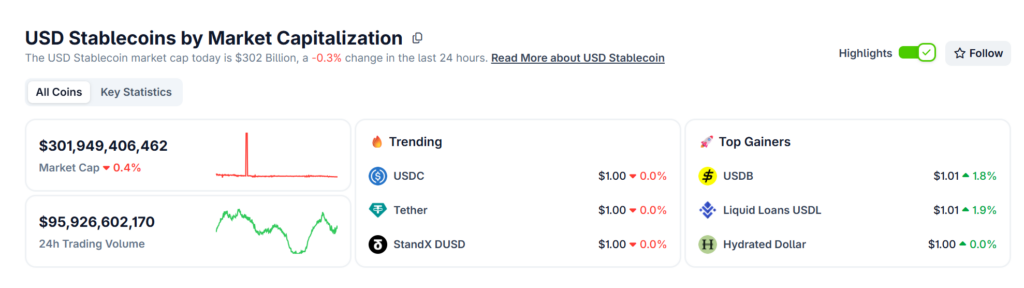
Standard Chartered estimates that US bank deposits could decline by roughly one-third of the stablecoin market capitalization, which currently stands at $301.4 billion for US dollar-pegged stablecoins. The risk is tied directly to deposits, which are critical for generating net interest margin (NIM) income, a core driver of bank profitability.
Regional Banks Most Vulnerable
The analysis finds that regional US banks are the most exposed, as deposits represent a larger share of their revenue base. By contrast, diversified banks and investment banks appear less vulnerable. The scale of risk also depends on whether stablecoin demand is domestic or foreign, and how issuers manage their reserves.
Major stablecoin issuers hold minimal reserves in bank deposits, limiting re-depositing into the banking system. Looking ahead, if stablecoins reach a $2 trillion market cap, up to $500 billion could exit developed-market banks by 2028, with emerging markets facing even larger outflows.
Disclaimer
This content is for informational purposes only and does not constitute financial, investment, or legal advice. Cryptocurrency trading involves risk and may result in financial loss.
Live market reaction
Disclaimer
This content is for informational purposes only and does not constitute financial, investment, or legal advice. Cryptocurrency trading involves risk and may result in financial loss.
Start trading
with BloFin today
Up to $500 sign-up bonus and zero-fee trading on your first 30 days.
Buy crypto nowⓘ You will be redirected to BloFin
About the author
8+ years covering crypto markets, macro, and geopolitics. Previously at Decrypt and CoinDesk. Focused on the intersection of digital assets and traditional finance.

 Guylian ·

.jpeg&w=32&q=75) Laurisa ·
Laurisa ·