

Photo: Illustrative
Stablecoins Not an Immediate Threat to Banks as Market Cap Surpasses $300 Billion
Stablecoins are unlikely to disrupt traditional banking operations in the near term, according to analysis from Moody’s Investors Service. The assessment comes as the global stablecoin market capitalization surpassed $300 billion at the end of last year, highlighting rapid growth but still limited direct competition with banks.
.jpeg)
Limited Short-Term Disruption to Banking Sector
Stablecoins are unlikely to disrupt traditional banking operations in the near term, according to analysis from Moody’s Investors Service. The assessment comes as the global stablecoin market capitalization surpassed $300 billion at the end of last year, highlighting rapid growth but still limited direct competition with banks.
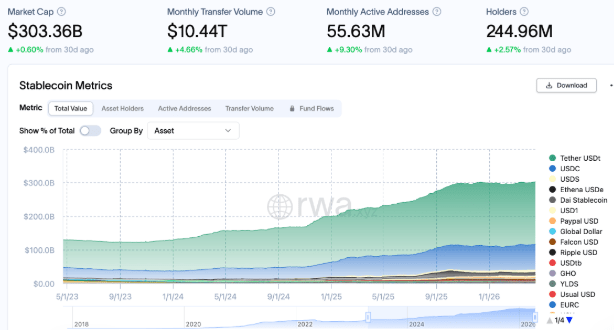
Abhi Srivastava, an associate vice president in Moody’s Digital Economy Group, noted that stablecoin adoption remains concentrated in specific areas such as payments, cross-border transfers and onchain finance. Despite expanding use cases, the overall influence on core banking functions such as deposits and lending remains relatively small at this stage.
A major factor limiting competition is current US regulation that restricts yield-bearing stablecoins. Without the ability to offer interest-like returns, stablecoins are less attractive as direct replacements for traditional bank deposits, reducing the likelihood of large-scale deposit migration in the short term.
Regulatory Uncertainty and Long-Term Competition Risks
However, analysts warn that long-term risks remain. Continued growth in stablecoins and tokenized real-world assets (RWAs) could gradually pressure banks by shifting customer funds away from traditional accounts. Such outflows could reduce lending capacity and reshape competition within the financial system.
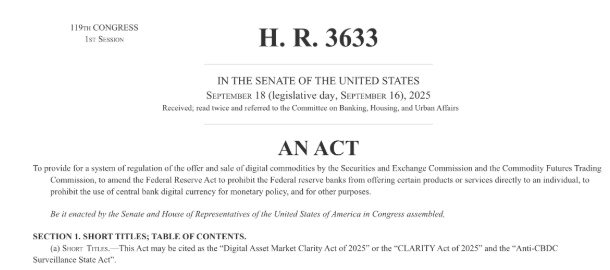
Debate around the Digital Asset Market Clarity Act of 2025, also known as the CLARITY Act, reflects these concerns. The proposed legislation aims to define regulatory oversight and asset classification in crypto markets but has faced resistance from both crypto firms and banking stakeholders, leaving the future regulatory path uncertain.
Disclaimer
This content is for informational purposes only and does not constitute financial, investment, or legal advice. Cryptocurrency trading involves risk and may result in financial loss.
Live market reaction
Disclaimer
This content is for informational purposes only and does not constitute financial, investment, or legal advice. Cryptocurrency trading involves risk and may result in financial loss.
Start trading
with BloFin today
Up to $500 sign-up bonus and zero-fee trading on your first 30 days.
Buy crypto nowⓘ You will be redirected to BloFin
About the author
Emerging voice in crypto journalism with a background in fintech and digital economics. Covers DeFi, NFTs, and the evolving regulatory landscape.

 Tristan R. ·
.jpeg&w=32&q=75) Laurisa ·
Laurisa ·