


Photo: Illustrative
Strive Adds 1,107 Bitcoin, Total Holdings Climb Above 27,400 BTC
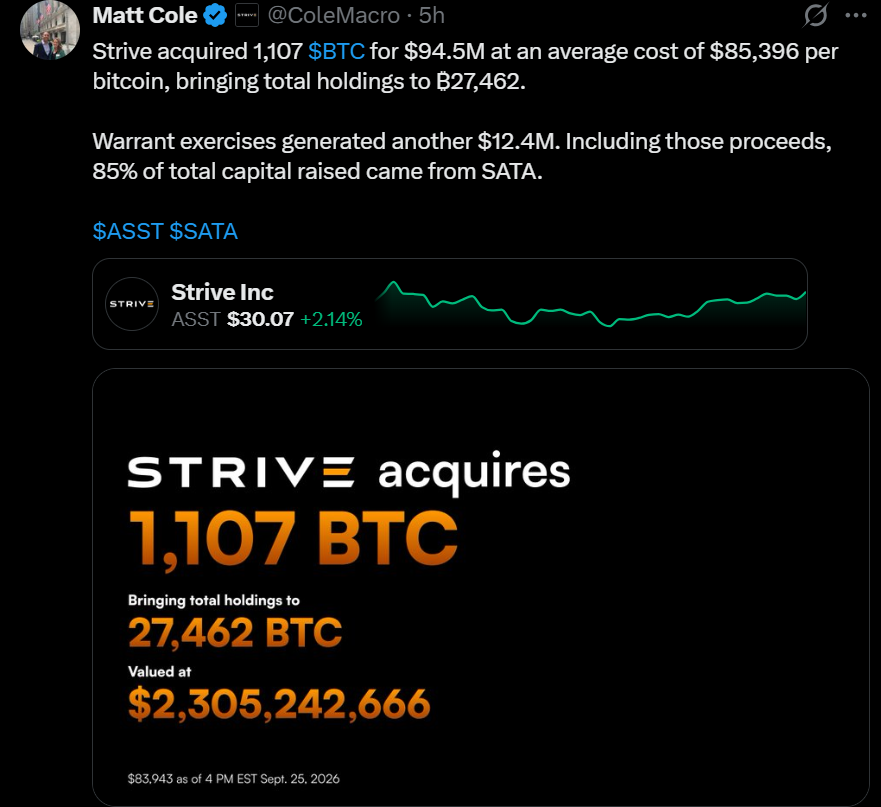
Strive bought another 1,107 BTC for about $94.5 million last week, pushing its treasury to 27,462 BTC as it chases a year-end goal of becoming a top-two public bitcoin holder.
.jpeg)
Strive bought another 1,107 BTC for about $94.5 million last week, pushing its treasury to 27,462 BTC as it chases a year-end goal of becoming a top-two public bitcoin holder.
Strive Bitcoin Purchase and Holdings
The company paid an average of $85,396 per coin between Sept. 21 and Sept. 25, according to a Monday regulatory filing. The buy was slightly below the prior week’s 1,355 BTC. Bitcoin itself slipped to a one-week low near $83,000 on Monday.
How Strive Funded the Bitcoin Buy
Sales of its SATA perpetual preferred stock supplied 85% of last week’s capital, up from 57.7% a week earlier. Warrant exercises added $12.4 million in gross proceeds, down from $21.2 million the week before.
Strive vs Twenty One: Race for Second Place
Strive remains the fifth largest public bitcoin holder, behind Strategy, Twenty One, Metaplanet and MARA. CEO Matt Cole has said second place by the end of 2026 is possible, though not his base case. Strive needs another 16,053 BTC to pass Twenty One’s 43,514 BTC, assuming Twenty One buys nothing more. With 13 full weeks left in the year, that means averaging about 1,235 BTC per week.
Strive’s common stock is down 0.3% on Monday at $29.35 and up nearly 70% year-to-date. Strategy is down 6% and Twenty One has lost 26% over the same period.
Live market reaction
Disclaimer
This content is for informational purposes only and does not constitute financial, investment, or legal advice. Cryptocurrency trading involves risk and may result in financial loss.
Start trading
with BloFin today
Up to $500 sign-up bonus and zero-fee trading on your first 30 days.
Buy crypto nowⓘ You will be redirected to BloFin
About the author
Emerging voice in crypto journalism with a background in fintech and digital economics. Covers DeFi, NFTs, and the evolving regulatory landscape.

 Tristan R. ·