

Photo: Illustrative
Tokenized Stock Markets Face Liquidity Fragmentation Risks From SEC Rule Shift
US regulators are moving toward an “innovation exemption” that would let third party platforms list tokenized stocks without needing approval from the original company. This change could reshape how equities are traded by allowing the same stock to exist on multiple blockchain platforms at the same time.

US regulators are moving toward an “innovation exemption” that would let third party platforms list tokenized stocks without needing approval from the original company. This change could reshape how equities are traded by allowing the same stock to exist on multiple blockchain platforms at the same time.
Liquidity fragmentation across trading platforms
Researchers warn this could break up liquidity. Instead of trading being concentrated on major exchanges like NYSE or Nasdaq, buying and selling could spread across many blockchain networks and decentralized platforms.
Ryan Yoon, director of research at Tiger Research, says traditional finance sees this split of centralized liquidity as a “serious structural threat.” He explains that when orders are spread across platforms, trading volume that should stay in one place becomes scattered.
This leads to price differences between platforms, higher slippage for large trades, and weaker overall market efficiency.
Revenue fragmentation risk for exchanges
Another concern is revenue fragmentation. As trading moves across different tokenized platforms, fees that normally go to domestic exchanges may shift offshore. This could affect financial competitiveness and reduce income for traditional exchanges.
Experts also warn about “disconnected pools,” where some platforms may not have enough buyers or sellers. This can cause pricing errors and unstable market behavior.
Growing adoption despite risks
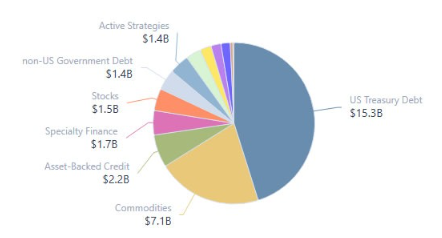
Even with risks, tokenized stocks offer faster settlement, fractional ownership, lower costs, and global access. Real-world asset open interest has also reached about $2.6 billion, showing growing activity.
Live market reaction
Disclaimer
This content is for informational purposes only and does not constitute financial, investment, or legal advice. Cryptocurrency trading involves risk and may result in financial loss.
Start trading
with BloFin today
Up to $500 sign-up bonus and zero-fee trading on your first 30 days.
Buy crypto nowⓘ You will be redirected to BloFin
About the author
8+ years covering crypto markets, macro, and geopolitics. Previously at Decrypt and CoinDesk. Focused on the intersection of digital assets and traditional finance.

 Guylian ·

.jpeg&w=32&q=75) Laurisa ·
Laurisa ·