

Photo: Illustrative
US Justice Department Moves to Seize $1.2 Billion in Crypto Tied to North Korea’s Binance Hack
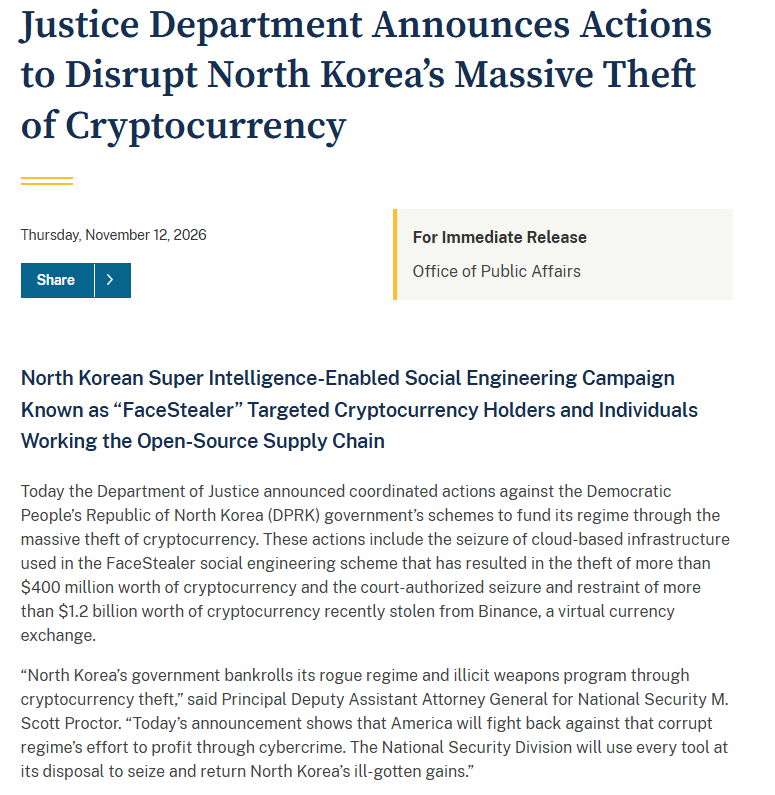
American authorities are going after the money and the tools behind two major North Korean hacking operations. Prosecutors have won approval to seize $1.2 billion in digital assets taken in the October 29 attack on Binance, which the FBI links to a military-backed group called TraderTraitor. More than $6 billion left the exchange that day, and officials say over $2.7 billion has already been frozen with help from private firms. Investigators are still following the stolen coins as they pass through blockchain bridges, mixers and exchanges, hoping to lock down more.

American authorities are going after the money and the tools behind two major North Korean hacking operations. Prosecutors have won approval to seize $1.2 billion in digital assets taken in the October 29 attack on Binance, which the FBI links to a military-backed group called TraderTraitor. More than $6 billion left the exchange that day, and officials say over $2.7 billion has already been frozen with help from private firms. Investigators are still following the stolen coins as they pass through blockchain bridges, mixers and exchanges, hoping to lock down more.
DOJ Statement on Stolen Cryptocurrency
M. Scott Proctor, a senior national security official at the Justice Department, said Pyongyang uses crypto theft to fund its government and weapons programs. He added that his division will use every available tool to seize the stolen funds and return them.
How the FaceStealer Scam Works
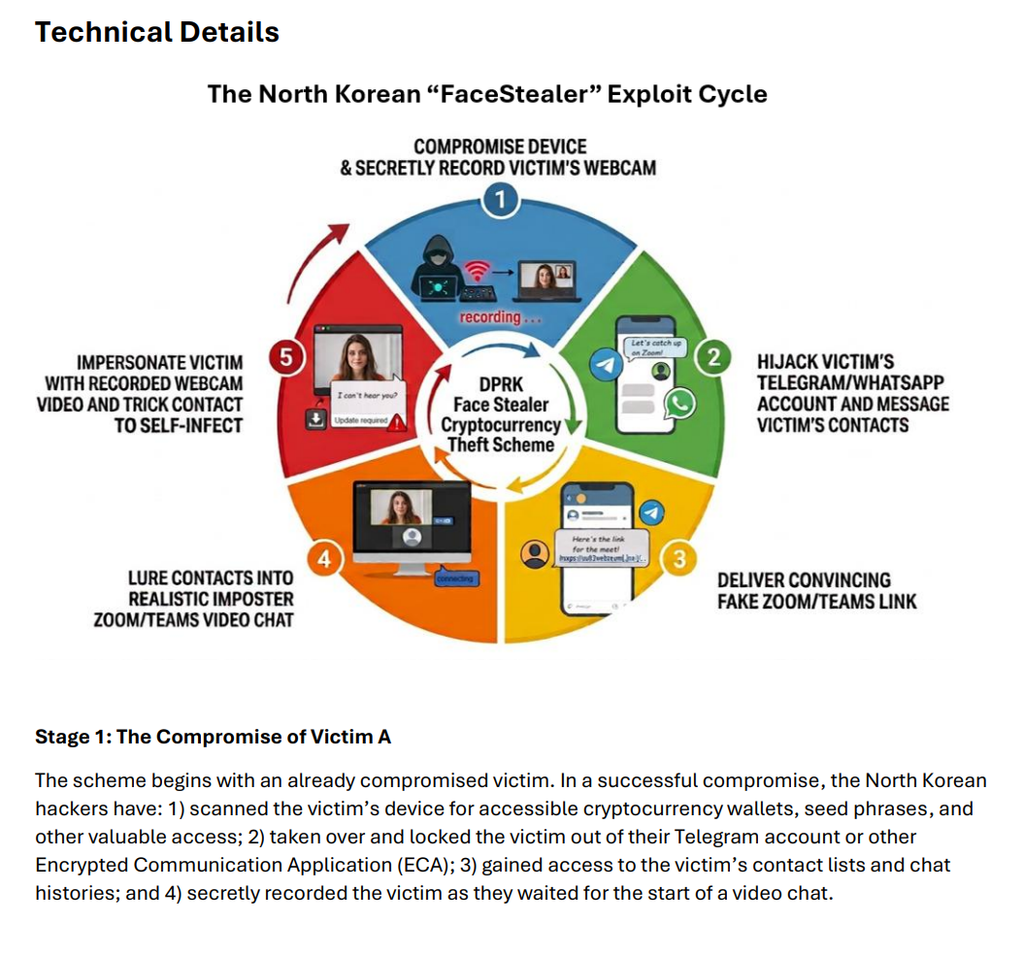
In a separate action, federal agents took control of cloud servers used in the FaceStealer campaign, which the FBI says has drained over $400 million in the past 18 months. Victims are pulled into fake video calls that look like Zoom or Microsoft Teams. The hackers pose as people the target trusts, using webcam recordings stolen from earlier victims and, more and more, AI-made deepfake video. Once inside the call, they claim a technical fault exists and tell the person to install software or run a command. That step quietly loads malware that steals crypto and opens the door to other systems.
Risks for Open-Source Developers
The FBI recovered more than 900 webcam videos gathered by the attackers. The group has also gone after developers who maintain widely used open-source software, and the agency warned that breaking into one developer’s device could give hackers a path into much larger systems.
Live market reaction
Disclaimer
This content is for informational purposes only and does not constitute financial, investment, or legal advice. Cryptocurrency trading involves risk and may result in financial loss.
Start trading
with BloFin today
Up to $500 sign-up bonus and zero-fee trading on your first 30 days.
Buy crypto nowYou will be redirected to BloFin
About the author
8+ years covering crypto markets, macro, and geopolitics. Previously at Decrypt and CoinDesk. Focused on the intersection of digital assets and traditional finance.

Air Force’s Cloud One Platform Reportedly Hit by Hackers, Putting Sensitive Military Data at Risk
 Guylian ·

Australia Imposes Counterterrorism Financing Sanctions on Two Men Over Iran Directed Arson Attacks
 Laurisa ·

Ethereum Developers Set Dec. 15 for Glamsterdam Hoodi Testnet Launch After Gas Pricing Delay
Guylian ·