

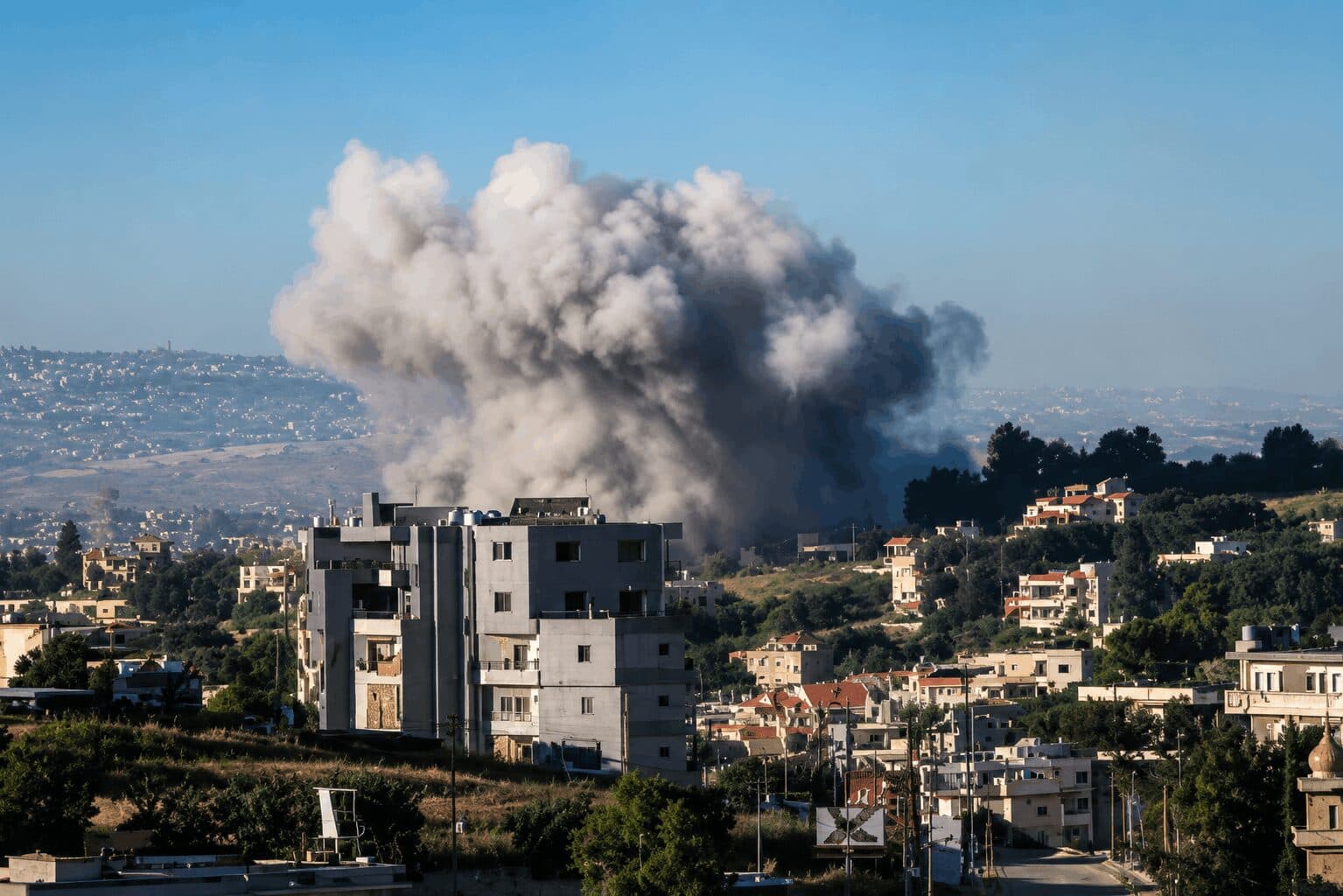
Photo: Illustrative
US Strikes Iranian Radar Sites After Drone Launches Escalate Gulf Tensions
US forces struck Iranian radar and surveillance sites after intercepting drones launched near the Strait of Hormuz, marking another escalation in the ongoing conflict.
.jpeg)
US forces struck Iranian radar and surveillance sites after intercepting drones launched near the Strait of Hormuz, marking another escalation in the ongoing conflict.
Iran responded with missile attacks targeting U.S. bases in the Gulf, while regional air defenses in Kuwait and Bahrain moved to intercept incoming threats.
According to U.S. Central Command, American forces intercepted four Iranian drones that were believed to be targeting maritime traffic in the strategic waterway. Following the interceptions, U.S. forces struck surveillance and radar installations located in Goruk and on Qeshm Island, both positioned along the Strait of Hormuz.
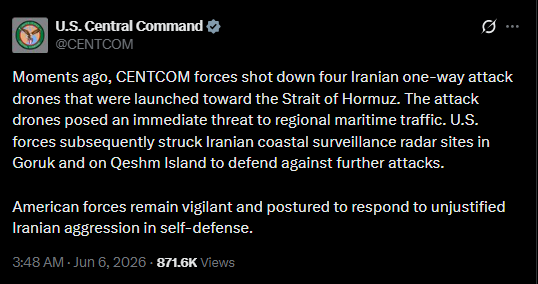
The latest military action adds to a conflict that has continued for more than three months, despite ongoing diplomatic efforts aimed at securing a ceasefire and broader peace agreement.
Iran Claims Retaliatory Missile Attacks
Iran’s Revolutionary Guard Corps said it responded by launching missiles toward U.S. military facilities in the Gulf region. Iranian officials also claimed responsibility for attacks on U.S. bases in Kuwait and Bahrain.
However, U.S. military officials reported that six missiles were intercepted and another failed to reach its intended target. Kuwaiti state media confirmed air defense systems were active against incoming missile and drone threats, while authorities in Bahrain activated emergency sirens and advised residents to seek shelter.
Strait of Hormuz Remains a Key Flashpoint
The Strait of Hormuz remains central to the conflict. Before the war, roughly one-fifth of global oil shipments passed through the waterway. Iran has sought greater leverage over the route while demanding sanctions relief, access to frozen assets and the removal of restrictions affecting its oil exports and ports.
President Donald Trump said Iran’s military capabilities have been significantly weakened, estimating that Tehran retains roughly 21% to 22% of its missile arsenal after months of fighting.
Regional Fighting Continues Beyond Iran
Violence has also intensified in Lebanon, where Hezbollah reported attacks on Israeli forces in southern Lebanon. Iran continues to support Hezbollah and has linked any broader peace agreement to an Israeli withdrawal from southern Lebanese territory.
Despite ongoing diplomatic efforts and ceasefire discussions, fighting across multiple fronts continues to threaten regional stability, global energy markets and international trade routes.
Live market reaction
Disclaimer
This content is for informational purposes only and does not constitute financial, investment, or legal advice. Cryptocurrency trading involves risk and may result in financial loss.
Start trading
with BloFin today
Up to $500 sign-up bonus and zero-fee trading on your first 30 days.
Buy crypto nowⓘ You will be redirected to BloFin
About the author
Emerging voice in crypto journalism with a background in fintech and digital economics. Covers DeFi, NFTs, and the evolving regulatory landscape.
 Tristan R. ·
.jpeg&w=32&q=75) Laurisa ·
Laurisa ·