

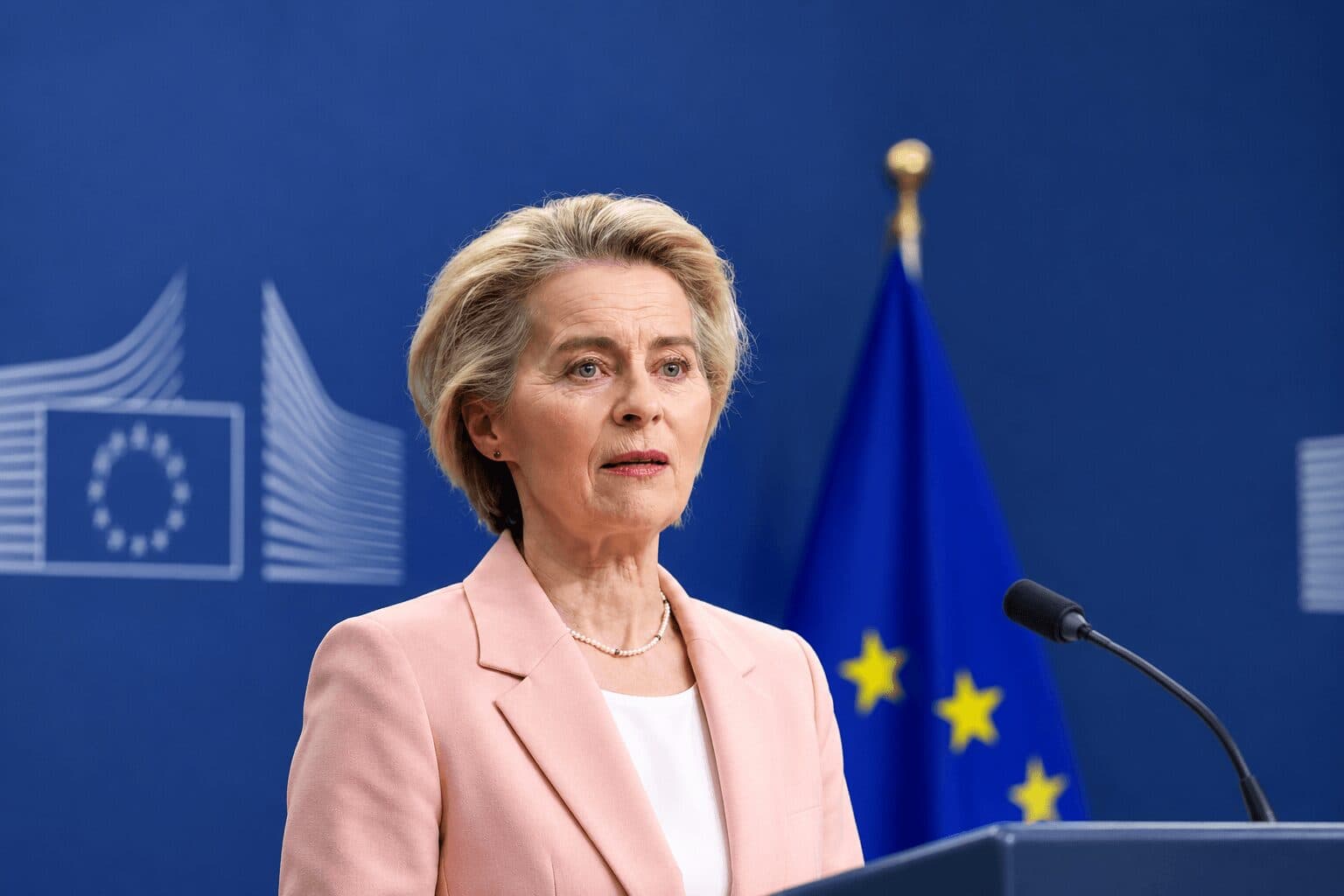
Photo: Illustrative
Von Der Leyen Proposes Canada Become EU’s First Associate Member
European Commission President Ursula von der Leyen proposed Wednesday that Canada become the EU's first associate member, framing the move as a way to strengthen alliances among democracies amid growing global instability.
.jpeg)
European Commission President Ursula von der Leyen proposed Wednesday that Canada become the EU’s first associate member, framing the move as a way to strengthen alliances among democracies amid growing global instability.
A Symbolic Moment In Strasbourg
The proposal drew a standing ovation from EU lawmakers during von der Leyen’s annual State of the Union address, followed by an embrace between her and Canadian Prime Minister Mark Carney, who attended the speech. Von der Leyen said new partnerships were necessary given the current global climate, citing shared challenges facing both the EU and Canada, including Russia’s war in Ukraine, trade tensions with the United States, and rising geopolitical pressure from China. She emphasized shared democratic values and cooperation on issues ranging from AI to Arctic policy.
Uncertain Path Forward
Any formal move toward associate membership would require approval from EU member states rather than von der Leyen alone. The EU has historically been cautious about such flexible alliance structures, having previously shown limited enthusiasm for a similar proposal regarding Ukraine. One EU diplomat expressed uncertainty over what the plan would actually entail, raising concerns that expectations may be getting ahead of concrete details. Trade friction also remains a hurdle, with Canada continuing to protect its telecommunications and dairy industries from further EU market access.
Canada Signals Interest, Not Full Membership
Carney said earlier in the week that Canada is seeking a closer, distinct alliance with the EU rather than formal membership, with more detailed talks expected at a Canada EU summit in Montreal this October. His European visit follows a breakdown in trade relations with the United States last month, prompting Canada to pursue efforts to diversify its trade relationships beyond its southern neighbor.
Live market reaction
Disclaimer
This content is for informational purposes only and does not constitute financial, investment, or legal advice. Cryptocurrency trading involves risk and may result in financial loss.
Start trading
with BloFin today
Up to $500 sign-up bonus and zero-fee trading on your first 30 days.
Buy crypto nowⓘ You will be redirected to BloFin
About the author
Emerging voice in crypto journalism with a background in fintech and digital economics. Covers DeFi, NFTs, and the evolving regulatory landscape.
.jpeg&w=32&q=75) Laurisa ·
Laurisa · 

 Tristan R. ·