

The Commodity Futures Trading Commission has filed a lawsuit against the state of New York, escalating an ongoing legal conflict over who has authority to regulate prediction market platforms. The federal agency argues that such markets fall under its exclusive jurisdiction and cannot be restricted by individual states under gambling laws.
This latest action follows recent moves by New York regulators targeting platforms operated by Coinbase and Gemini, which the state claims violate state-level gambling regulations. New York has also previously pursued action against Kalshi, requiring it to halt certain sports related contracts.
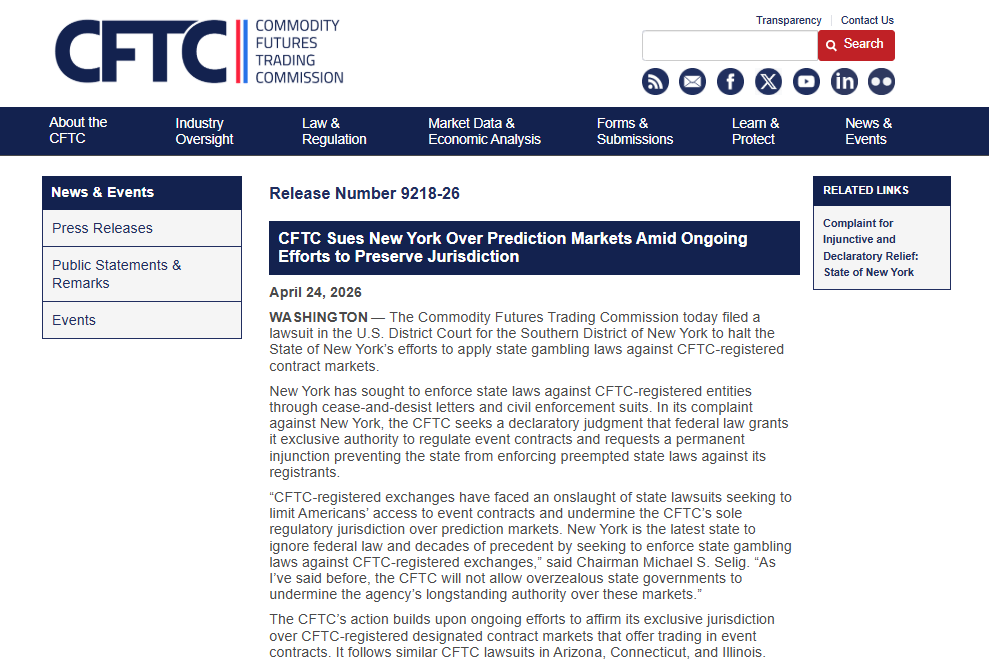
Federal-State Conflict Over Event Contracts Expands
The CFTC, led by Chairman Mike Selig, maintains that federally registered exchanges have exclusive authority over commodity futures, options, and swaps, including event based prediction contracts. The agency has already taken similar legal action against Arizona, Connecticut, and Illinois, reinforcing its stance that prediction markets fall strictly under federal oversight.
However, opposition is growing at the state level. A coalition of 37 state attorneys general, including New York Attorney General Letitia James, has argued that prediction markets threaten states’ ability to enforce gambling protections and consumer safeguards.
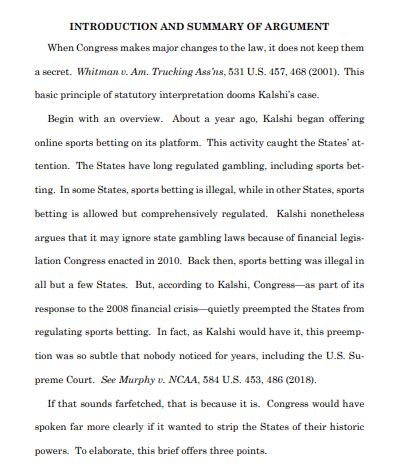
Political Tensions Rise Over Regulation of Prediction Markets
New York Governor Kathy Hochul defended the state’s actions, stating that gambling laws are intended to protect consumers regardless of whether betting occurs through casinos or online prediction platforms. She emphasized that the state will continue to enforce its regulations against firms operating in violation of local law.
The legal dispute highlights a widening divide between federal regulators and state governments over how prediction markets should be classified, regulated, and accessed, with both sides preparing for extended court battles over jurisdiction and consumer protection authority.
Disclaimer
This content is for informational purposes only and does not constitute financial, investment, or legal advice. Cryptocurrency trading involves risk and may result in financial loss.