

Iran has begun collecting toll revenue from the Strait of Hormuz, according to senior parliamentary official Hamidreza Hajibabaei, who said the first payments were transferred to the Central Bank. A Pentagon assessment reported by the Washington Post estimates it could take up to six months to fully clear naval mines reportedly laid in the strait, raising the risk of prolonged disruption to global oil shipping routes.
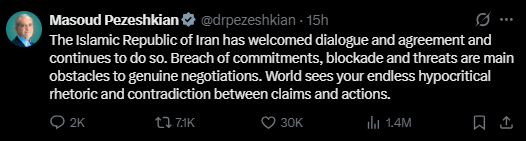
Iranian President Masoud Pezeshkian said on X;
The U.S. Central Command stated it directed 31 vessels to turn back or reroute, most of them oil tankers, as part of ongoing maritime security operations. Tehran has said it will not reopen the strait while US sanctions and port restrictions remain in place, escalating geopolitical tensions.
Oil Prices Surge on Supply Risk Concerns
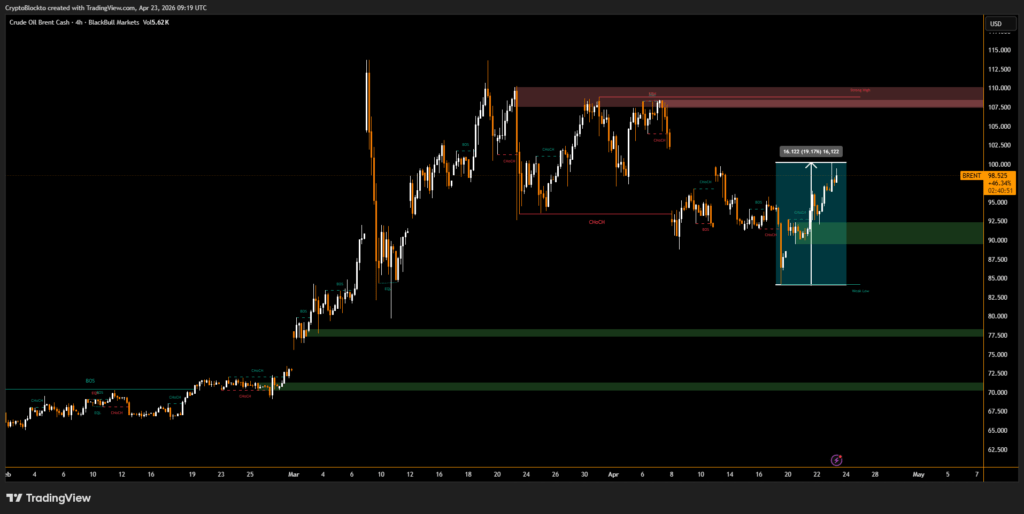
Brent crude rose above $99 per barrel, while West Texas Intermediate climbed past $96, reflecting market fears of supply shocks through one of the world’s most critical energy corridors.
Regional Conflict Spreads Across Multiple Fronts
Iran also carried out an execution of an individual accused of links to opposition groups and alleged cooperation with Israeli intelligence services. At the same time, Israel and Lebanon held talks in Washington focused on extending a fragile ceasefire amid ongoing cross-border tensions and strikes in southern Lebanon.
The combination of maritime restrictions, military escalation, and diplomatic uncertainty continues to intensify volatility in global energy and geopolitical markets.
Disclaimer
This content is for informational purposes only and does not constitute financial, investment, or legal advice. Cryptocurrency trading involves risk and may result in financial loss.