


Photo: Illustrative
Bank of Korea Study Finds Dollar-Backed Stablecoins Can Weaken Local Currencies
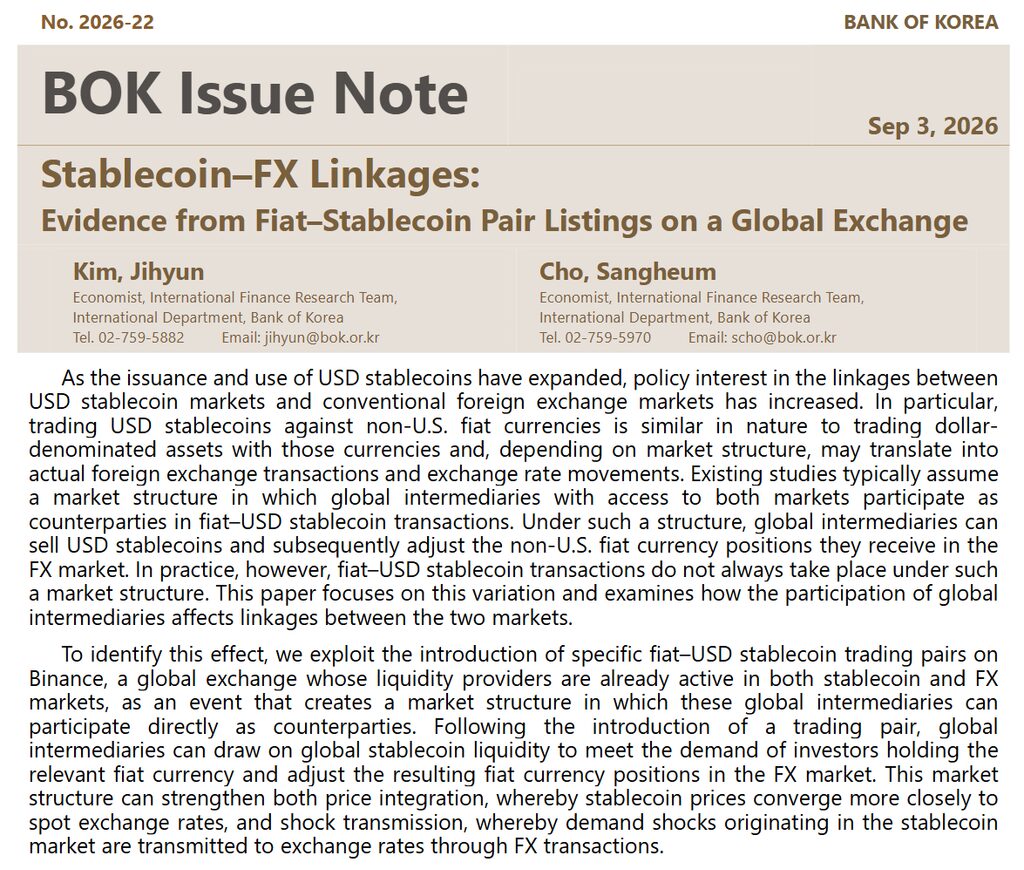
A new study from the Bank of Korea suggests that growing demand for dollar backed stablecoins can put downward pressure on national currencies once major global exchanges allow investors to purchase these tokens directly using local currency. Researchers examined what happened after a major crypto exchange introduced direct trading pairs between several national currencies and popular dollar-pegged stablecoins.

A new study from the Bank of Korea suggests that growing demand for dollar backed stablecoins can put downward pressure on national currencies once major global exchanges allow investors to purchase these tokens directly using local currency. Researchers examined what happened after a major crypto exchange introduced direct trading pairs between several national currencies and popular dollar-pegged stablecoins.
The study found that when investors buy stablecoins using local currency, professional market makers supplying those tokens have an incentive to sell that local currency and purchase dollars to balance their positions, creating a direct channel through which stablecoin demand can influence exchange rates.
Measurable Impact on Currency Values
According to the research, local stablecoin price premiums dropped notably after these direct fiat to stablecoin trading pairs were introduced, with tokens tending to flow from global exchanges into local markets whenever domestic prices rose above global exchange rates. In currencies with direct stablecoin trading pairs available, increased buying pressure correlated with measurable currency depreciation, whereas currencies without such direct pairings, including the South Korean won, showed limited exchange rate impact but instead saw local stablecoin premiums rise.
Korea’s Rapidly Growing Stablecoin Market
The findings arrive as stablecoin adoption in South Korea has expanded rapidly, with local currency purchases of these tokens reaching billions of dollars over the past year, making the country the largest local currency stablecoin market across the Asia-Pacific region.
Researchers noted that if future regulations allow greater corporate and international participation in crypto markets, deeper foreign exchange liquidity and broader international use of the won could help the country better absorb potential currency market shocks as ties between stablecoins and traditional currency markets continue to strengthen.
A related analysis also found that rising public interest in cryptocurrency investment, measured through online search activity, was associated with modest currency depreciation and higher stablecoin premiums in at least one other major currency examined in the study.
Live market reaction
Disclaimer
This content is for informational purposes only and does not constitute financial, investment, or legal advice. Cryptocurrency trading involves risk and may result in financial loss.
Start trading
with BloFin today
Up to $500 sign-up bonus and zero-fee trading on your first 30 days.
Buy crypto nowⓘ You will be redirected to BloFin
About the author
Covers Bitcoin, on-chain data and market structure. Breaks down what the charts and wallet flows are actually saying, without the hype.

 Guylian ·

.jpeg&w=32&q=75) Laurisa ·
Laurisa ·