

Photo: Illustrative
Bitcoin Enters Technical ‘No Man’s Land’ as Analysts See Key Support Near $45,000
Bitcoin has slipped below $60,000, leaving the cryptocurrency in what analysts describe as a technical "no man's land." The price is now trading beneath several important resistance levels, suggesting bearish momentum remains in control unless buyers reclaim key thresholds.

Bitcoin has slipped below $60,000, leaving the cryptocurrency in what analysts describe as a technical “no man’s land.” The price is now trading beneath several important resistance levels, suggesting bearish momentum remains in control unless buyers reclaim key thresholds.
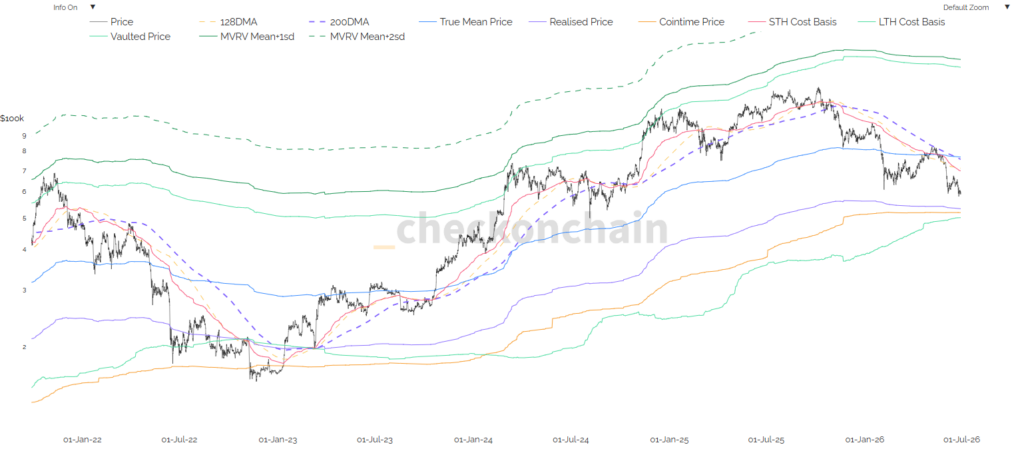
Among the major resistance levels are the True Mean Price at $76,300, the 200-day moving average at $75,500, the 128-day moving average at $70,900, and the Short-Term Holder Cost Basis at $69,600. Together, these indicators point to continued market weakness.
Historical Bear Market Data Points to $45,000
Below the current price, analysts identify the Long-Term Holder Cost Basis at $49,900, the Coin Time Price at $51,700, and the Realized Price at $53,200 as major support zones.
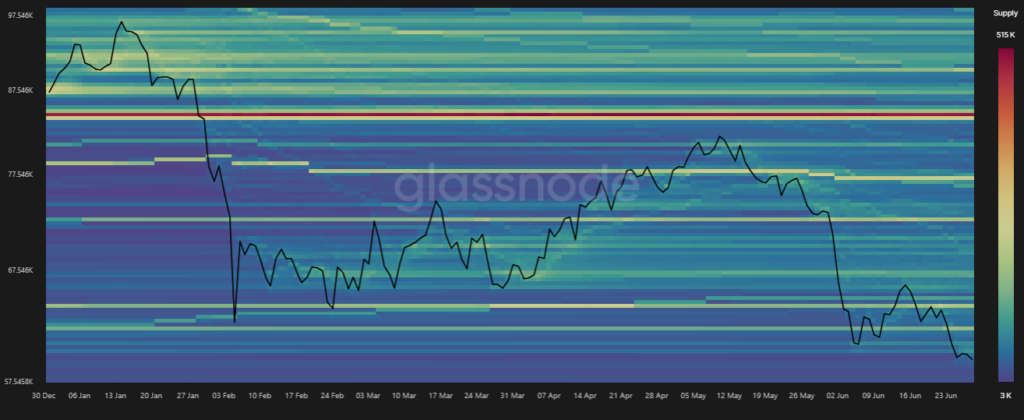
Previous bear market cycles showed Bitcoin typically falling 5% to 10% below these onchain valuation levels before establishing a market bottom. If history follows a similar pattern, analysts believe Bitcoin could decline toward $45,000 before finding stronger long-term support.
While the outlook remains cautious, reclaiming key resistance levels would be necessary to improve Bitcoin’s broader market trend.
Live market reaction
Disclaimer
This content is for informational purposes only and does not constitute financial, investment, or legal advice. Cryptocurrency trading involves risk and may result in financial loss.
Start trading
with BloFin today
Up to $500 sign-up bonus and zero-fee trading on your first 30 days.
Buy crypto nowⓘ You will be redirected to BloFin
About the author
8+ years covering crypto markets, macro, and geopolitics. Previously at Decrypt and CoinDesk. Focused on the intersection of digital assets and traditional finance.

 Tristan R. ·