


Photo: Illustrative
Bitcoin Sell Pressure May Be Nearing Exhaustion After Sharp USDT Contraction
Tether's market capitalization has shrunk by roughly $4 billion over the past two months, marking one of the sharpest contractions on record according to blockchain analytics firm CryptoQuant. The decline has accelerated recently, with nearly $870 million in USDT supply disappearing over an 11-day period alone, suggesting the drop is more than just a lingering effect from earlier redemptions. Data shows the 30-day moving average of USDT's 60-day market cap change stood at roughly negative $4.88 billion as of early August, with the steepest single contraction period reaching nearly $5.72 billion in mid-July.
.jpeg)
Tether’s market capitalization has shrunk by roughly $4 billion over the past two months, marking one of the sharpest contractions on record according to blockchain analytics firm CryptoQuant. The decline has accelerated recently, with nearly $870 million in USDT supply disappearing over an 11-day period alone, suggesting the drop is more than just a lingering effect from earlier redemptions. Data shows the 30-day moving average of USDT’s 60-day market cap change stood at roughly negative $4.88 billion as of early August, with the steepest single contraction period reaching nearly $5.72 billion in mid-July.
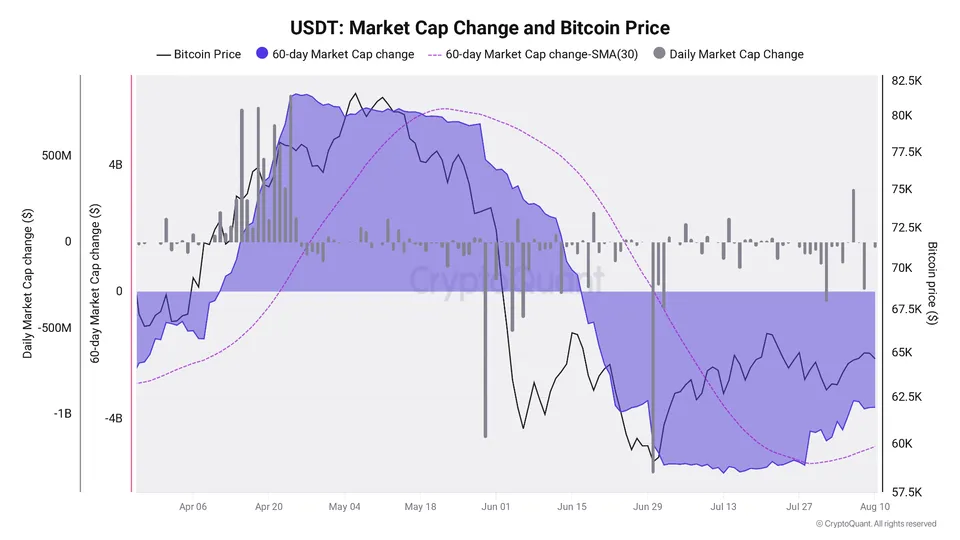
Liquidity Drop Linked to Bitcoin Price Weakness
Since stablecoins serve as a key source of liquidity in crypto markets, shrinking supply typically signals less available capital for investors to deploy, reflecting reduced willingness to buy at current prices. Analysts caution that correlation between USDT flows and Bitcoin price doesn’t necessarily indicate direct causation, since both often respond to the same broader risk-off conditions rather than one strictly leading the other. Historically, however, periods of USDT expansion have aligned with stronger Bitcoin price trends, while prolonged contractions have coincided with weaker demand and deeper market corrections.
Signs Point Toward Possible Market Bottom
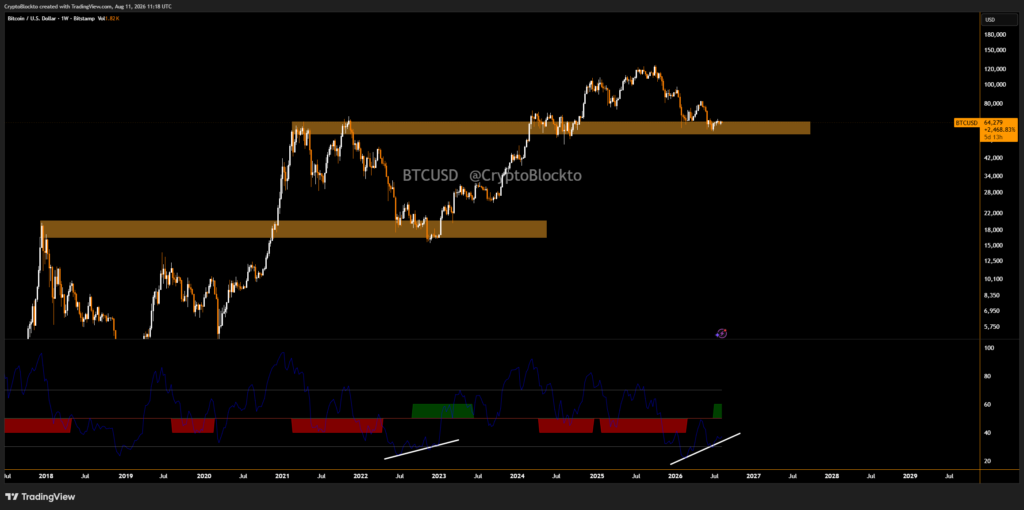
CryptoQuant noted that the most severe USDT contraction phases have historically occurred near the final stages of major market downturns, suggesting current selling pressure may be closer to exhaustion than further acceleration. This aligns with growing analyst sentiment that Bitcoin could be approaching a macro bottom before the end of the year, with one independent analyst pointing to an emerging bullish divergence between Bitcoin’s price and momentum indicators on weekly charts, a pattern that historically preceded the end of the 2022 bear market.
Live market reaction
Disclaimer
This content is for informational purposes only and does not constitute financial, investment, or legal advice. Cryptocurrency trading involves risk and may result in financial loss.
Start trading
with BloFin today
Up to $500 sign-up bonus and zero-fee trading on your first 30 days.
Buy crypto nowⓘ You will be redirected to BloFin
About the author
Emerging voice in crypto journalism with a background in fintech and digital economics. Covers DeFi, NFTs, and the evolving regulatory landscape.

 Tristan R. ·
.jpeg&w=32&q=75) Laurisa ·
Laurisa ·