

Photo: Illustrative
Fed Proposes New Capital and Redemption Rules for Stablecoin Issuers
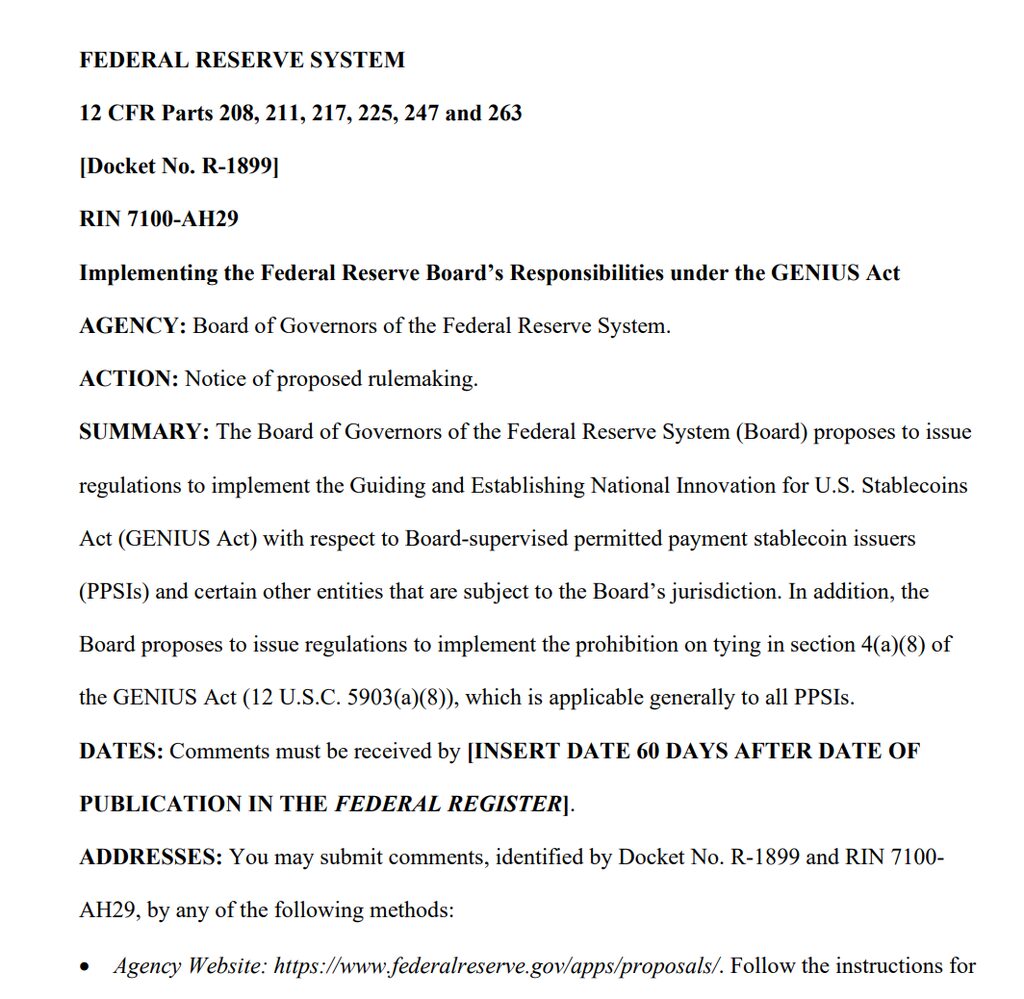
The Federal Reserve has proposed capital, redemption and other rules for stablecoin issuers under its supervision as it works to implement the GENIUS Act. The law already requires issuers to back their tokens one-to-one with reserves such as cash, bank deposits and short-term US Treasurys, but left the details of capital and risk management rules to regulators.
.jpeg)
The Federal Reserve has proposed capital, redemption and other rules for stablecoin issuers under its supervision as it works to implement the GENIUS Act. The law already requires issuers to back their tokens one-to-one with reserves such as cash, bank deposits and short-term US Treasurys, but left the details of capital and risk management rules to regulators.
Under the proposal, issuers would face an operational risk capital charge of 2% on the first $20 billion in stablecoins outstanding, 1.5% on the next $30 billion and 1% above $50 billion, plus added capital tied to credit and operational risk.
Redemption Rules and Reserve Reporting
Issuers would generally need to process redemptions within two business days. If reserves drop below full backing, the issuer must notify the Fed and either restore reserves through a remediation plan or liquidate and redeem the outstanding tokens. Issuers would also publish monthly reports on outstanding stablecoins and reserve value and composition, checked by a registered accounting firm and certified by the CEO and CFO.
A separate proposal sets up an application process for Fed-supervised banks that want to issue payment stablecoins through subsidiaries, including a business plan and financial details. Both proposals are open for public comment for 60 days after publication in the Federal Register.
Fed Governor Barr on Stablecoin Redemption During Stress
Fed Governor Michael Barr backed the proposal but said more work is needed for stablecoins to become reliable payment tools. He said stablecoins are only stable if they can be redeemed at par reliably, including during market stress or strain on an issuer. Barr welcomed the proposed reserve asset limits and standardized capital rules, but asked for public feedback on whether the framework handles interest rate and foreign currency risk well enough. He also called for clear universal redemption rights in the final rule and raised concern over a standard that would limit Fed enforcement on anti-money-laundering issues unless they are “significant or systemic.”
The GENIUS Act takes effect on Jan. 18, 2027, or 120 days after regulators finalize the rules, whichever comes first.
Live market reaction
Disclaimer
This content is for informational purposes only and does not constitute financial, investment, or legal advice. Cryptocurrency trading involves risk and may result in financial loss.
Start trading
with BloFin today
Up to $500 sign-up bonus and zero-fee trading on your first 30 days.
Buy crypto nowⓘ You will be redirected to BloFin
About the author
Emerging voice in crypto journalism with a background in fintech and digital economics. Covers DeFi, NFTs, and the evolving regulatory landscape.

 Tristan R. ·