

Photo: Illustrative
Bitcoin’s BIP-110 Fork Collapses After Mining Only Two Blocks
A proposed Bitcoin soft fork known as BIP-110 has effectively failed just hours after launching, managing to mine only two blocks before falling behind the main Bitcoin chain. The split occurred at block height 961,632 but attracted support from only 2.53% of total mining power, far short of the 55% threshold required for the upgrade to activate successfully.
.jpeg)
A proposed Bitcoin soft fork known as BIP-110 has effectively failed just hours after launching, managing to mine only two blocks before falling behind the main Bitcoin chain. The split occurred at block height 961,632 but attracted support from only 2.53% of total mining power, far short of the 55% threshold required for the upgrade to activate successfully.
Why the Fork Struggled to Survive
Despite carrying almost none of Bitcoin’s actual computing power, the new chain inherited the network’s full mining difficulty, which currently sits above 127 trillion. Because so few miners are working on it, the fork’s next difficulty adjustment would not arrive for roughly 350 days under normal Bitcoin rules, though analysts estimate the real gap could stretch closer to two decades at its current pace.
Industry Reaction Turns Skeptical
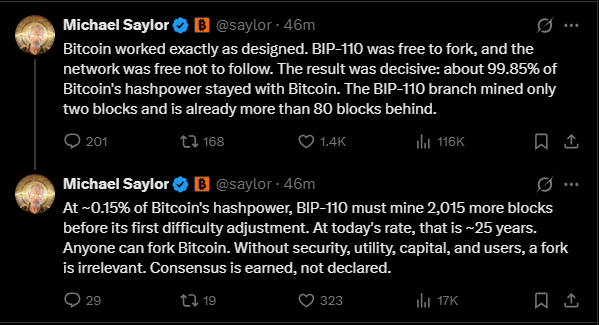
Strategy chairman Michael Saylor dismissed the fork’s chances, noting it represents a tiny fraction of Bitcoin’s overall computing power and predicting it would either stall completely or drift into irrelevance while the main Bitcoin network continues operating as usual. He emphasized that network consensus has to be earned through participation rather than simply announced. Some supporters of the fork are now reportedly considering switching to a different mining algorithm entirely, a move that would effectively turn the project into a separate cryptocurrency rather than a Bitcoin upgrade.
What BIP-110 Aimed to Do
The proposal sought to limit certain types of non-financial data, such as images, text, and inscription-style content, from being stored on the Bitcoin blockchain for a full year. Backers of the idea, including Bitcoin Knots developer Luke Dashjr, argued that this kind of data clutters the network and pushes transaction fees higher.
Live market reaction
Disclaimer
This content is for informational purposes only and does not constitute financial, investment, or legal advice. Cryptocurrency trading involves risk and may result in financial loss.
Start trading
with BloFin today
Up to $500 sign-up bonus and zero-fee trading on your first 30 days.
Buy crypto nowⓘ You will be redirected to BloFin
About the author
Emerging voice in crypto journalism with a background in fintech and digital economics. Covers DeFi, NFTs, and the evolving regulatory landscape.

Kalshi Denies CFTC Investigation as Questions Grow Over Unusual Ether Perpetual Trading
.jpeg&w=32&q=75) Laurisa ·
Laurisa · 
Bank-Level Protections Could Push Stablecoin Adoption To 56 Percent, Visa Study Finds
 Tristan R. ·
White House Crypto Adviser Pushes Back on Trump Conflict Claims After Clarity Act Setback
Laurisa ·