


Photo: Illustrative
Bittensor Root Reborn Proposal Would Turn Validators Into Fund Managers
A new proposal in the Bittensor ecosystem, called “Root Reborn,” could significantly change how rewards are handled across the decentralized AI network. The idea would shift TAO validators from passive participants into active capital allocators, similar to fund managers.
.jpeg)
A new proposal in the Bittensor ecosystem, called “Root Reborn,” could significantly change how rewards are handled across the decentralized AI network. The idea would shift TAO validators from passive participants into active capital allocators, similar to fund managers.
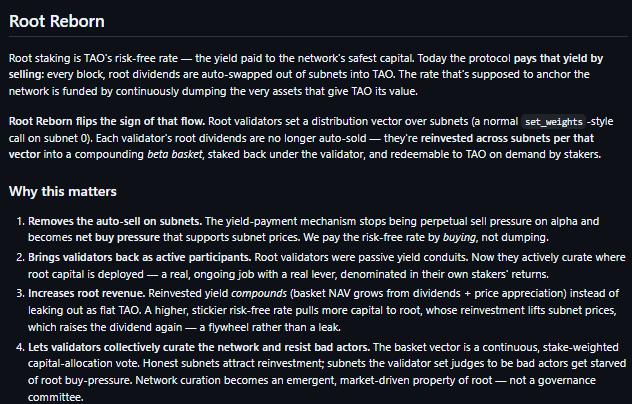
Bittensor is built from multiple subnets, each focused on different AI tasks with its own token. TAO is the main network token, and users earn yield by staking TAO with validators at the root layer, which is considered the safest staking point in the system.
Current System Relies on Constant Token Selling
At present, yield payments depend on selling subnet rewards and converting tokens back into TAO. Critics argue this creates continuous selling pressure on subnet tokens, weakening their market value over time.
Root Reborn Proposal Reinvests Yield Into Subnets
This structure would still allow stakers to earn yield and withdraw into TAO when needed, but it would reduce constant selling pressure and potentially support subnet token prices.
Validators would effectively act as curators, directing capital toward stronger subnets while weaker or poorly performing ones may receive less support.
The proposal is currently under code review on GitHub and is intended for testnet use, not mainnet deployment. Early reviews highlighted technical risks, including data handling issues and payout edge cases, though the developer has said fixes are being implemented.
TAO has declined about 28% over the past year, while staking yields remain around 17% annually, according to network data.
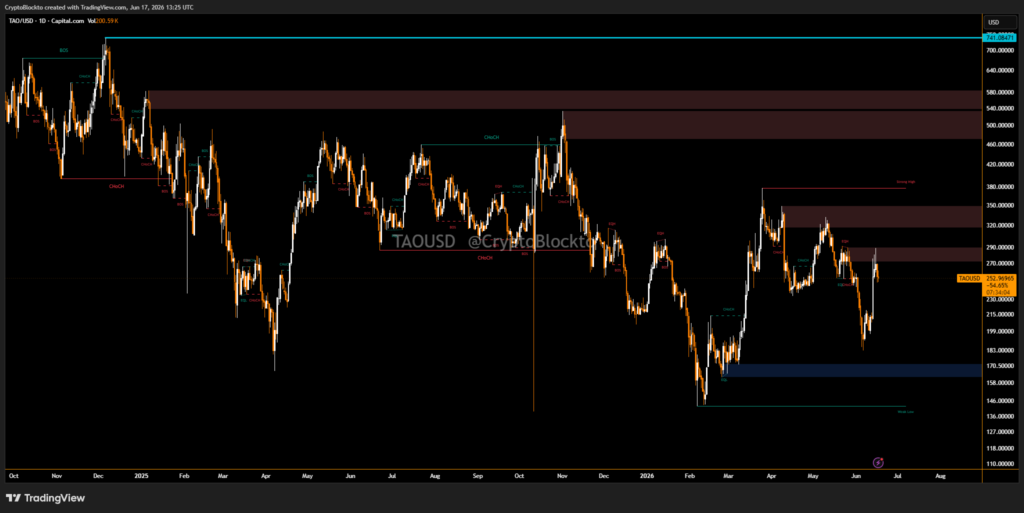
Live market reaction
Disclaimer
This content is for informational purposes only and does not constitute financial, investment, or legal advice. Cryptocurrency trading involves risk and may result in financial loss.
Start trading
with BloFin today
Up to $500 sign-up bonus and zero-fee trading on your first 30 days.
Buy crypto nowⓘ You will be redirected to BloFin
About the author
Emerging voice in crypto journalism with a background in fintech and digital economics. Covers DeFi, NFTs, and the evolving regulatory landscape.

 Tristan R. ·
.jpeg&w=32&q=75) Laurisa ·
Laurisa ·