

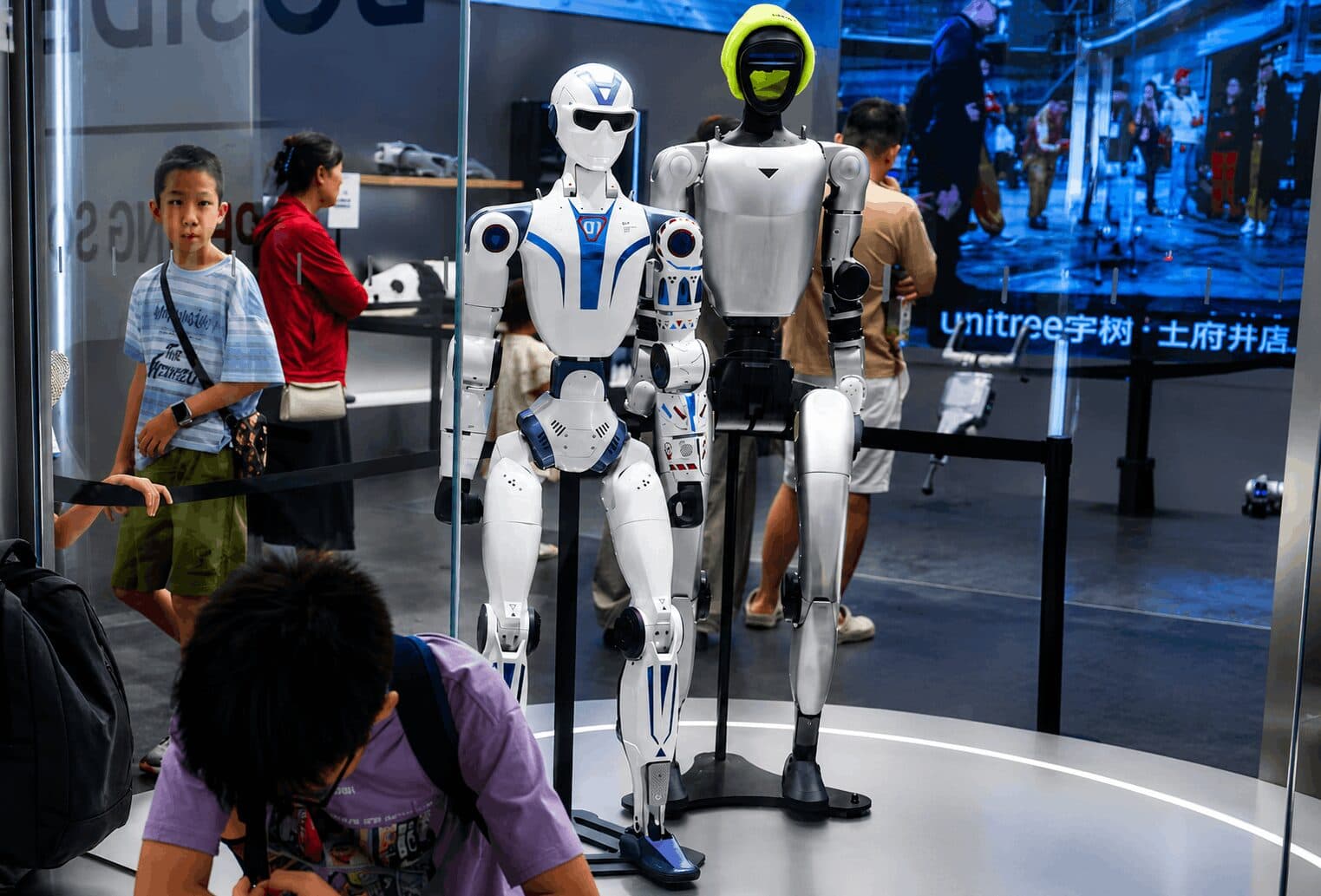
Photo: Illustrative
Chinese Robotics Startup Predicts Major AI Breakthrough for Humanoid Robots by Next Year
A leading Chinese robotics company says humanoid robots could soon respond to natural language instructions and carry out general-purpose tasks, marking a potential breakthrough similar to the impact ChatGPT had on generative AI. The company's co-founder said this milestone could arrive as early as mid-2027, though robots becoming genuinely useful in everyday households remains years away.

A leading Chinese robotics company says humanoid robots could soon respond to natural language instructions and carry out general-purpose tasks, marking a potential breakthrough similar to the impact ChatGPT had on generative AI. The company’s co-founder said this milestone could arrive as early as mid-2027, though robots becoming genuinely useful in everyday households remains years away.
While Chinese humanoid robots have made significant hardware progress, including impressive physical movements, the company argues that the “brain,” or underlying software intelligence, remains the weakest part of the overall technology stack.
Real-World Data Drives Training Approach
Unlike many competitors that rely heavily on virtual simulations to train robot behavior, this company depends primarily on real-world data collection, employing around 1,000 contractors who wear sensor equipment while performing everyday tasks like opening refrigerators or cutting vegetables. The company says this approach has helped its robots achieve a 90% success rate on simple tasks within structured environments like living rooms.
Rapid Growth and Industry Position
Founded in 2024, the startup has raised over $670 million and is now valued at roughly $2.9 billion, making it one of the fastest-funded companies in China’s embodied AI sector. Its robots are already deployed in limited numbers at manufacturing and retail company production lines.
Safety Considerations for Physical AI
While concerns about advanced AI systems acting autonomously have grown following recent hacking incidents involving language models, the company’s leadership suggested that similar risks are less immediate for physical robots today, given current software limitations. Still, they noted that safety features like automatic emergency braking are already built into their systems as a baseline precaution.
Live market reaction
Disclaimer
This content is for informational purposes only and does not constitute financial, investment, or legal advice. Cryptocurrency trading involves risk and may result in financial loss.
Start trading
with BloFin today
Up to $500 sign-up bonus and zero-fee trading on your first 30 days.
Buy crypto nowⓘ You will be redirected to BloFin
About the author
8+ years covering crypto markets, macro, and geopolitics. Previously at Decrypt and CoinDesk. Focused on the intersection of digital assets and traditional finance.

.jpeg&w=32&q=75) Laurisa ·
Laurisa · 

 Tristan R. ·