

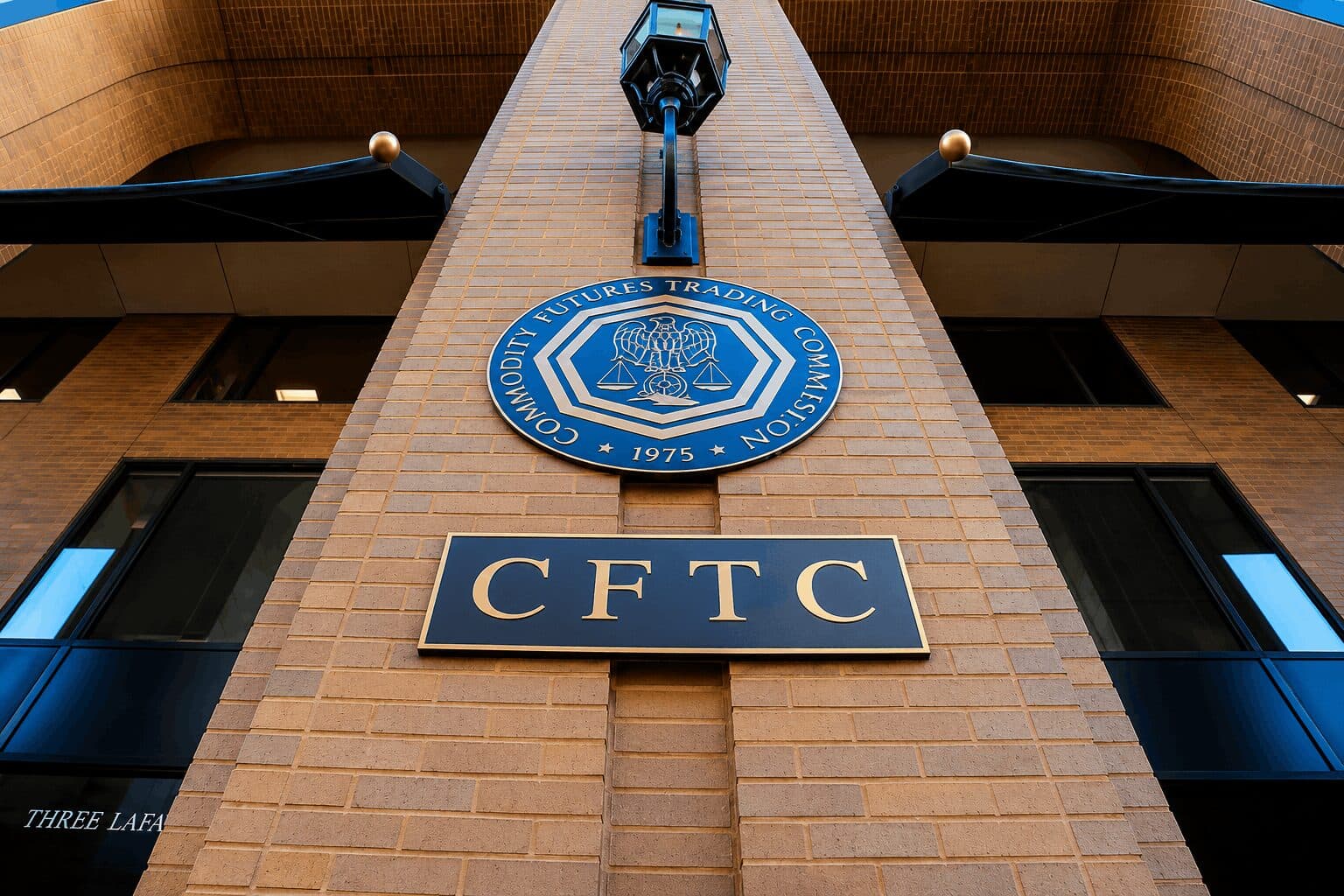
Photo: Illustrative
CME Seen Holding Strong Legal Position in Crypto Perpetual Futures Lawsuit Against CFTC
CME Group is believed to have the stronger legal argument in its lawsuit against the US Commodity Futures Trading Commission over the approval of crypto perpetual futures products, according to investment bank TD Cowen.

CME Group is believed to have the stronger legal argument in its lawsuit against the US Commodity Futures Trading Commission over the approval of crypto perpetual futures products, according to investment bank TD Cowen.
The lawsuit was filed after the CFTC approved crypto perpetual futures offerings connected to Kalshi and Coinbase. CME argues that perpetual futures, often called “perps,” should legally be classified as swaps because they do not have expiration dates like traditional futures contracts.
Under the Commodity Exchange Act, CME claims futures contracts are required to involve delivery or settlement at a defined future date, which perpetual contracts do not provide.
Legal Dispute Focuses on Definition of Swaps
TD Cowen analyst Jaret Seiberg said the case will likely depend on whether a contract without an expiry can legally qualify as a futures product. The distinction is important because swaps and futures operate under different tax and regulatory systems.
Swap dealers face stricter registration rules and longer margin requirements, while futures contracts generally receive tax advantages and lower margin obligations.
Seiberg also argued that CME’s procedural claims under the Administrative Procedure Act appear strong. He noted that the CFTC previously treated perpetual contracts as swaps before approving Kalshi’s Bitcoin perpetual futures product without creating a new regulation.
Preliminary Injunction Could Delay Perpetual Futures Rollout
TD Cowen expects CME to request a preliminary injunction that could temporarily block crypto perpetual futures while the lawsuit moves through court.
CME is asking the court to cancel the CFTC approval and officially classify similar perpetual contracts as swaps instead of futures.
Meanwhile, the CFTC defended its position and accused CME of trying to block competition rather than compete directly in the market. Kalshi and Coinbase also supported the regulator’s approach, arguing that innovation and competition benefit US financial markets.
The lawsuit has already pushed regulators to seek public feedback on how future crypto derivatives and prediction market products should be regulated.
Live market reaction
Disclaimer
This content is for informational purposes only and does not constitute financial, investment, or legal advice. Cryptocurrency trading involves risk and may result in financial loss.
Start trading
with BloFin today
Up to $500 sign-up bonus and zero-fee trading on your first 30 days.
Buy crypto nowⓘ You will be redirected to BloFin
About the author
8+ years covering crypto markets, macro, and geopolitics. Previously at Decrypt and CoinDesk. Focused on the intersection of digital assets and traditional finance.

 Tristan R. ·
.jpeg&w=32&q=75) Laurisa ·
Laurisa ·