

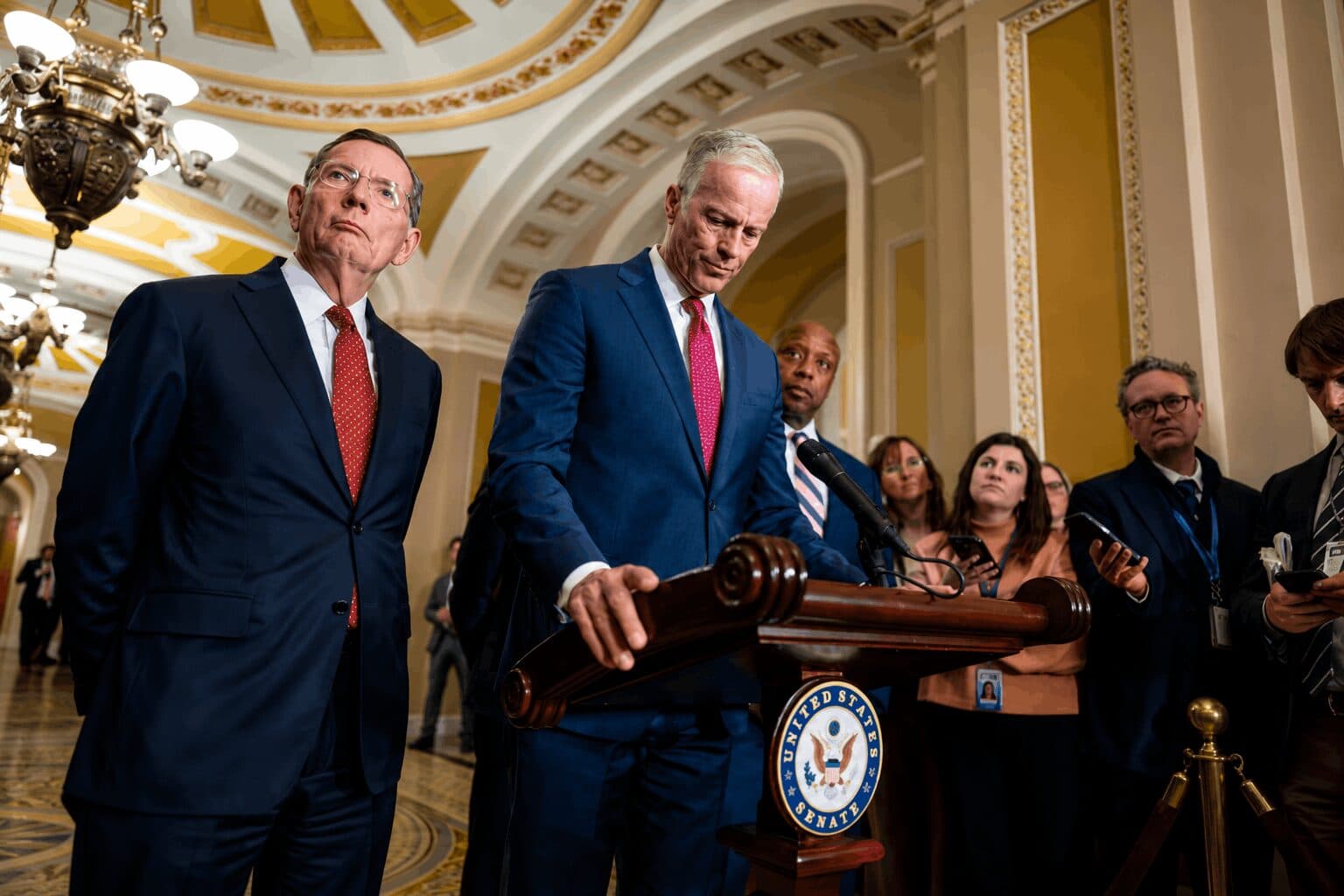
Photo: Illustrative
Democratic Senators Push To Block CFTC Funding For State Lawsuits
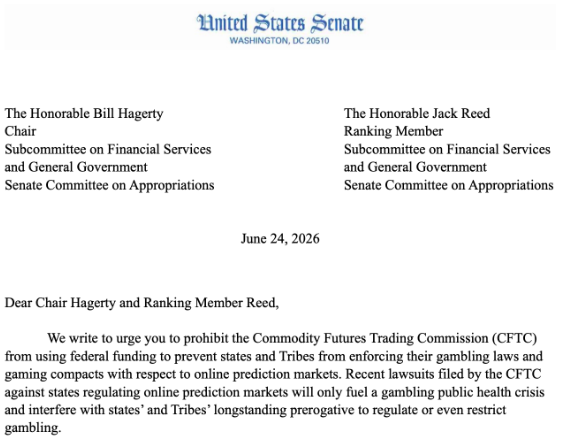
Seventeen Democratic senators sent a letter Wednesday pushing the Senate Appropriations Subcommittee to cut off CFTC funding for legal fights against state gaming regulators.

Seventeen Democratic senators sent a letter Wednesday pushing the Senate Appropriations Subcommittee to cut off CFTC funding for legal fights against state gaming regulators.
Senators Richard Blumenthal and Jeff Merkley led the group, targeting Chair Michael Selig’s claim that the CFTC has exclusive jurisdiction over prediction markets since event contracts qualify as swaps.
The senators warned the CFTC risks becoming a tool for prediction markets to dodge state consumer protections, calling it a “race to the bottom in gambling.” The agency has battled states including Connecticut, Illinois, Arizona, Kentucky, Wisconsin, New York, Minnesota, Rhode Island and New Mexico. Kalshi and Polymarket have filed their own lawsuits backing the CFTC’s stance.
Could Head To The Supreme Court
Experts think one of these cases might eventually reach the Supreme Court, which could revisit its 2018 Murphy v. NCAA ruling that gave states authority over sports betting.
Selig Runs The Agency Solo
Selig leads the CFTC alone as its only commissioner, with Trump yet to fill the other four bipartisan seats.
The fight comes as the Senate prepares to vote on the CLARITY Act, which would split crypto oversight between the CFTC and SEC. Gaming groups want sports event contracts excluded from that bill entirely.
Live market reaction
Disclaimer
This content is for informational purposes only and does not constitute financial, investment, or legal advice. Cryptocurrency trading involves risk and may result in financial loss.
Start trading
with BloFin today
Up to $500 sign-up bonus and zero-fee trading on your first 30 days.
Buy crypto nowⓘ You will be redirected to BloFin
About the author
8+ years covering crypto markets, macro, and geopolitics. Previously at Decrypt and CoinDesk. Focused on the intersection of digital assets and traditional finance.

.jpeg&w=32&q=75) Laurisa ·
Laurisa · 
 Tristan R. ·