

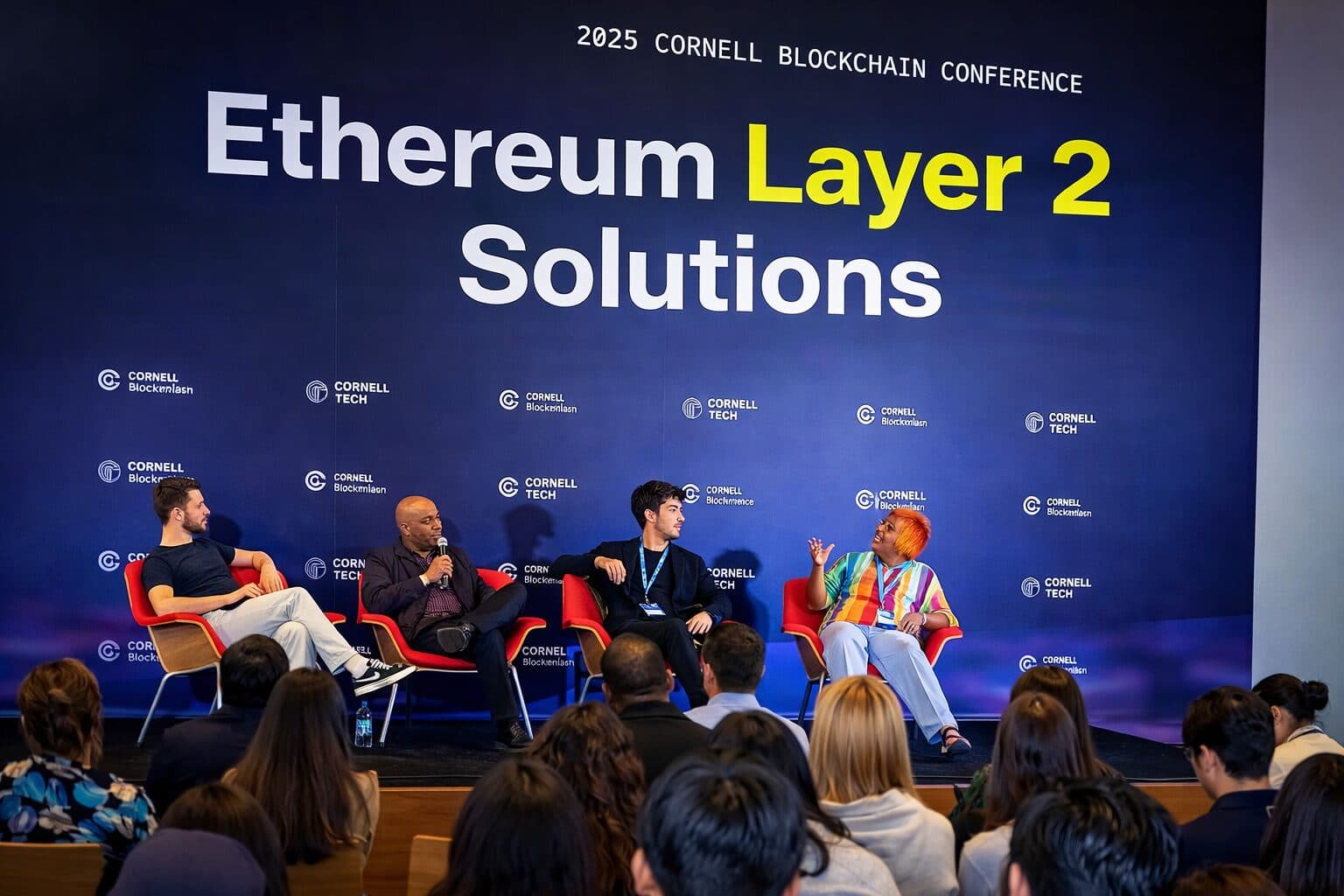
Photo: Illustrative
Ethereum L2s Need Responsive Pricing to Scale, Says Offchain Labs
Ethereum layer-2 networks require responsive pricing to scale to billions of users and reduce the fee volatility that still accompanies network congestion, according to Edward Felten, co founder of Offchain Labs. Speaking at EthCC 2026, Felten noted that although Ethereum’s EIP-1559 upgrade in August 2021 reformed the fee market and introduced fee burning, gas-price swings remain the primary mechanism to protect networks during high demand.
.jpeg)
Responsive Pricing Can Reduce Gas-Fee Swings
Ethereum layer-2 networks require responsive pricing to scale to billions of users and reduce the fee volatility that still accompanies network congestion, according to Edward Felten, co founder of Offchain Labs. Speaking at EthCC 2026, Felten noted that although Ethereum’s EIP-1559 upgrade in August 2021 reformed the fee market and introduced fee burning, gas-price swings remain the primary mechanism to protect networks during high demand.
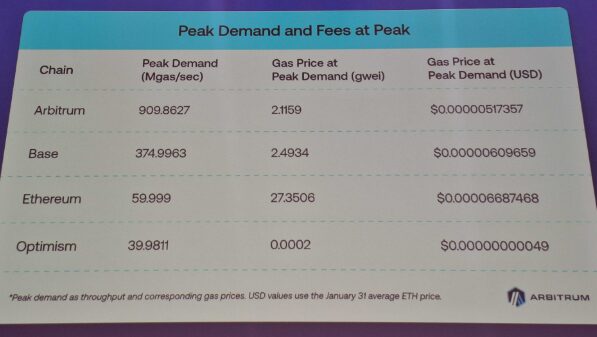
Responsive pricing allows networks to accommodate more transactions at lower gas fees without overloading infrastructure, making costs more predictable for mainstream-style apps. Felten cited Arbitrum One, the largest Ethereum L2 with $15.2 billion in total value locked (TVL), as the first network to adopt dynamic pricing. Arbitrum’s new model keeps fees lower during peak congestion than EIP-1559-style L2s such as Coinbase Base, which holds $10.9 billion TVL, demonstrating its scalability advantages.
Tradeoffs Between Predictability and Efficiency
While responsive pricing improves transparency and efficiency, it reduces predictability compared to EIP-1559. Julian Kors, founder of Pulsar Spaces, emphasized that the debate is whether L2s optimize for “predictability and mechanism design purity” or “efficiency and real-time cost alignment.” Similarly, Jerome de Tychey, president of Ethereum France and EthCC, and Cyprien Grau, project lead at Status Network, note that gas markets still exist, meaning users may face variable costs during congestion.
Grau added that responsive pricing smooths fee declines but does not solve the structural problem: as L1 and L2 networks scale, gas fees trend toward zero. Future L2s will need models where users do not actively consider gas fees, and network economics no longer depend on charging for them.
Disclaimer
This content is for informational purposes only and does not constitute financial, investment, or legal advice. Cryptocurrency trading involves risk and may result in financial loss.
Live market reaction
Disclaimer
This content is for informational purposes only and does not constitute financial, investment, or legal advice. Cryptocurrency trading involves risk and may result in financial loss.
Start trading
with BloFin today
Up to $500 sign-up bonus and zero-fee trading on your first 30 days.
Buy crypto nowⓘ You will be redirected to BloFin
About the author
Emerging voice in crypto journalism with a background in fintech and digital economics. Covers DeFi, NFTs, and the evolving regulatory landscape.
 Tristan R. ·

.jpeg&w=32&q=75) Laurisa ·
Laurisa ·