

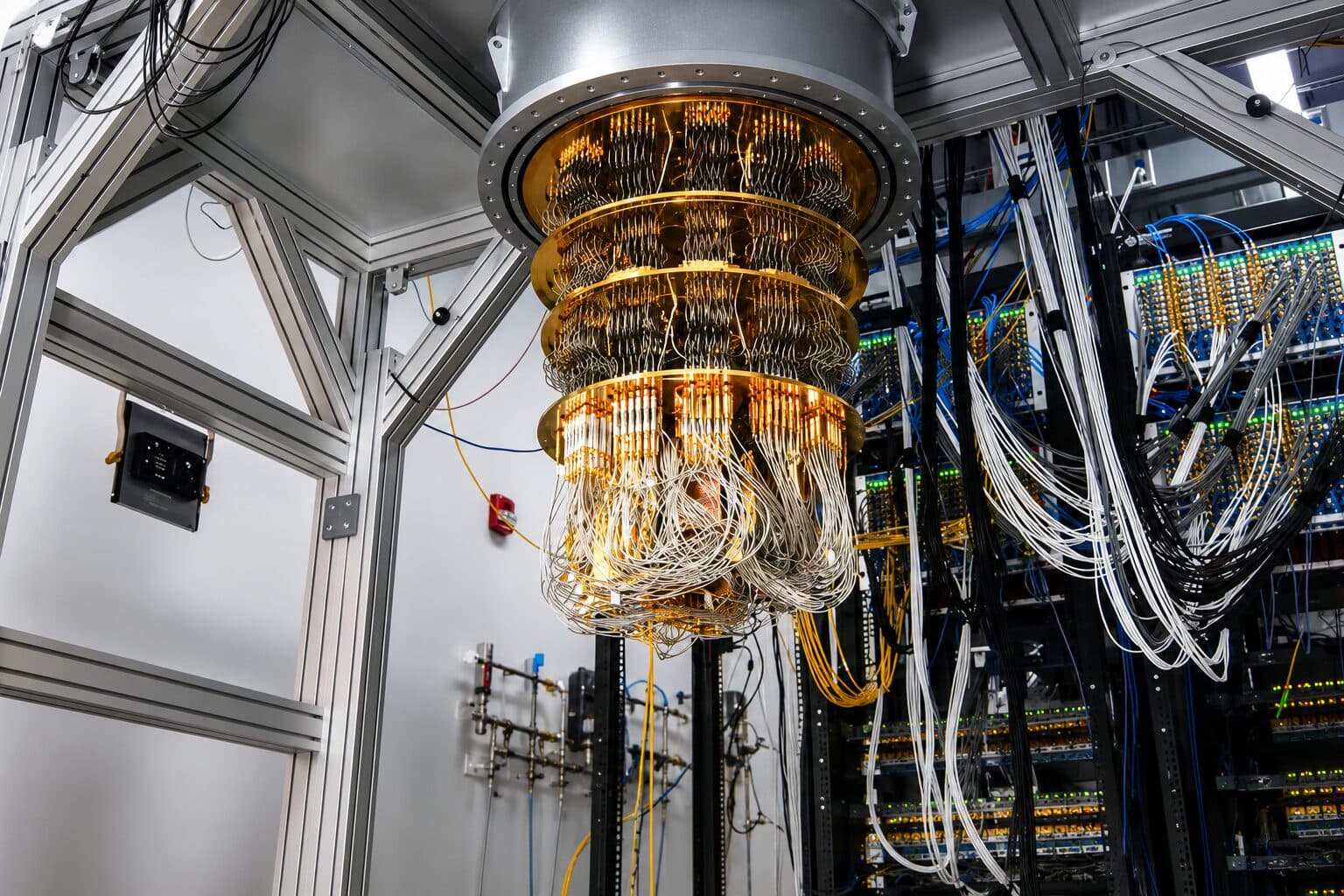
Photo: Illustrative
Europol Warns Quantum Computers Put Crypto Wallets at Risk, Not the Blockchain
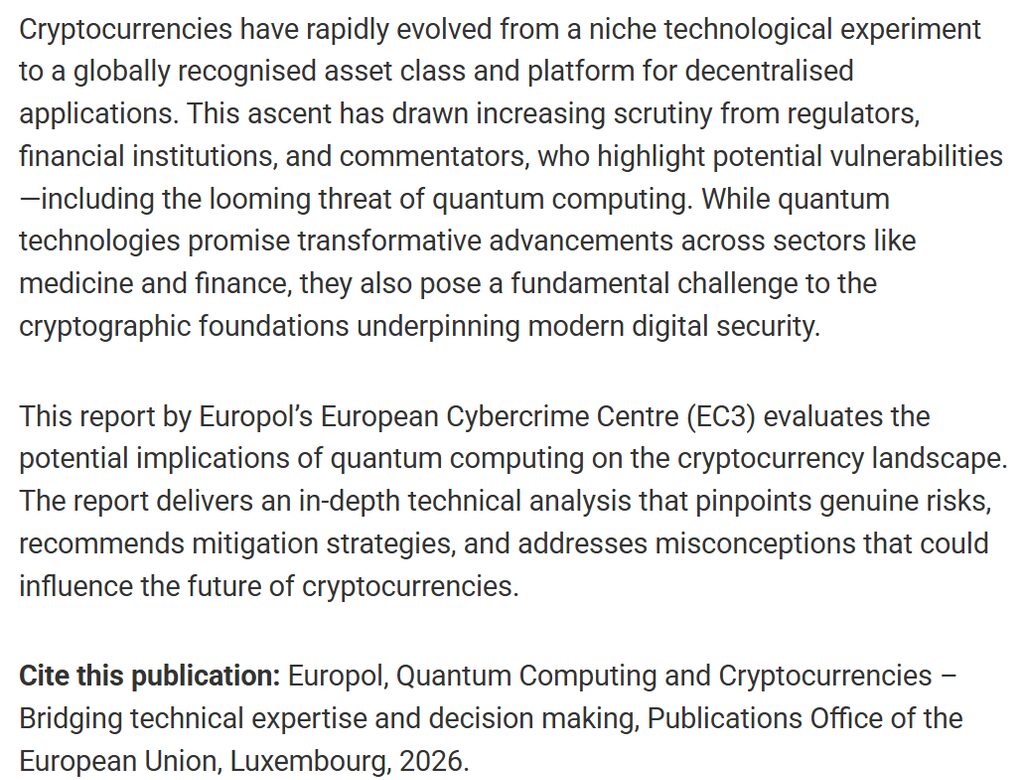
Europol says the real weak point in a future quantum attack is the crypto wallet, not the blockchain itself. In a report released Wednesday, the EU law enforcement agency admitted that computers able to pull off such attacks do not exist yet, and it gave no date for when they might. Still, it said smooth adaptation is far more likely than a systemic collapse, and it asked developers, miners, exchanges and users to start a phased shift now through wallet upgrades and post quantum cryptography. Many Bitcoin researchers see 2029 as the deadline for solid migration plans, and IBM expects major commercial quantum revenue within two to four years.

Europol says the real weak point in a future quantum attack is the crypto wallet, not the blockchain itself. In a report released Wednesday, the EU law enforcement agency admitted that computers able to pull off such attacks do not exist yet, and it gave no date for when they might. Still, it said smooth adaptation is far more likely than a systemic collapse, and it asked developers, miners, exchanges and users to start a phased shift now through wallet upgrades and post quantum cryptography. Many Bitcoin researchers see 2029 as the deadline for solid migration plans, and IBM expects major commercial quantum revenue within two to four years.
Why Hash Functions Are Safer Than Wallet Keys
A powerful quantum machine could work out a private key from a public key and spend the funds. Hash functions that protect blockchain history, including Bitcoin mining, hold up much better than the public-key cryptography guarding wallets. In Europol’s words, cryptocurrencies will not collapse because of quantum computing.
Satoshi-Era Bitcoin and Exposed Public Keys
Early addresses with visible public keys face the biggest danger. About 6.9 million BTC sit in such addresses, and Europol says exposed keys cannot be fixed after the fact, which fuels the debate over freezing Satoshi-era coins.
Bitcoin Quantum Migration Challenges
A 2024 study cited by Europol estimates that moving every UTXO to a quantum-resistant format would need at least 76 days of block space, or about 300 days if 25% of each block is reserved. New signature schemes can be 10 to 120 times larger than ECDSA signatures. The harder job is convincing a decentralized global network to adopt them in time.
Live market reaction
Disclaimer
This content is for informational purposes only and does not constitute financial, investment, or legal advice. Cryptocurrency trading involves risk and may result in financial loss.
Start trading
with BloFin today
Up to $500 sign-up bonus and zero-fee trading on your first 30 days.
Buy crypto nowⓘ You will be redirected to BloFin
About the author
Covers Bitcoin, on-chain data and market structure. Breaks down what the charts and wallet flows are actually saying, without the hype.

 Tristan R. ·
 Guylian ·