

Photo: Illustrative
Google Pitches a Key Splitting Security Service to Banks Handling Crypto and Tokenized Assets
Google is preparing to show a security service built for banks and other financial firms that hold or move crypto and tokenized assets. Called Google Multi-Party Compute, it is in private preview, with several unnamed institutions testing it. Alphabet is also using it to protect its own holdings on Ethereum and Solana. Broad commercial release is planned for early 2027, and pricing has not been shared.

Google is preparing to show a security service built for banks and other financial firms that hold or move crypto and tokenized assets. Called Google Multi-Party Compute, it is in private preview, with several unnamed institutions testing it. Alphabet is also using it to protect its own holdings on Ethereum and Solana. Broad commercial release is planned for early 2027, and pricing has not been shared.
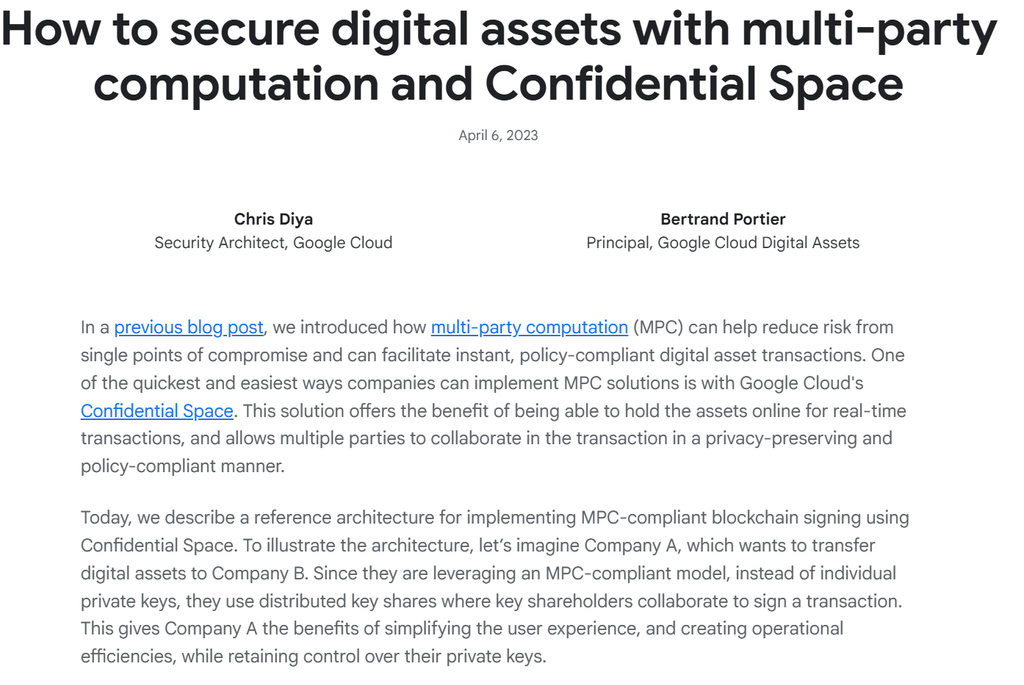
How Multi-Party Computation Protects Private Keys
Instead of keeping one private key in one place, the system breaks it into pieces spread across separate machines, so a single compromised computer cannot hand over control. Several pieces must cooperate to approve any transaction. Google says the full key is never stored in one spot, customers keep control of their key material, and the company cannot read it unencrypted. The service also adds signing, spending rules and key recovery in one package, and it can check each transfer against set limits before it is signed.
Why Private Key Theft Remains a Costly Problem
Chainalysis found that compromised keys made up 43.8% of crypto stolen in 2024. DeFiLlama figures show projects had lost a cumulative $16.69 billion to hacks by June, with roughly 40% tied to key compromises. Resolv lost about $25 million in March, and a Humanity Protocol breach in June drained over $32 million and pushed its token down more than 80%.
AI and Quantum Risks Facing Crypto Security
Chainalysis reported that scams linked to AI tool vendors earned about $3.2 million per operation in 2025, against $719,000 for others, though the report does not prove AI caused the gap. Researcher Justin Drake has warned that AI might one day find shortcuts against wallet signatures, but nothing like that has been shown. Google’s protections target stolen credentials and unauthorized transfers, and they cannot stop users from being tricked into approving a bad transaction.
Live market reaction
Disclaimer
This content is for informational purposes only and does not constitute financial, investment, or legal advice. Cryptocurrency trading involves risk and may result in financial loss.
Start trading
with BloFin today
Up to $500 sign-up bonus and zero-fee trading on your first 30 days.
Buy crypto nowYou will be redirected to BloFin
About the author
8+ years covering crypto markets, macro, and geopolitics. Previously at Decrypt and CoinDesk. Focused on the intersection of digital assets and traditional finance.

 Laurisa ·


 Tristan R. ·