

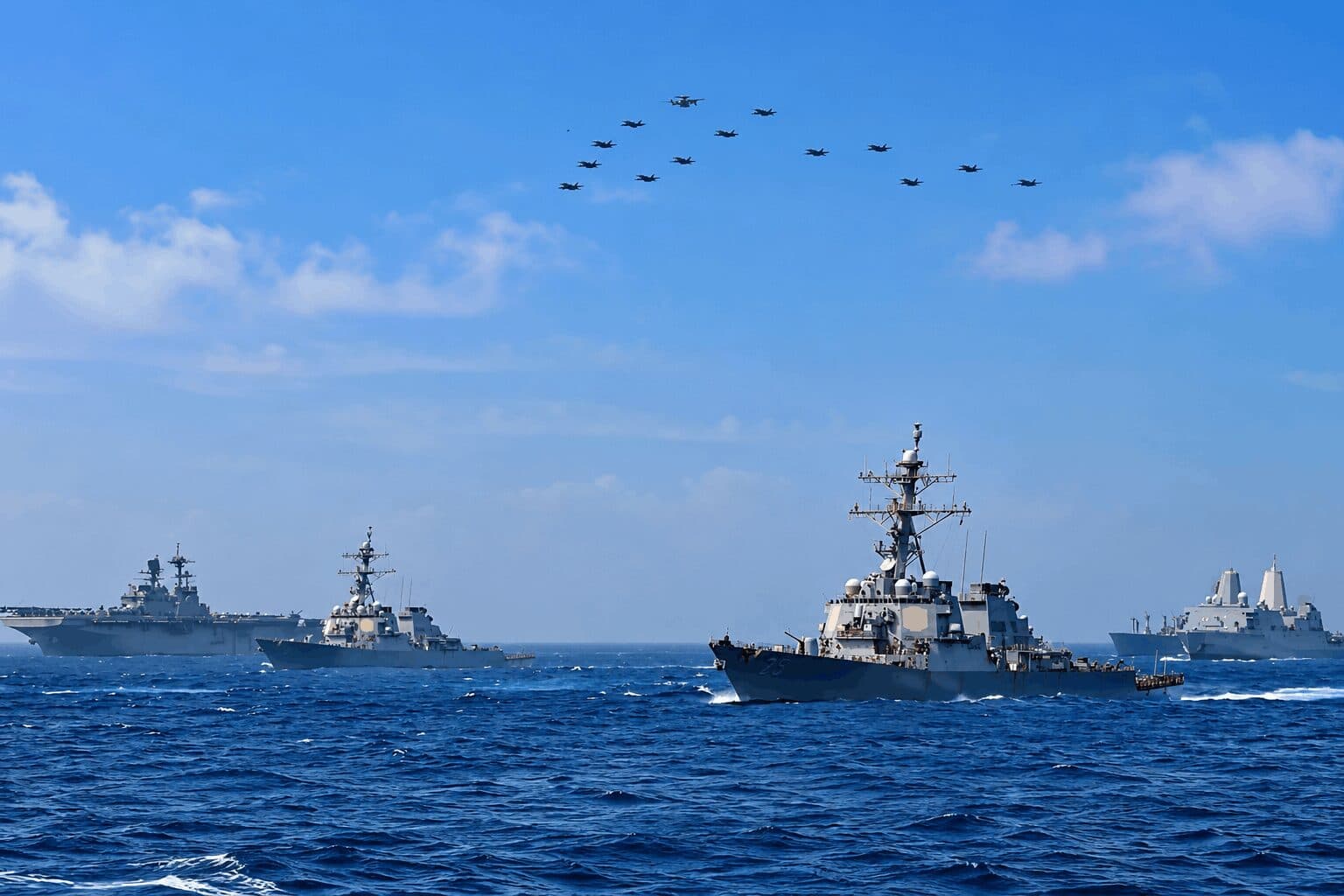
Photo: Illustrative
U.S. Deploys Over 20 Warships To Middle East As Iran Tensions Escalate
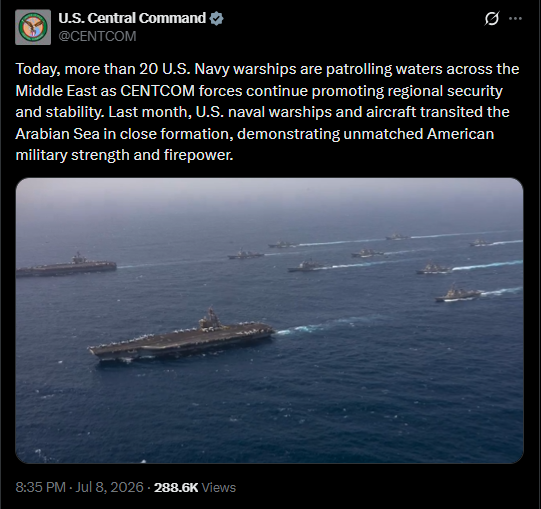
The U.S. Central Command confirmed Wednesday that more than 20 American warships are now patrolling waters across the Middle East, a deployment described as aimed at promoting regional security following President Trump's threats of further military action against Iran.
.jpeg)
The U.S. Central Command confirmed Wednesday that more than 20 American warships are now patrolling waters across the Middle East, a deployment described as aimed at promoting regional security following President Trump’s threats of further military action against Iran.
Trump Declares Ceasefire Framework Over
Speaking at the NATO summit in Ankara, Trump said he believes the ceasefire agreement signed on June 17 has collapsed, using harsh language to describe Iran’s leadership and population. CENTCOM noted that naval forces had previously conducted a coordinated show of force in the Arabian Sea last month, describing it as a demonstration of significant military capability.
Strikes Target Key Iranian Infrastructure
According to Trump, U.S. forces struck Kharg Island on Tuesday night, a critical hub for Iran’s crude oil exports, destroying 28 Iranian boats and a radar installation that had been rebuilt to 60% capacity. War Secretary Pete Hegseth said the strikes also hit underground facilities storing drones and missiles, coastal defense positions, radar sites, surveillance centers and any location involved in disrupting maritime traffic through the Strait of Hormuz.
Live market reaction
Disclaimer
This content is for informational purposes only and does not constitute financial, investment, or legal advice. Cryptocurrency trading involves risk and may result in financial loss.
Start trading
with BloFin today
Up to $500 sign-up bonus and zero-fee trading on your first 30 days.
Buy crypto nowⓘ You will be redirected to BloFin
About the author
Emerging voice in crypto journalism with a background in fintech and digital economics. Covers DeFi, NFTs, and the evolving regulatory landscape.

 Guylian ·
.jpeg&w=32&q=75) Laurisa ·
Laurisa ·