

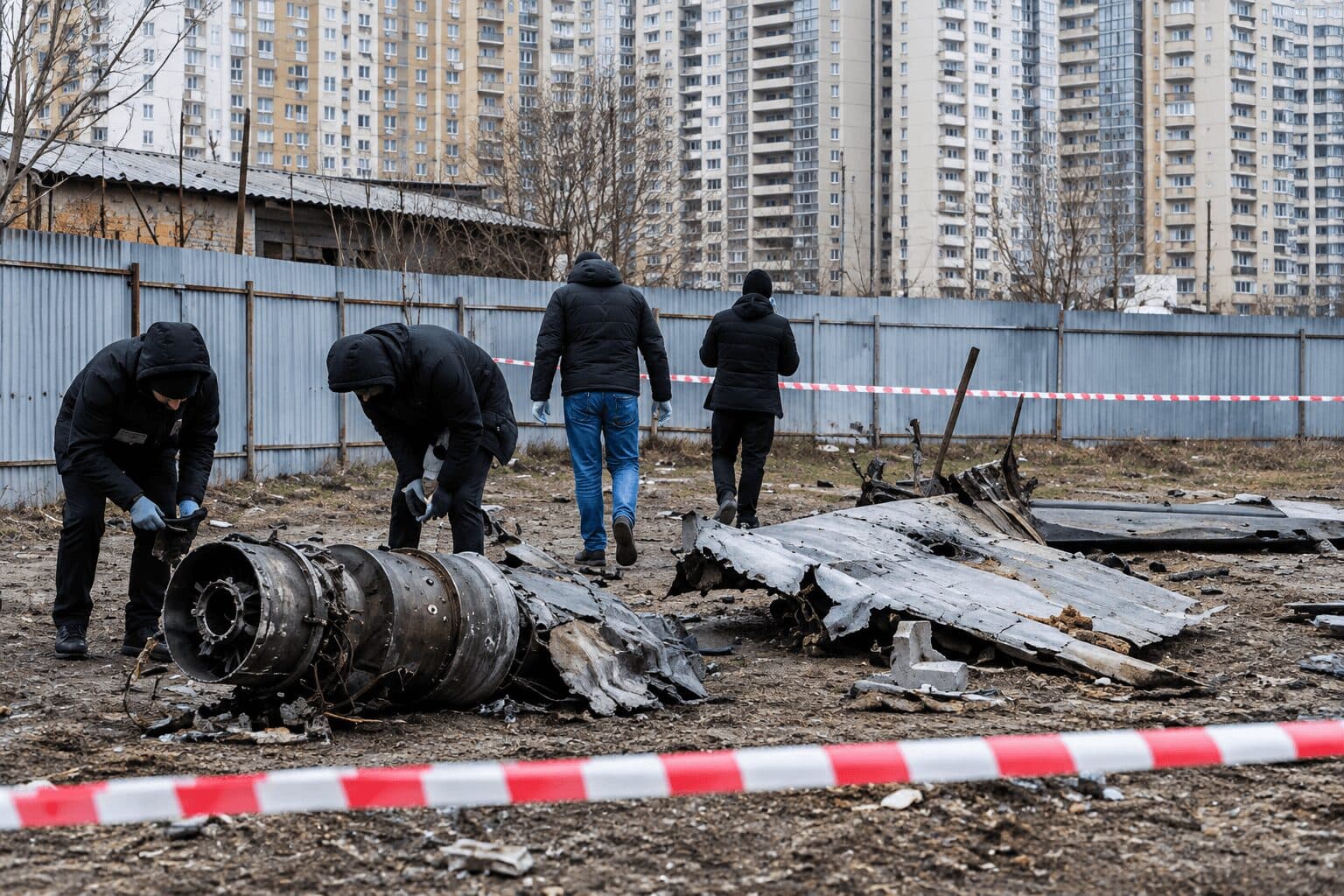
Photo: Illustrative
Ukraine Struggles To Counter Russia’s Fast-Growing Jet Drone Attacks
Ukraine is racing to develop new defenses against Russian jet-powered drones, which have grown far faster and harder to intercept than the slower Shahed-style drones that dominated earlier phases of the war.

Ukraine is racing to develop new defenses against Russian jet-powered drones, which have grown far faster and harder to intercept than the slower Shahed-style drones that dominated earlier phases of the war.
Russia’s Jet Drones Outpace Ukraine’s Defenses
Russian jet drone use rose roughly sixfold over the summer, with launches climbing from about 450 in June to nearly 2,850 in August, reaching speeds up to 500 kilometers per hour. That far exceeds the under-200 km/h speed of older piston-powered Shaheds, which Ukraine had learned to intercept at close to a 90% success rate. A senior Ukrainian commander acknowledged the country has fallen behind on countering the newer jet drones, while officials say Kyiv and the port city of Odesa have taken the heaviest attacks, with jet drones sometimes making up over 70% of strikes in a given attack.
Early Interceptor Tests Show Mixed Results
A July test of a new generation of interceptor drones ran into trouble, with several aircraft proving hard to control at high speed and crashing before reaching targets. Existing low-cost interceptors, effective against older drones, cannot keep pace with jet-powered models. More than 60 Ukrainian companies are reportedly working on solutions, though only a few have shown results so far. Some jet drones are guided manually and resistant to jamming due to advanced antenna systems, complicating efforts to disrupt their navigation.
New Approaches Being Tested
Officials point to lower cost guided missiles, networked drone systems designed to confuse enemy navigation, and AI-assisted interceptors capable of head-on engagement as promising next steps.
Ukraine’s air force says some head-on interception techniques have already succeeded, though the technology still needs further development before wider deployment. In the meantime, much of the defensive burden falls on manned aircraft, which face dwindling missile supplies and increasingly rely on cannon fire to down incoming drones.
Live market reaction
Disclaimer
This content is for informational purposes only and does not constitute financial, investment, or legal advice. Cryptocurrency trading involves risk and may result in financial loss.
Start trading
with BloFin today
Up to $500 sign-up bonus and zero-fee trading on your first 30 days.
Buy crypto nowⓘ You will be redirected to BloFin
About the author
8+ years covering crypto markets, macro, and geopolitics. Previously at Decrypt and CoinDesk. Focused on the intersection of digital assets and traditional finance.

 Tristan R. ·
.jpeg&w=32&q=75) Laurisa ·
Laurisa ·