


Photo: Illustrative
US Bond Market Faces New Pressure as Japan’s Rising Rates Threaten Treasury Demand
The US bond market is once again under strain, with long-term Treasury yields approaching their highest levels since 2007. Rising yields are pushing up mortgage rates and corporate borrowing costs while adding pressure on stock valuations. Treasury Secretary Scott Bessent has already taken steps to ease the situation by increasing long term Treasury buybacks, but yields have continued climbing.

The US bond market is once again under strain, with long-term Treasury yields approaching their highest levels since 2007. Rising yields are pushing up mortgage rates and corporate borrowing costs while adding pressure on stock valuations. Treasury Secretary Scott Bessent has already taken steps to ease the situation by increasing long term Treasury buybacks, but yields have continued climbing.
Japan’s Rate Shift Creates New Risk for US Debt Demand
A fresh concern is now emerging from Japan, the largest foreign holder of US government debt. After decades of near-zero interest rates, Japanese government bonds are now yielding around 3% for the first time in nearly three decades. This shift gives Japanese investors more incentive to keep their money at home rather than continuing to invest heavily in US Treasurys, a trend that could reduce a major source of demand Washington has relied on for years.
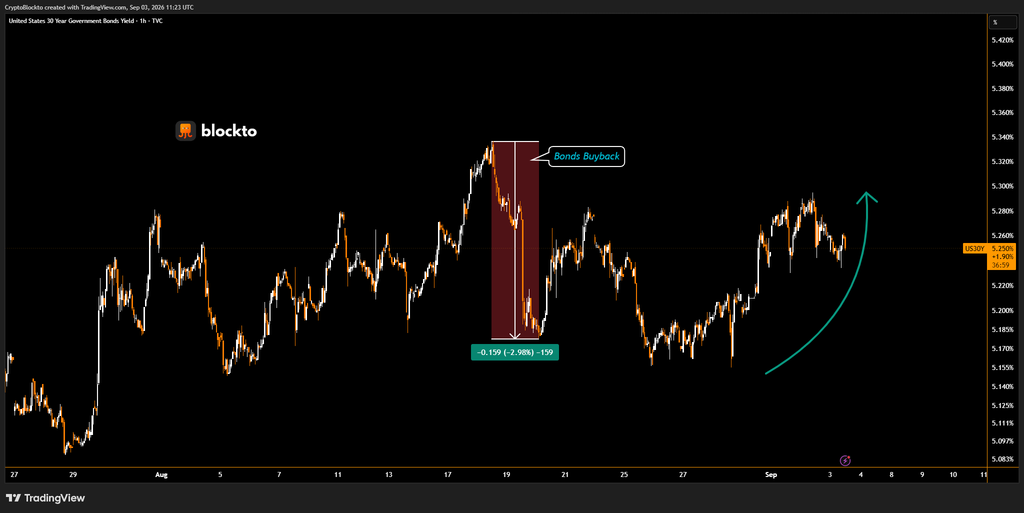
There is also concern that if the yen weakens further, Japan may need to sell dollars to support its currency, which could mean offloading US Treasury holdings into an already fragile bond market.
A Key Fed Program Could Help Ease the Pressure
So far, data shows Japanese investors have mostly sold short-term Treasury bills rather than longer-term bonds, which are more closely tied to mortgage rates and stock market performance. An existing Federal Reserve facility that allows Japan to exchange Treasurys for cash without selling them outright is being viewed as an important tool going forward. Japan has indicated it plans to use this facility more actively, and Bessent has pushed for expanding its capacity, suggesting officials are preparing for this pressure to persist rather than fade quickly.
Live market reaction
Disclaimer
This content is for informational purposes only and does not constitute financial, investment, or legal advice. Cryptocurrency trading involves risk and may result in financial loss.
Start trading
with BloFin today
Up to $500 sign-up bonus and zero-fee trading on your first 30 days.
Buy crypto nowⓘ You will be redirected to BloFin
About the author
Covers Bitcoin, on-chain data and market structure. Breaks down what the charts and wallet flows are actually saying, without the hype.

 Guylian ·

.jpeg&w=32&q=75) Laurisa ·
Laurisa ·