

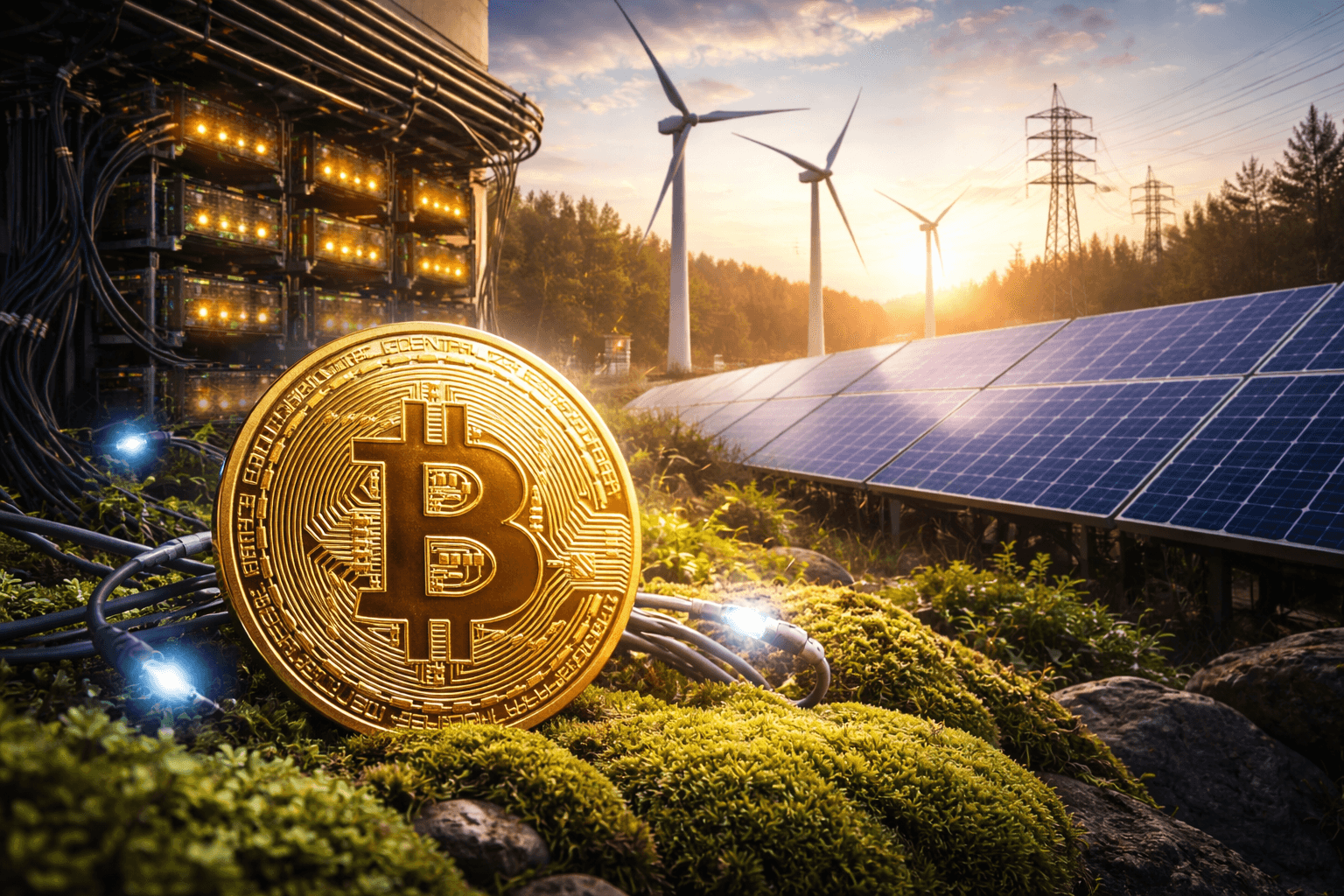
Photo: Illustrative
Bitcoin Energy Use Myths Challenged by Grid and ESG Data
New research disputes claims that Bitcoin mining harms power grids, raises electricity costs, or undermines sustainability goals
.jpeg)
New research disputes claims that Bitcoin mining harms power grids, raises electricity costs, or undermines sustainability goals
Bitcoin’s energy consumption has long been a focal point of environmental debate. Critics often claim that mining destabilizes power grids, drives up electricity prices, and wastes renewable energy. However, recent peer-reviewed studies and grid-level data increasingly challenge these assumptions, suggesting the narrative is more complex than commonly portrayed.
A key misconception is that Bitcoin’s resource use rises with transaction volume. Multiple peer-reviewed studies show that energy consumption is largely independent of the number of transactions, meaning Bitcoin can scale without proportionally increasing electricity, water use, or e-waste. This directly contradicts claims that Bitcoin is inherently inefficient per transaction.
“Every nascent disruptive technology is accompanied by claims that are based on lack of understanding, lack of data, and a fear of something unknown,” said Batten.
Bitcoin Mining and Power Grid Stability
Another widespread belief is that mining strains power grids. In reality, data from renewable-heavy regions show miners act as flexible load participants, absorbing excess electricity and shutting down during peak demand. This behavior can stabilize grids and reduce curtailment of wind and solar energy.

There is no empirical evidence showing that Bitcoin mining increases electricity costs for households. In some markets, miners have contributed to lower wholesale prices by consuming surplus power. Importantly, mining produces no direct emissions, and its emissions intensity continues to decline as renewable and sustainable energy sources exceed 50% of total usage.
Claims that Bitcoin “wastes energy” overlook its role in preventing renewable energy loss. Studies indicate mining can achieve over 90% utilization of solar and wind, improving project economics and expanding clean energy access.
Disclaimer
This content is for informational purposes only and does not constitute financial, investment, or legal advice. Cryptocurrency trading involves risk and may result in financial loss.
Live market reaction
Disclaimer
This content is for informational purposes only and does not constitute financial, investment, or legal advice. Cryptocurrency trading involves risk and may result in financial loss.
Start trading
with BloFin today
Up to $500 sign-up bonus and zero-fee trading on your first 30 days.
Buy crypto nowⓘ You will be redirected to BloFin
About the author
Emerging voice in crypto journalism with a background in fintech and digital economics. Covers DeFi, NFTs, and the evolving regulatory landscape.

.jpeg&w=32&q=75) Laurisa ·
Laurisa · 
 Tristan R. ·