

Photo: Illustrative
Bitcoin’s Path to Private Payments Without Changing Its Core Rules
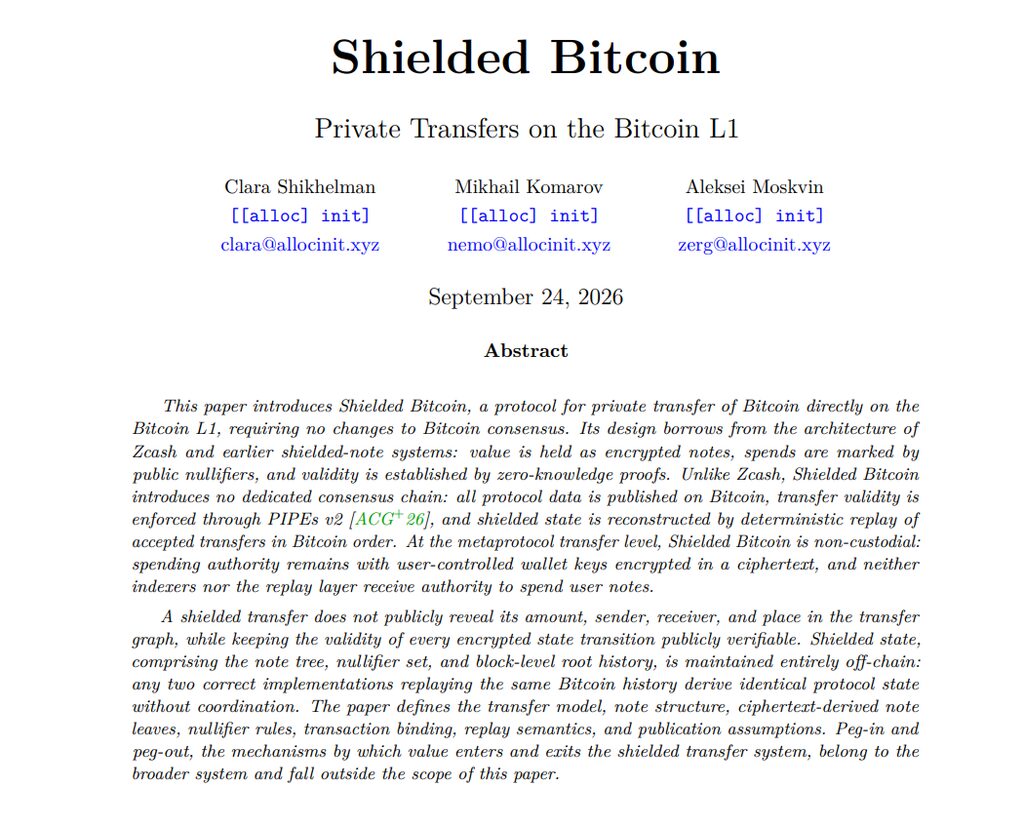
A new proposal called Shielded Bitcoin outlines a way to add private, encrypted payments to the Bitcoin network without altering its underlying rules. The design borrows from Zcash's shielded transaction model, hiding payment amounts, senders and recipients while keeping Bitcoin's base protocol untouched.
.jpeg)
A new proposal called Shielded Bitcoin outlines a way to add private, encrypted payments to the Bitcoin network without altering its underlying rules. The design borrows from Zcash’s shielded transaction model, hiding payment amounts, senders and recipients while keeping Bitcoin’s base protocol untouched.
How the System Would Work
Value would be held in encrypted “notes.” Spending one publishes proof that the sender owns the funds, without revealing details publicly. Bitcoin’s network would store this data but wouldn’t verify it directly, leaving that job to separate software.
Why Privacy Is Gaining Attention
Interest in private payments has grown as businesses look for ways to handle payroll and transactions without exposing financial details tied to public addresses. Zcash has seen a surge in shielded activity recently, with nearly a third of its coins now hidden and prices climbing sharply over the past year.
What’s Missing
The 56-page proposal doesn’t yet explain how real bitcoin would enter or exit the system, leaving key questions unanswered. Critics note the design still requires further development before real-world use.
Live market reaction
Disclaimer
This content is for informational purposes only and does not constitute financial, investment, or legal advice. Cryptocurrency trading involves risk and may result in financial loss.
Start trading
with BloFin today
Up to $500 sign-up bonus and zero-fee trading on your first 30 days.
Buy crypto nowⓘ You will be redirected to BloFin
About the author
Emerging voice in crypto journalism with a background in fintech and digital economics. Covers DeFi, NFTs, and the evolving regulatory landscape.
.jpeg&w=32&q=75) Laurisa ·
Laurisa ·